Oklahoma Social Studies 8.C.1.2
Standard Cluster
- 8.C.1
- Analyze the foundations of the United States of America by examining the causes, events, and ideologies which led to the American Revolution.
Summarize the political and economic consequences of the French and Indian War. Explain Parliament’s rationale for levying new forms of taxation. Describe how the Proclamation of 1763 and its restriction on migration into American Indian sovereign territories fed discontent among the colonies.
Oklahoma Academic Standards for Social Studies (2026) · 8.C.1
Cluster contents
Standards in This Cluster
8.C.1.2 is a cluster heading. These are the individual standards under it.
Teacher's field guide
What This Cluster Means
What Students Need to Do
- Students describe how Britain gained former French territory but took on heavy war debt. They explain why Parliament taxed the colonies and why colonists objected. They explain how the 1763 boundary limited settlement in American Indian sovereign territories and angered colonists seeking land.
What Mastery Looks Like
- A student can connect Britain's war debt and the cost of troops to new taxes, then explain the complaint about taxation without representation. On a map, they can locate the 1763 boundary along the Appalachians and explain why settlers wanted to cross it.
Common Misconceptions
- Students may think Parliament taxed colonists only to punish them, rather than to pay debt and support troops. They may confuse Britain's claim to former French territory with ownership of American Indian sovereign lands. They may assume every colonist opposed the boundary.
How to Assess It
- Exit ticket: In four sentences, name Britain's territorial gain and war debt, explain Parliament's reason for taxes and the colonists' objection, and explain who the 1763 boundary affected.
Lesson moves
Ways to Teach It
Give pairs a blank map; draw the 1763 line along the Appalachians, label American Indian lands, and mark a settler's blocked route.
Ask students to write four sentences answering: Why did Parliament tax the colonies after the war, and why did colonists object?
Have pairs arrange war debt, frontier troops, new taxes, 1763 boundary, and settler anger cards into two cause-and-effect chains.
Print a local council budget page; ask who pays for public safety, who approves the cost, and how that compares with Parliament's taxes.
Free download
Printable 8.C.1.2 Worksheet
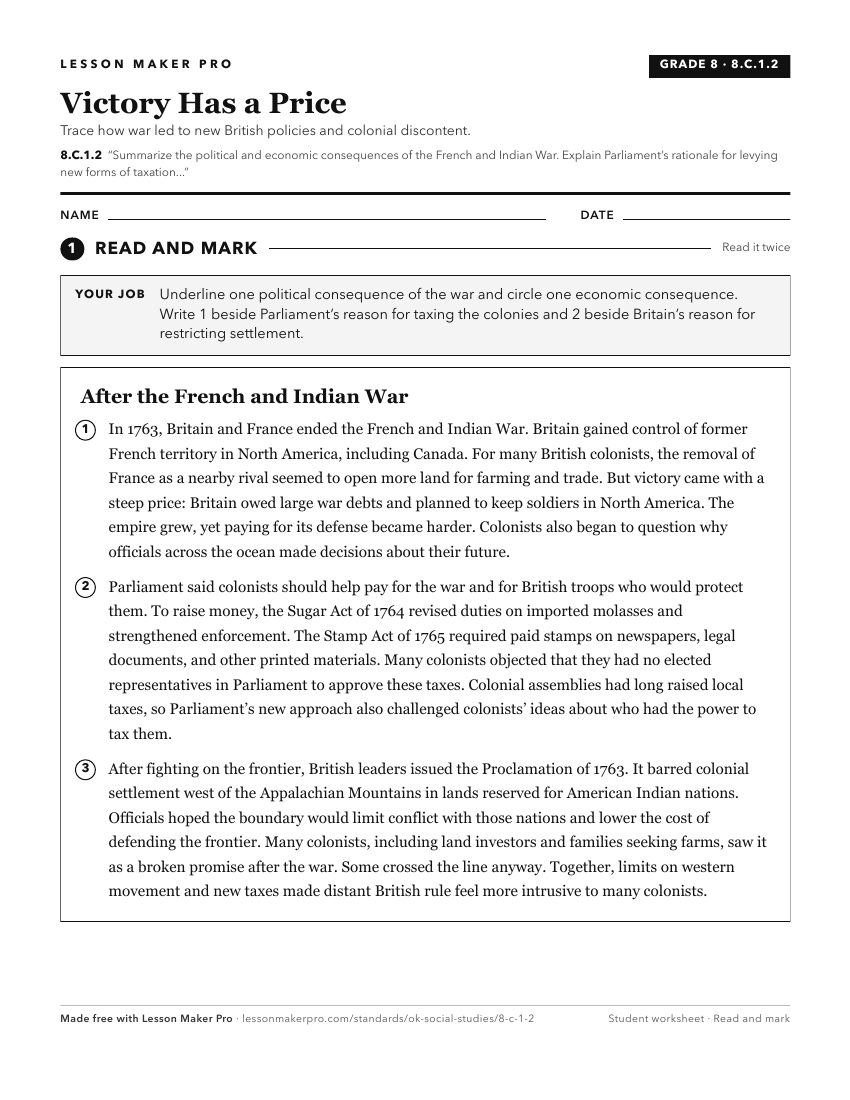
A ready-to-print activity worksheet aligned to 8.C.1.2, with an answer key for the teacher on its own page. No account needed.
PDF, US Letter, prints cleanly in black and white.
Download the worksheetKeep exploring
Related Standards
- 8.C.1.3.B
Describe the effect on colonial economics and local self-government created by the series of trade restrictions and imposed taxes, such as the Sugar Act, Stamp ...
- 8.C.1.1
Analyze the political and economic climate in the British colonies on the eve of the French and Indian War.
- 8.C.7.1.A
Summarize the causes of the war, including British trade restrictions and impressment.
- 5.C.2.5.A
although colonists and American Indians benefited from trade, disputes erupted over territorial claims.
Turn this cluster into a lesson
Grade, subject, topic, and the complete cluster are prefilled. Create one free, no account needed.
Also for this cluster:Make a WorksheetMake a QuizMake a Sub Lesson