Oklahoma ELA 12.3.R.4
The Standard
Students will evaluate how literary devices impact theme, mood, and/or tone, using textual evidence: • figurative language (i.e., simile, metaphor, personification, hyperbole, imagery, symbolism) • sound devices (i.e., onomatopoeia, alliteration, assonance) • irony (i.e., verbal, situational, dramatic)
Oklahoma Academic Standards for English Language Arts (2021)
Teacher's field guide
What This Standard Means
What Students Need to Do
- Students find figurative language, sound patterns, and irony in a text. They explain how a specific word or moment shapes the theme, mood, or tone, then support that explanation with evidence.
What Mastery Looks Like
- A student can quote “doubting, dreaming dreams” from “The Raven” and explain how the repeated sounds build an uneasy mood. They can point to the combs and watch chain in “The Gift of the Magi” and explain how the ironic exchange supports a theme about sacrifice.
Common Misconceptions
- Students may name a device without explaining what it does. They may confuse mood with the author's attitude or give a one-word topic instead of a theme. Some call any surprising event ironic, even when it does not reverse an expectation.
How to Assess It
- After reading “The Gift of the Magi,” ask: How does the irony of the exchanged gifts shape the story's theme? Cite one detail from the story.
Lesson moves
Ways to Teach It
Give pairs a printed stanza from “The Raven”; have them highlight repeated sounds and write how those sounds shape the mood.
Ask: Why are the gifts useless in “The Gift of the Magi,” and what does that irony say about love? Cite a line.
Make quote cards from both texts; have pairs sort them by device, then explain one card's effect on mood or theme.
Post “America runs on Dunkin”; ask students how “runs on” makes coffee sound like fuel for daily life.
Free download
Printable 12.3.R.4 Worksheet
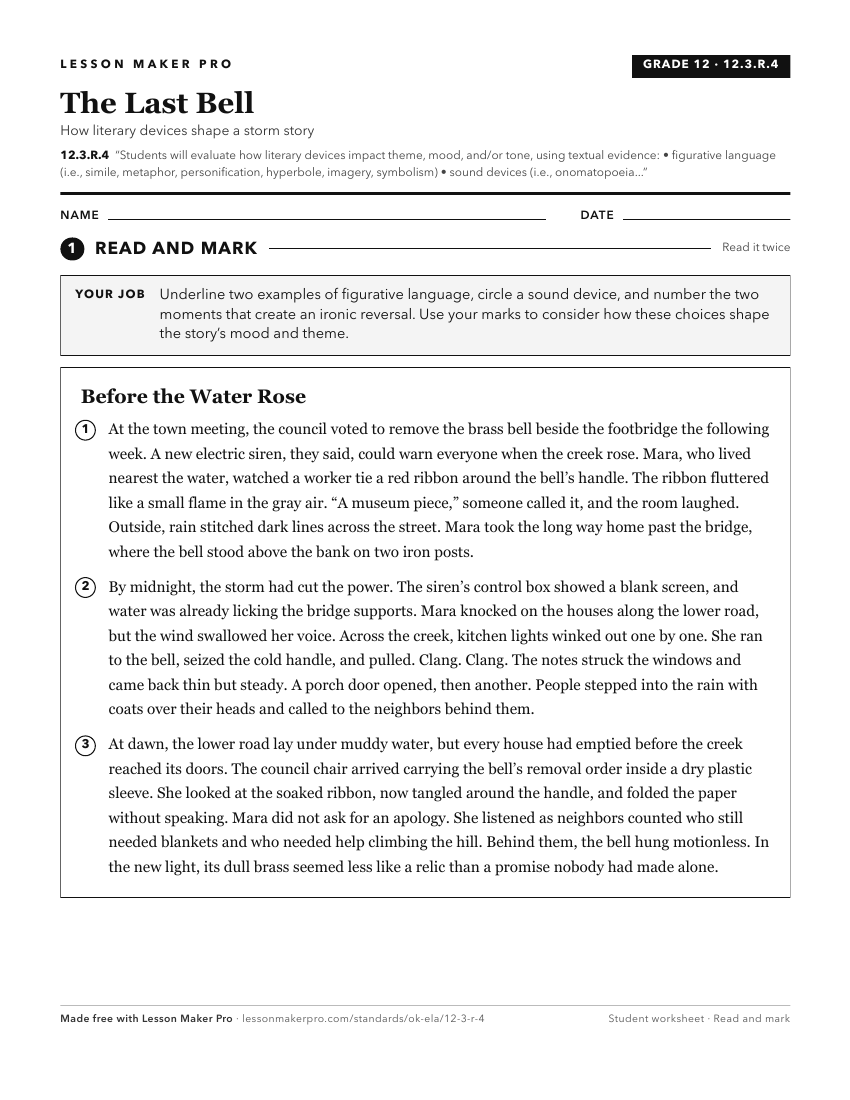
A ready-to-print activity worksheet aligned to 12.3.R.4, with an answer key for the teacher on its own page. No account needed.
PDF, US Letter, prints cleanly in black and white.
Download the worksheetKeep exploring
Related Standards
- 11.3.R.4
The 11th Grade version of this standard.
- 9.3.R.4
The 9th Grade version of this standard.
- 10.3.R.4
The 10th Grade version of this standard.
- 6.3.R.4
Analyze how literary devices contribute to the meaning of a text:- figurative language (i.e., simile, metaphor, personification, hyperbole, imagery, symbolism, ...
Turn this exact standard into a lesson
Grade, subject, topic, and the complete standard are prefilled. Create one free, no account needed.
Also for this standard:Make a WorksheetMake a QuizMake a Sub Lesson