Oklahoma ELA 11.3.R.4
The Standard
Students will evaluate how literary devices impact theme, mood, and/or tone, using textual evidence: • figurative language (i.e., simile, metaphor, personification, hyperbole, imagery, symbolism) • sound devices (i.e., onomatopoeia, alliteration, assonance) • irony (i.e., verbal, situational, dramatic)
Oklahoma Academic Standards for English Language Arts (2021)
Teacher's field guide
What This Standard Means
What Students Need to Do
- Students find figurative language, sound patterns, and irony in a passage. They quote the words that show the device and explain how it shapes the theme, mood, or tone.
What Mastery Looks Like
- A student can identify a device and explain its effect using a quote, not just name it. They can also explain how an ironic ending supports a theme.
Common Misconceptions
- Students often name a device but stop before explaining its effect. They may call any surprise irony or confuse the writer's tone with a character's feelings. Some give a topic like 'love' instead of a theme about love.
How to Assess It
- Exit ticket: Read 'The hallway swallowed our footsteps, and the lights buzzed like angry bees.' Name one device, quote its words, and explain how it shapes the mood.
Lesson moves
Ways to Teach It
Hand out the first stanza of 'The Raven'; students underline 'weak and weary' and write how its sound affects the mood.
Write 'The fire station burned down' on the board; ask partners why it is ironic and whether it sounds funny or grim.
Put 'weak and weary,' 'a sea of faces,' and 'bang!' on cards; pairs name each device and explain its effect.
Compare two weather alerts, 'The wind howled' and 'Wind gusts reached 40 mph'; students explain which sounds more threatening and why.
Free download
Printable 11.3.R.4 Worksheet
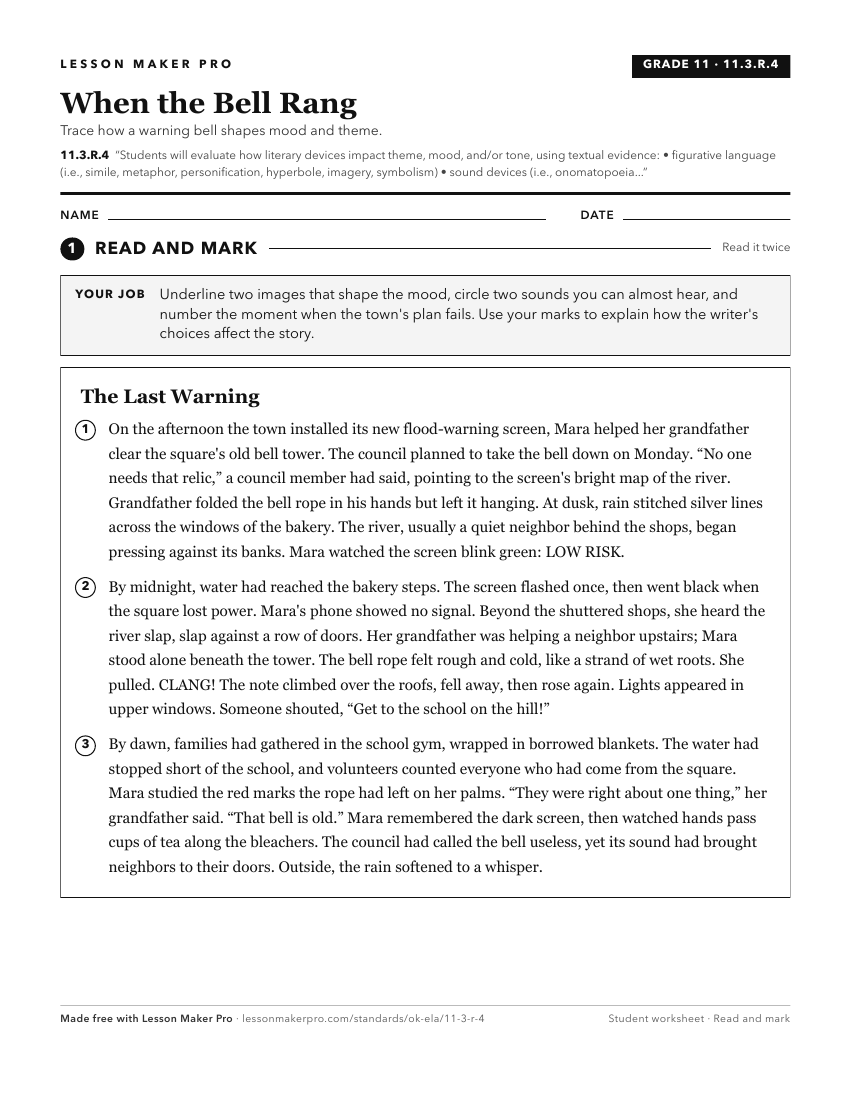
A ready-to-print activity worksheet aligned to 11.3.R.4, with an answer key for the teacher on its own page. No account needed.
PDF, US Letter, prints cleanly in black and white.
Download the worksheetKeep exploring
Related Standards
- 12.3.R.4
The 12th Grade version of this standard.
- 9.3.R.4
The 9th Grade version of this standard.
- 10.3.R.4
The 10th Grade version of this standard.
- 6.3.R.4
Analyze how literary devices contribute to the meaning of a text:- figurative language (i.e., simile, metaphor, personification, hyperbole, imagery, symbolism, ...
Turn this exact standard into a lesson
Grade, subject, topic, and the complete standard are prefilled. Create one free, no account needed.
Also for this standard:Make a WorksheetMake a QuizMake a Sub Lesson