Oklahoma ELA 10.3.R.4
The Standard
Students will evaluate how literary devices impact theme, mood, and/or tone, using textual evidence: • figurative language (i.e., simile, metaphor, personification, hyperbole, imagery, symbolism) • sound devices (i.e., onomatopoeia, alliteration, assonance) • irony (i.e., verbal, situational, dramatic)
Oklahoma Academic Standards for English Language Arts (2021)
Teacher's field guide
What This Standard Means
What Students Need to Do
- Students find figurative language, sound patterns, and irony in a passage. They use a quoted detail to explain how a device shapes the theme, mood, or tone.
What Mastery Looks Like
- A student can cite “rain rattled the roof” and explain how the repeated r sound makes the scene feel tense. They can explain why a fire station burning during its safety drill is ironic and how that gives the story a wry tone.
Common Misconceptions
- Students may call any surprising event irony, even when no expectation is reversed. They may name a device without explaining its effect, or confuse the reader’s mood with the speaker’s tone.
How to Assess It
- Give students this line: “Rain rattled the roof like handfuls of nails.” Ask them to name one device, quote the words that show it, and explain the mood it creates.
Lesson moves
Ways to Teach It
Sort strips reading “rain rattled the roof,” “the moon watched,” and “the fire station burned during its safety drill”; explain each device’s effect.
Discuss why the police in “The Tell-Tale Heart” seem calm while readers know a body is hidden; cite one line.
Play a device match race: read the three strip lines aloud; teams raise alliteration, personification, or irony cards and explain the effect.
Show a sports headline calling a last-place team’s win a “miracle”; have students explain how the hyperbole changes its tone.
Free download
Printable 10.3.R.4 Worksheet
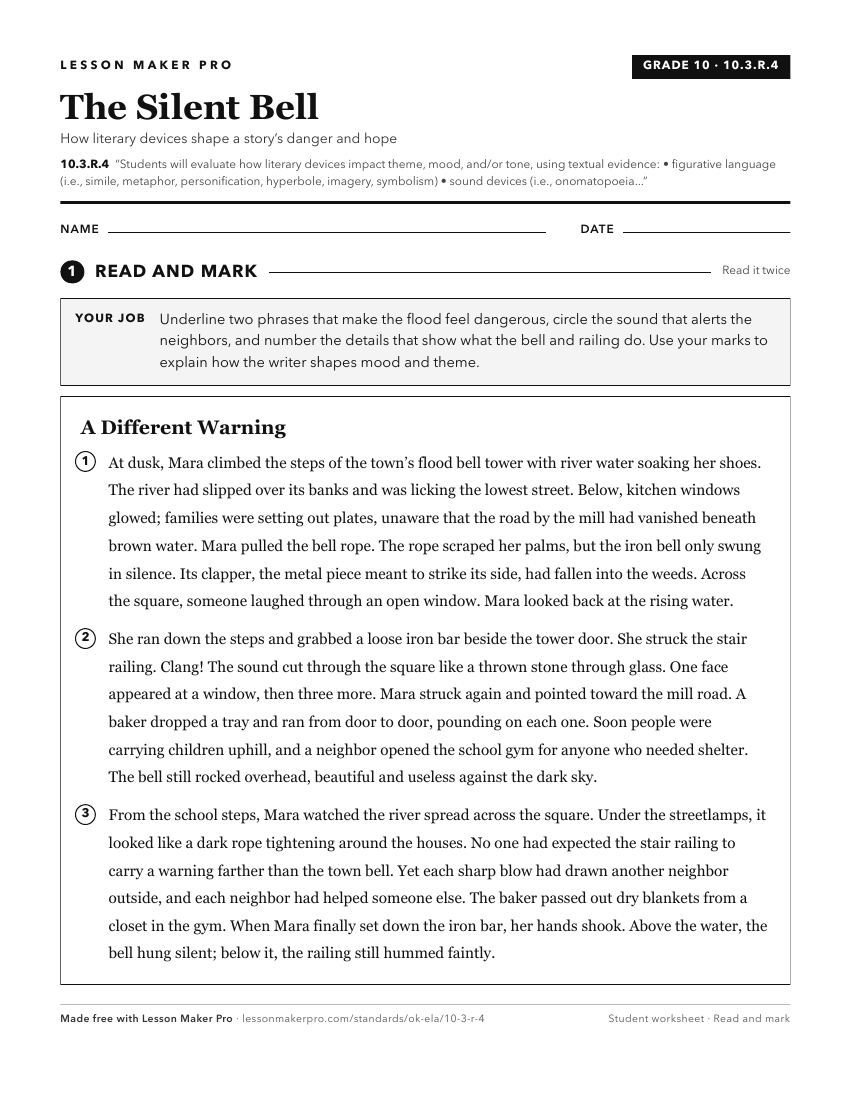
A ready-to-print activity worksheet aligned to 10.3.R.4, with an answer key for the teacher on its own page. No account needed.
PDF, US Letter, prints cleanly in black and white.
Download the worksheetKeep exploring
Related Standards
- 9.3.R.4
The 9th Grade version of this standard.
- 11.3.R.4
The 11th Grade version of this standard.
- 12.3.R.4
The 12th Grade version of this standard.
- 6.3.R.4
Analyze how literary devices contribute to the meaning of a text:- figurative language (i.e., simile, metaphor, personification, hyperbole, imagery, symbolism, ...
Turn this exact standard into a lesson
Grade, subject, topic, and the complete standard are prefilled. Create one free, no account needed.
Also for this standard:Make a WorksheetMake a QuizMake a Sub Lesson