NY Next Generation ELA 9-10W3b
The Standard
Use narrative techniques, such as dialogue, pacing, description, reflection, and plot line(s) to develop experiences, events, and/or characters.
New York State Next Generation English Language Arts Learning Standards
Teacher's field guide
What This Standard Means
What Students Need to Do
- Students use narrative techniques such as dialogue and description, pacing, reflection, and plot development to develop experiences, events, and characters. Each technique serves the narrative.
What Mastery Looks Like
- The student selects techniques that reveal character, shape pacing, advance events, or deepen reflection. Dialogue and detail do more than decorate the scene.
Common Misconceptions
- Students may add dialogue that repeats narration or description that stops the action. They may rush important moments or reflect without connection to events.
How to Assess It
- Give a flat narrative scene. Ask students to revise it with purposeful dialogue, description, and pacing or reflection, then explain each effect.
Lesson moves
Ways to Teach It
Annotate a scene for dialogue, description, pacing, and reflection effects.
Ask students which technique best develops the turning point.
Play Technique Purpose Match.
Revise a real or imagined event scene.
Free download
Printable 9-10W3b Worksheet
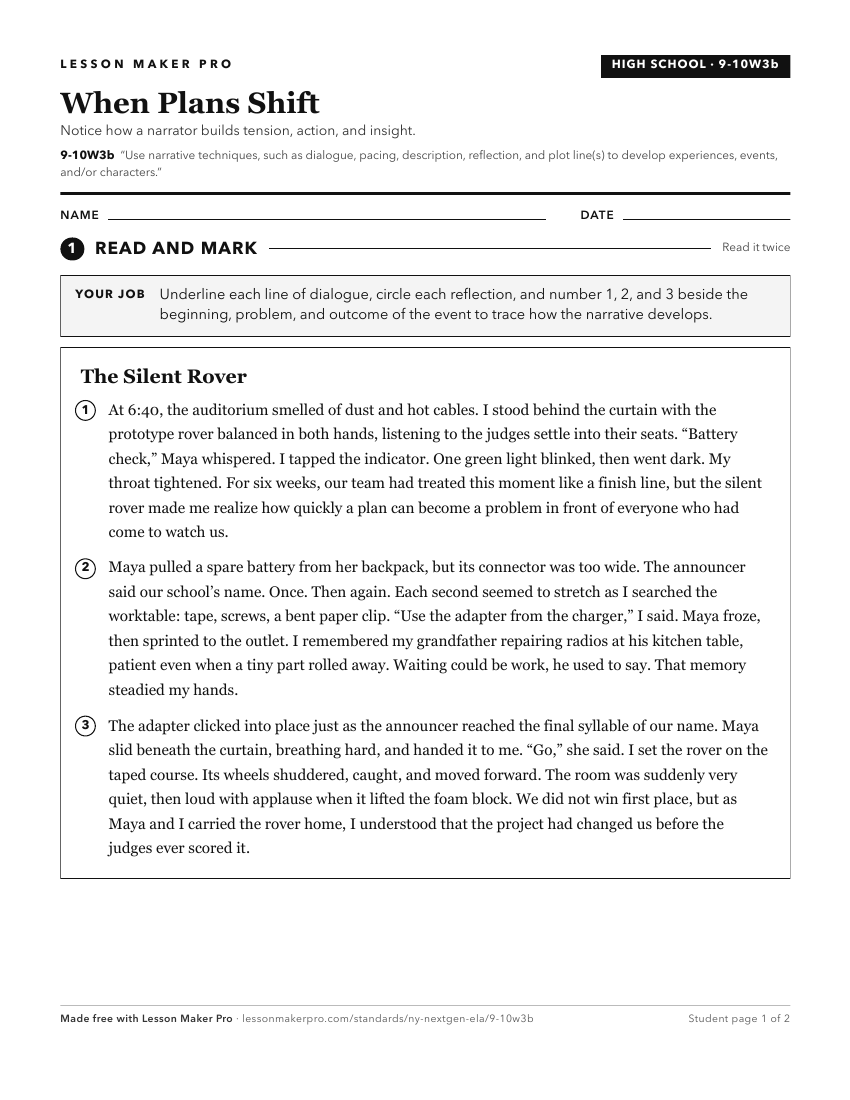
A ready-to-print activity worksheet aligned to 9-10W3b, with an answer key for the teacher on its own page. No account needed.
PDF, US Letter, prints cleanly in black and white.
Download the worksheetKeep exploring
Related Standards
- 7W3.b
Use narrative techniques, such as dialogue and description, to develop experiences, events, and/or characters.
- 5W3.b
Use narrative techniques, such as dialogue and description, to develop experiences and events or show the responses of characters to situations.
- 8W3.b
Use narrative techniques, such as dialogue, pacing, description, and reflection to develop experiences, events, and/or characters.
- 6W3.b
Use narrative techniques, such as dialogue and description, to develop experiences, events, and/or characters.
Turn this exact standard into a lesson
Grade, subject, topic, and the complete standard are prefilled. Create one free, no account needed.
Also for this standard:Make a WorksheetMake a QuizMake a Sub Lesson