NY Next Generation ELA 9-10L5a
The Standard
Interpret figures of speech, including euphemism and oxymoron, in context and analyze their role in the text.
New York State Next Generation English Language Arts Learning Standards
Teacher's field guide
What This Standard Means
What Students Need to Do
- Students interpret euphemisms and oxymorons in context and analyze their roles in a text. They connect literal wording, intended meaning, tone, audience, and rhetorical purpose.
What Mastery Looks Like
- A student explains what a euphemism softens, avoids, or reframes and what tension an oxymoron creates. The student shows how the choice affects meaning, tone, characterization, persuasion, or critique.
Common Misconceptions
- Students may call any polite phrase a euphemism or any pair of opposites an oxymoron. They may define the figure but omit its function in the specific text.
How to Assess It
- Give students one euphemism and one oxymoron in short passages. Ask them to interpret each and analyze its textual role with evidence.
Lesson moves
Ways to Teach It
Annotate figure cards for literal wording, intended meaning, tension or softening, textual role, and audience effect.
Ask, ‘What reality does this euphemism reframe, and how does that choice influence the audience?’
Play Device or Coincidence by testing whether examples meet the contextual requirements for euphemism or oxymoron.
Analyze euphemistic and oxymoronic language in institutional statements, headlines, or product messaging.
Free download
Printable 9-10L5a Worksheet
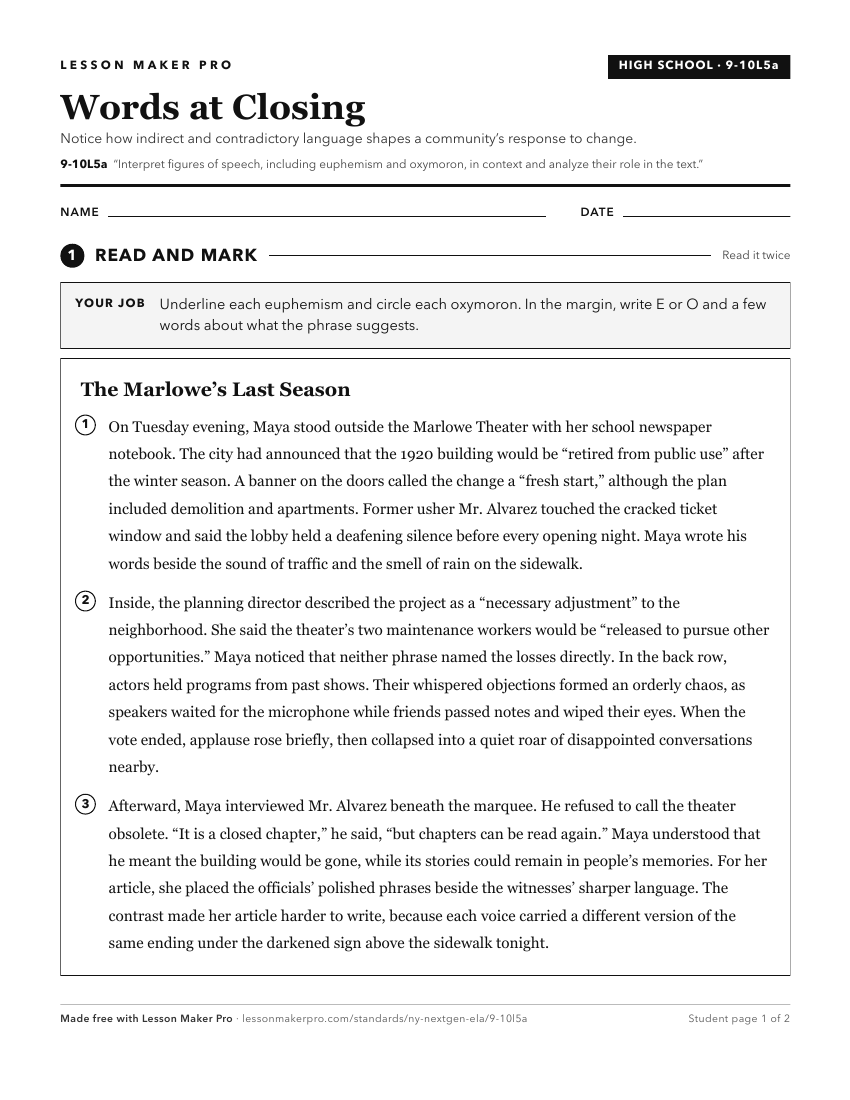
A ready-to-print activity worksheet aligned to 9-10L5a, with an answer key for the teacher on its own page. No account needed.
PDF, US Letter, prints cleanly in black and white.
Download the worksheetKeep exploring
Related Standards
Turn this exact standard into a lesson
Grade, subject, topic, and the complete standard are prefilled. Create one free, no account needed.
Also for this standard:Make a WorksheetMake a QuizMake a Sub Lesson