NY Next Generation ELA 7L5.a
The Standard
Interpret figurative language, including allusions, in context.
New York State Next Generation English Language Arts Learning Standards
Teacher's field guide
What This Standard Means
What Students Need to Do
- Students interpret figurative language, including allusions, within context. They identify the outside person, event, story, or idea invoked and analyze the meaning it adds.
What Mastery Looks Like
- A student explains an allusion's relevant background without retelling everything about its source. The student connects that background to a specific implication, comparison, tone, or theme in the passage.
Common Misconceptions
- Students may identify a reference but not explain its function or overapply every source detail. They may call any named person or place an allusion without evidence of added meaning.
How to Assess It
- Give students a short passage containing a familiar allusion and a brief source note. Ask them to interpret the allusion and analyze its role.
Lesson moves
Ways to Teach It
Match allusive lines with concise background cards, contextual interpretations, and effects on tone or theme.
Ask, ‘Which part of the source matters here, and what meaning does the allusion add?’
Play Allusion Evidence Match by rejecting background details that do not contribute to the passage.
Analyze allusions in headlines or campaign messages and explain what shared knowledge they expect from audiences.
Free download
Printable 7L5.a Worksheet
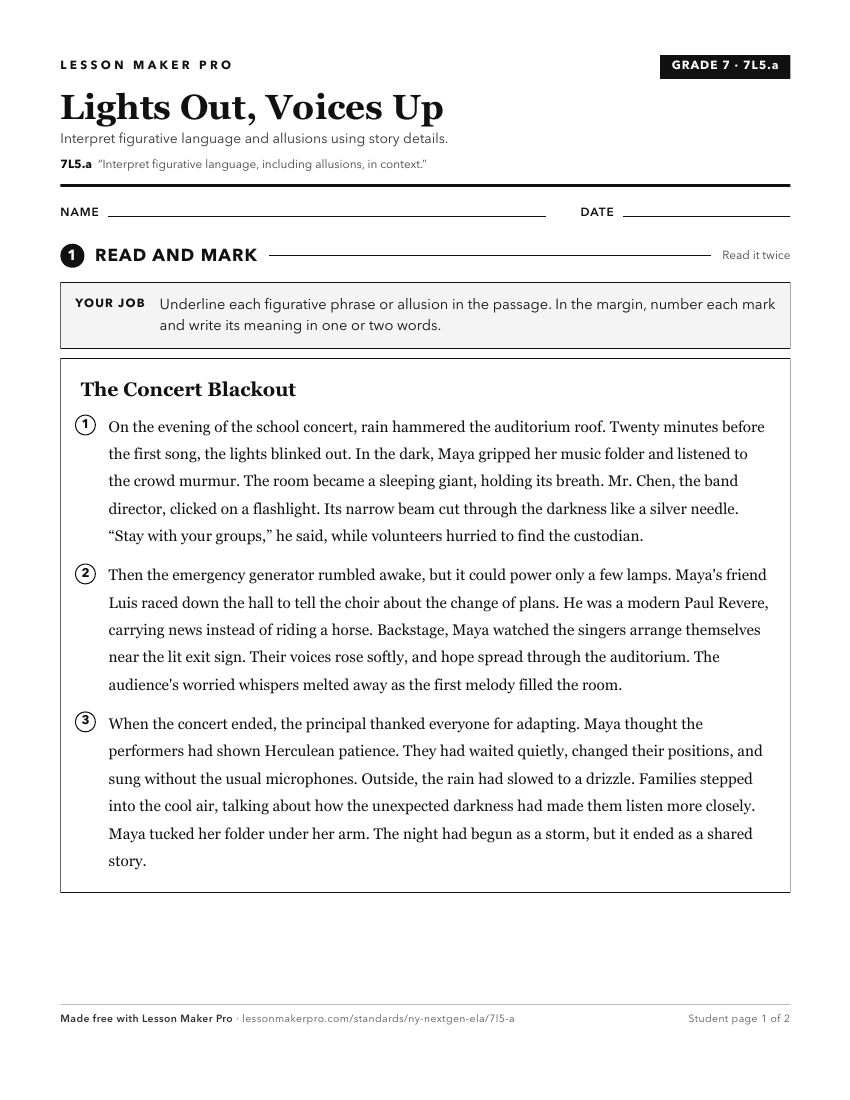
A ready-to-print activity worksheet aligned to 7L5.a, with an answer key for the teacher on its own page. No account needed.
PDF, US Letter, prints cleanly in black and white.
Download the worksheetKeep exploring
Related Standards
- 5L5.a
Interpret figurative language, including similes and metaphors, in context.
- 9-10L5a
Interpret figures of speech, including euphemism and oxymoron, in context and analyze their role in the text.
- 6L5.a
Interpret figurative language, including personification, in context.
- 8L5.a
Interpret figures of speech including irony and puns in context.
Turn this exact standard into a lesson
Grade, subject, topic, and the complete standard are prefilled. Create one free, no account needed.
Also for this standard:Make a WorksheetMake a QuizMake a Sub Lesson