NGSS K-LS1-1
The Standard
Use observations to describe patterns of what plants and animals (including humans) need to survive.
Next Generation Science Standards
Teacher's field guide
What This Standard Means
What Students Need to Do
- Students observe plants, animals, and people, then record what each needs to stay alive. They compare examples and describe repeated patterns, such as all needing water, animals eating food, and plants needing light.
What Mastery Looks Like
- Given picture cards, a student matches water to plants and animals, food to animals, and light to plants. They describe a repeated pattern and point to an observation as evidence.
Common Misconceptions
- Students may say plants eat soil or drink sunlight. They may think every animal eats the same food, or that water counts as food. Some name preferred items, such as toys or treats, as survival needs.
How to Assess It
- Show paired photos of a dog and bird eating, a child and plant getting water, and two plants in sunlight. Ask students to name the need repeated in each pair by drawing or speaking.
Lesson moves
Ways to Teach It
Water two bean seedlings equally, place one in light and one in a dark box, then draw daily changes for five days.
Show photos of a cow, hawk, and child eating, and ask students to name one shared need and one food difference.
Play Needs Match with plant, animal, water, light, and food cards, asking students to explain each match aloud.
Create a care checklist for a classroom plant, then compare it with a pet care sheet from a local shelter.
Free download
Printable K-LS1-1 Worksheet
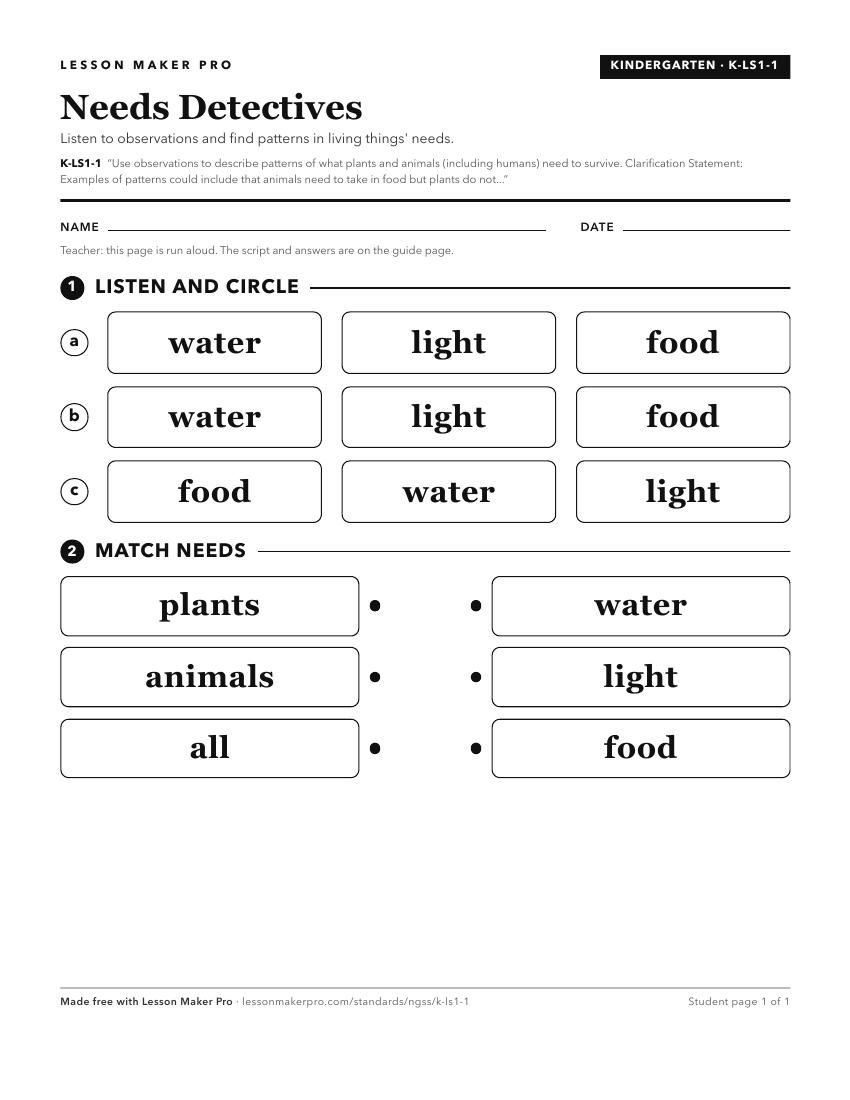
A ready-to-print activity worksheet aligned to K-LS1-1, with an answer key for the teacher on its own page. No account needed.
PDF, US Letter, prints cleanly in black and white.
Download the worksheetKeep exploring
Related Standards
- K-ESS2-2
Construct an argument supported by evidence for how plants and animals (including humans) can change the environment to meet their needs.
- K-ESS3-1
Use a model to represent the relationship between the needs of different plants or animals (including humans) and the places they live.
- 2-LS4-1
Make observations of plants and animals to compare the diversity of life in different habitats.
- 1-LS1-1
Use materials to design a solution to a human problem by mimicking how plants and/or animals use their external parts to help them survive, grow, and meet their...
Turn this exact standard into a lesson
Grade, subject, topic, and the complete standard are prefilled. Create one free, no account needed.
Also for this standard:Make a WorksheetMake a QuizMake a Sub Lesson