NGSS 4-LS1-2
The Standard
Use a model to describe that animals' receive different types of information through their senses, process the information in their brain, and respond to the information in different ways.
Next Generation Science Standards
Teacher's field guide
What This Standard Means
What Students Need to Do
- Students use a diagram, physical model, or sequence of cards to trace information from a sense organ to the brain and then to an action. They explain how different sensory information can lead to different responses.
What Mastery Looks Like
- Students can build or draw a model with a stimulus, sense organ, brain, and response in the correct order. They can use arrows and labels to explain how information moves through the system.
Common Misconceptions
- Students may think sense organs decide what the body does, rather than sending information to the brain. They may also confuse a stimulus with a response or assume every animal responds the same way.
How to Assess It
- Give this exit ticket: “A dog smells food and walks toward it. Draw and label the information pathway using arrows.”
Lesson moves
Ways to Teach It
Give pairs picture cards for a barking dog, ears, brain, and running away, then have them arrange and explain the pathway.
Have students explain how a rabbit detects a hawk, processes that information, and chooses among hiding, freezing, or running.
Play a card sort matching stimuli, sense organs, brain processing, and responses, then challenge groups to defend each pathway.
Observe a school crossing signal and map how a pedestrian sees or hears it, processes the cue, and responds.
Free download
Printable 4-LS1-2 Worksheet
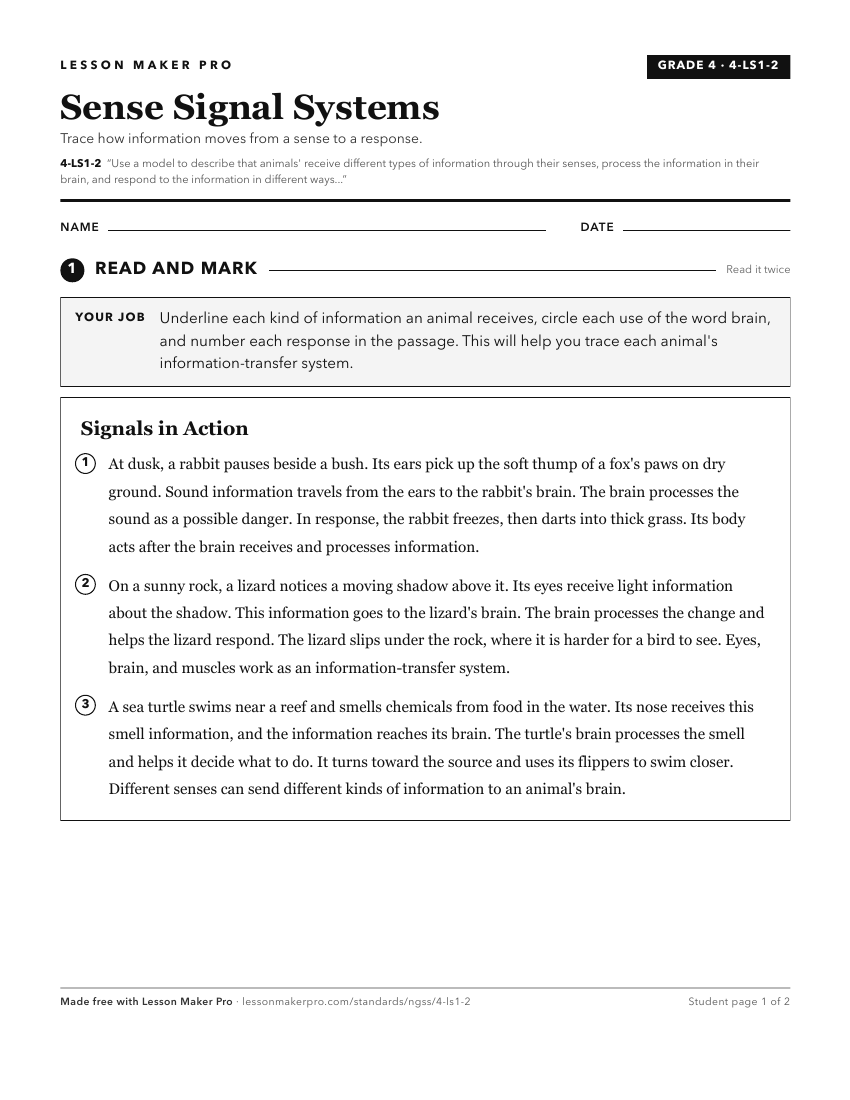
A ready-to-print activity worksheet aligned to 4-LS1-2, with an answer key for the teacher on its own page. No account needed.
PDF, US Letter, prints cleanly in black and white.
Download the worksheetWhat This Unlocks
Mastery here sets students up for these next.
Keep exploring
Related Standards
- HS-LS1-2
Develop and use a model to illustrate the hierarchical organization of interacting systems that provide specific functions within multicellular organisms.
- K-ESS3-1
Use a model to represent the relationship between the needs of different plants or animals (including humans) and the places they live.
- 5-LS2-1
Develop a model to describe the movement of matter among plants, animals, decomposers, and the environment.
Turn this exact standard into a lesson
Grade, subject, topic, and the complete standard are prefilled. Create one free, no account needed.
Also for this standard:Make a WorksheetMake a QuizMake a Sub Lesson