NGSS 3-LS4-3
The Standard
Construct an argument with evidence that in a particular habitat some organisms can survive well, some survive less well, and some cannot survive at all.
Next Generation Science Standards
Teacher's field guide
What This Standard Means
What Students Need to Do
- Students examine an organism's needs and traits, then compare them with the food, water, shelter, space, and conditions in one habitat. They use observations or provided facts to make and support a claim about how likely that organism is to live there.
What Mastery Looks Like
- Students make a clear claim for several organisms and cite relevant evidence from both the organism and habitat. They explain the link, such as thick fur helping in cold conditions or gills requiring water for breathing.
Common Misconceptions
- Students may decide based only on where they have seen an animal. They may treat survival as all or nothing, rather than recognizing that limited food, shelter, or water can reduce success. They may also assume any organism can adjust to any habitat.
How to Assess It
- Exit ticket: A habitat is cold and snowy, with buried seeds and no ponds. Decide whether an animal with thick fur, one with thin fur, and one with gills would live well, less well, or not at all, then support each decision with one fact.
Lesson moves
Ways to Teach It
Build three habitat trays with sand, water, and leaf litter, then place organism models and justify each placement with a trait.
Write: Could a pond frog live in a dry desert? Support your claim with two facts about frogs and deserts.
Play Habitat Match with organism and habitat cards, earning a point only when the match includes a spoken evidence statement.
Study photos of a local park, list available food and shelter, then predict which three local animals are most likely to live there.
Free download
Printable 3-LS4-3 Worksheet
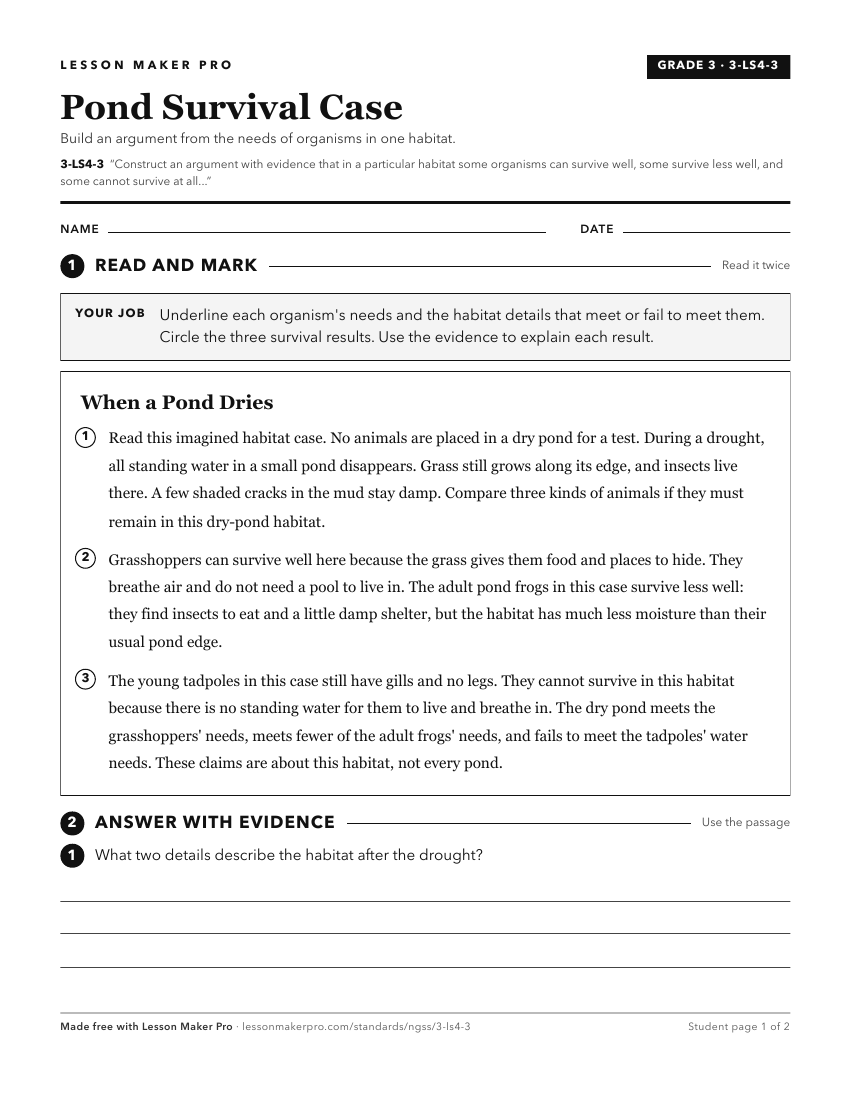
A ready-to-print activity worksheet aligned to 3-LS4-3, with an answer key for the teacher on its own page. No account needed.
PDF, US Letter, prints cleanly in black and white.
Download the worksheetWhat This Unlocks
Mastery here sets students up for these next.
Keep exploring
Related Standards
- 3-LS2-1
Construct an argument that some animals form groups that help members survive.
- MS-LS2-4
Construct an argument supported by empirical evidence that changes to physical or biological components of an ecosystem affect populations.
- HS-ESS2-7
Construct an argument based on evidence about the simultaneous coevolution of Earth systems and life on Earth.
- K-ESS2-2
Construct an argument supported by evidence for how plants and animals (including humans) can change the environment to meet their needs.
Turn this exact standard into a lesson
Grade, subject, topic, and the complete standard are prefilled. Create one free, no account needed.
Also for this standard:Make a WorksheetMake a QuizMake a Sub Lesson