Montana Math MT.1.NBT.2
The Standard
Understand that ten is a unit composed of ten ones and that a two-digit number represents tens and ones.
2026 Montana Mathematics Content Standards
Teacher's field guide
What This Standard Means
What Students Need to Do
- Students group 10 objects, then use those groups and leftover objects to build two-digit numbers. They match each digit to what it counts.
What Mastery Looks Like
- Given 34, a student makes three groups of 10 and four loose objects. They explain that the 3 means 30 and show 40 with four groups and no loose objects.
Common Misconceptions
- Some students read 24 as two loose objects and four groups of 10. Others think the 0 in 30 means there are no objects at all.
How to Assess It
- Give students a page with 24 dots. Ask them to circle groups of 10, write the number, and label what each digit counts.
Lesson moves
Ways to Teach It
Give students straws and rubber bands to make bundles of 10, then ask them to build 23 with bundles and loose straws.
Draw 10 loose cubes beside one ten-stick and ask, "Why do these show the same amount?"
Have pairs draw numeral cards from 10 to 99, build each number with ten-sticks and cubes, and check each other's work.
Set out 3 dimes and 7 pennies, then ask students to show how the coins make 37 cents.
Free download
Printable MT.1.NBT.2 Worksheet
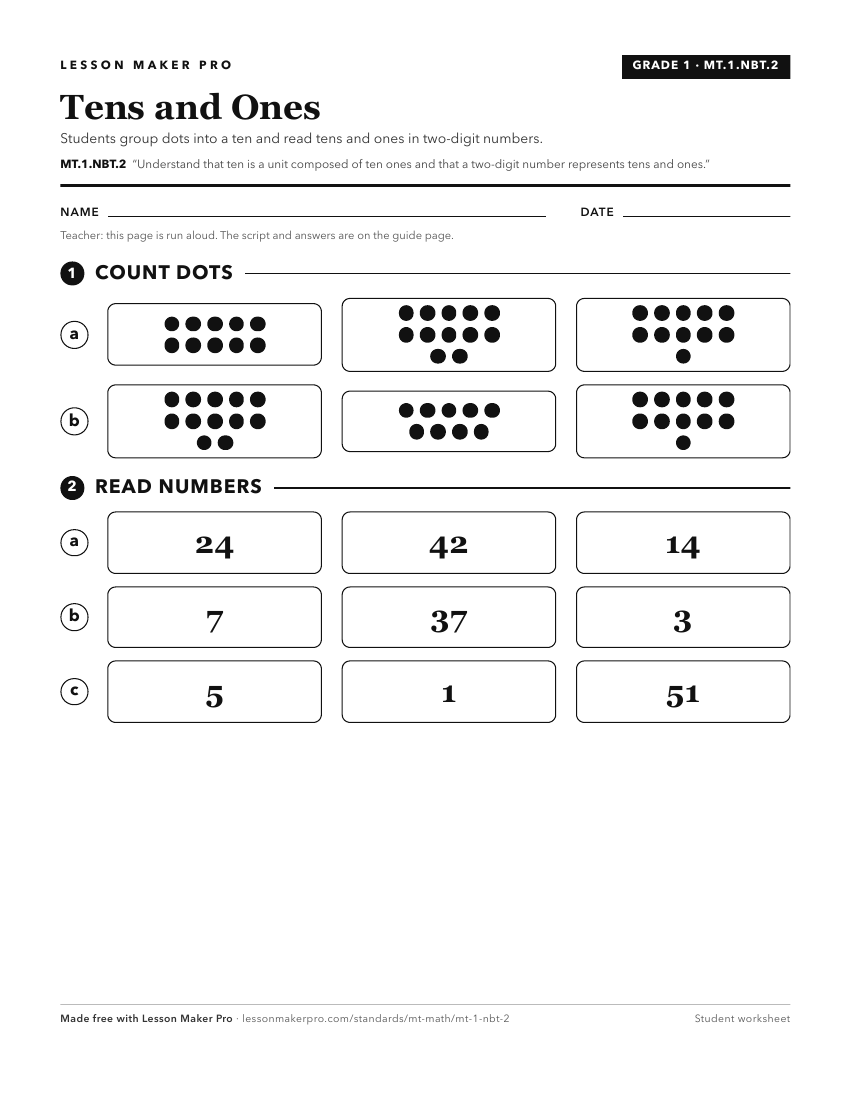
A ready-to-print activity worksheet aligned to MT.1.NBT.2, with an answer key for the teacher on its own page. No account needed.
PDF, US Letter, prints cleanly in black and white.
Download the worksheetKeep exploring
Related Standards
Turn this exact standard into a lesson
Grade, subject, topic, and the complete standard are prefilled. Create one free, no account needed.
Also for this standard:Make a WorksheetMake a QuizMake a Sub Lesson