Mississippi Science E.K.8B
Standard Cluster
Students will demonstrate an understanding that the Sun provides the Earth with heat and light. With teacher guidance, generate and answer questions to develop a simple model, which describes observable patterns of sunlight on the Earth’s surface (day and night). With teacher guidance, develop questions to conduct a structured investigation to determine how sunlight affects the temperature of the Earth’s natural resources (e.g., sand, soil, rocks, and water). Develop a device (i.e., umbrella, shade structure, or hat) which would reduce heat from the sun (temperature). Use an engineering design process to define the problem, design, construct, evaluate, and improve the device. *
2026 Mississippi College- and Career-Readiness Standards for Science · Earth and the Universe
Cluster contents
Standards in This Cluster
E.K.8B is a cluster heading. These are the individual standards under it.
- E.K.8B.1
With teacher guidance, generate and answer questions to develop a simple model, which describes observable patterns of sunlight on the Earth's surface (day and ...
- E.K.8B.2
With teacher guidance, develop questions to conduct a structured investigation to determine how sunlight affects the temperature of the Earth's natural resource...
- E.K.8B.3
Develop a device (i.e., umbrella, shade structure, or hat) which would reduce heat from the sun (temperature). Use an engineering design process to define the p...
Teacher's field guide
What This Cluster Means
What Students Need to Do
- Children ask why it is light in the day and dark at night. They use a ball and light to show the pattern. They compare how the Sun warms materials, then build, test, and improve a shade.
What Mastery Looks Like
- A child can turn a marked ball to show when its marked spot has daylight or darkness. They can compare sunny and shaded sand temperatures and change a paper shade to keep the sand cooler.
Common Misconceptions
- Some children think the Sun turns off at night. Others think a hat makes cool air instead of blocking sunlight, or that sand warms just as much in shade.
How to Assess It
- On an exit slip, show a light shining on a ball and two sand cups with picture thermometers, one in sun and one in shade. Ask children to mark the daytime side, circle the warmer cup, and draw a shade for it.
Lesson moves
Ways to Teach It
Pairs use paper and tape to shade one sand cup, compare its thermometer reading with a sunny cup, then improve the shade.
Show a flashlight and marked ball; ask children what they wonder about nighttime, then turn the ball to answer one question.
Give pairs sunny and shaded sand, rock, and water picture cards; have them match each to warmer or cooler thermometer readings.
At recess, point out a shaded bench and a sunny bench; ask children where they would sit to stay cooler and why.
Free download
Printable E.K.8B Worksheet
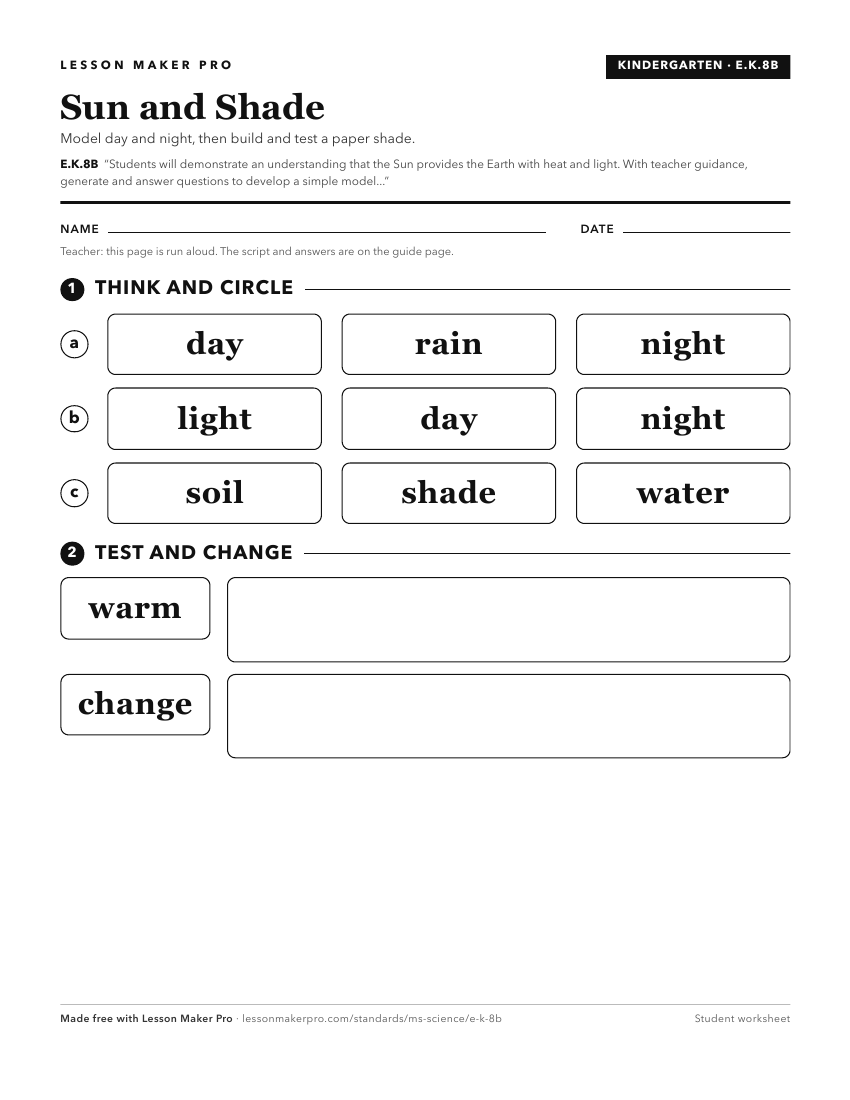
A ready-to-print activity worksheet aligned to E.K.8B, with an answer key for the teacher on its own page. No account needed.
PDF, US Letter, prints cleanly in black and white.
Download the worksheetKeep exploring
Related Standards
- E.4.9A
Students will demonstrate an understanding of how the water cycle is propelled by the sun's energy.
- P.1.6A
Students will demonstrate an understanding that light is required to make objects visible.
- E.7.9C
Students will demonstrate an understanding that the seasons are the direct result of the Earth's tilt and the intensity of sunlight on the Earth's hemispheres.
- P.4.6B
Students will demonstrate an understanding of the properties of light as forms of energy.
Turn this cluster into a lesson
Grade, subject, topic, and the complete cluster are prefilled. Create one free, no account needed.
Also for this cluster:Make a WorksheetMake a QuizMake a Sub Lesson