Indiana Social Studies S.9.4
The Standard
Examine how individuals and groups respond to social problems.
2026 Indiana Academic Standards: K-12 Social Studies
Teacher's field guide
What This Standard Means
What Students Need to Do
- Students identify who is taking action on a social problem and what they do. They compare what one person can do with what an organized group can do, including the limits of each response.
What Mastery Looks Like
- Given two short accounts about food insecurity, a student names each action and its goal. They use details from the accounts to explain who each action reaches and what it may not solve.
Common Misconceptions
- Students may assume a food donation solves a family's need for good. They may also assume a group effort always helps more people, without checking what the group actually does.
How to Assess It
- On an exit ticket, give students two cases: one person donates a bag of groceries, and neighbors organize weekly deliveries. Ask them to name one likely strength and one limit of each response.
Lesson moves
Ways to Teach It
Give pairs four food insecurity scenario cards and have them sort each response by actor, action, and likely reach.
Ask: Which might help more families over time, one grocery donation or a weekly food drive, and what facts would help you decide?
Play response match: teams pair problem cards with possible individual and group actions, then explain one pairing aloud.
Open a local food pantry website and have students list one action a person can take and one action a group can organize.
Free download
Printable S.9.4 Worksheet
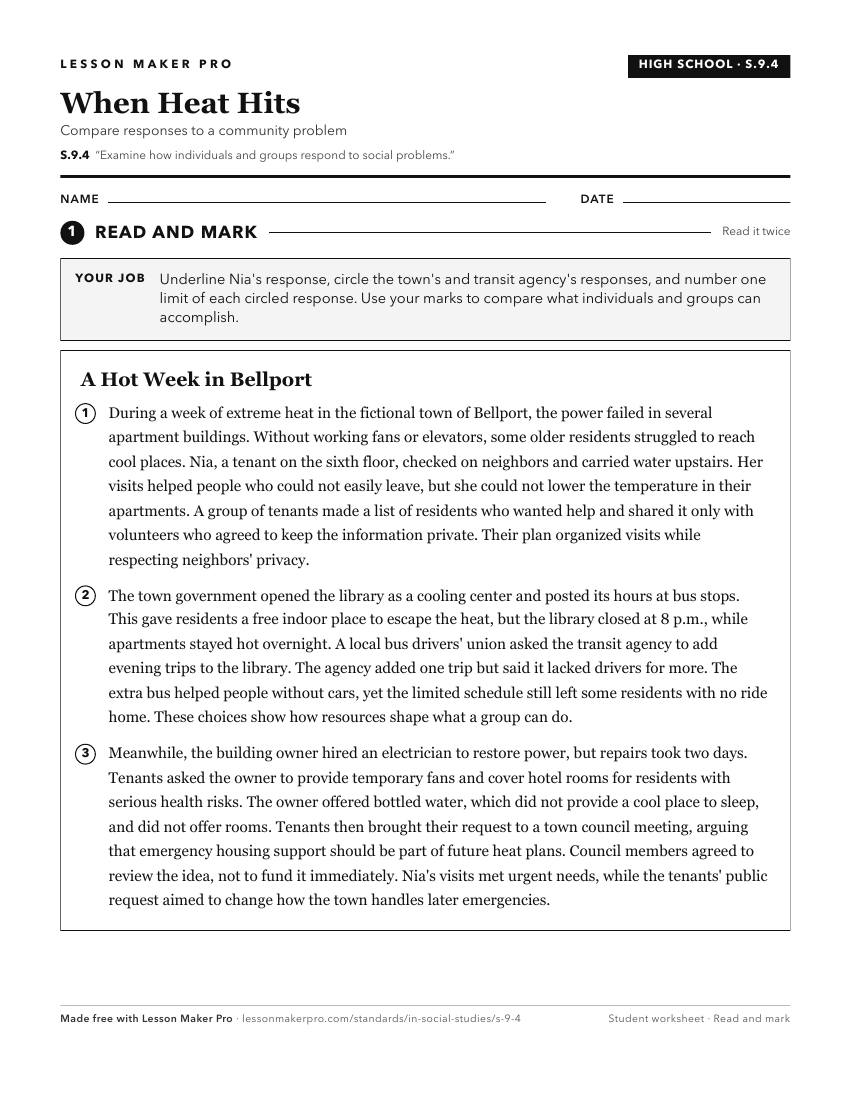
A ready-to-print activity worksheet aligned to S.9.4, with an answer key for the teacher on its own page. No account needed.
PDF, US Letter, prints cleanly in black and white.
Download the worksheetKeep exploring
Related Standards
Turn this exact standard into a lesson
Grade, subject, topic, and the complete standard are prefilled. Create one free, no account needed.
Also for this standard:Make a WorksheetMake a QuizMake a Sub Lesson