Indiana Social Studies S.4.1
The Standard
Define stratification as understood in sociology and describe its connection to ideology.
2026 Indiana Academic Standards: K-12 Social Studies
Teacher's field guide
What This Standard Means
What Students Need to Do
- Students identify how groups are ranked by money, decision-making power, and social respect. They explain how shared beliefs can make those rankings seem fair or call them into question.
What Mastery Looks Like
- Given profiles with pay and job duties, a student can rank the groups and explain their choices. They can show how a claim about hard work might justify the ranking without treating that claim as fact.
Common Misconceptions
- Students may think stratification is only about income, missing power and respect. They may think ideology means only political party views. They may also treat beliefs about who deserves more as facts rather than claims people can question.
How to Assess It
- Use this exit ticket: "Business owners set wages and earn more than workers. A poster says, 'Anyone who works hard can become an owner.' Explain the social ranking and how the poster's claim might support it."
Lesson moves
Ways to Teach It
Give pairs three role cards with wages, hiring power, and respect ratings; have them stack the cards by rank and explain their order.
Write 'Anyone can get ahead with hard work' on the board; ask how this belief might explain unequal pay and whose experience it overlooks.
Play claim sort with 'The rich earned it,' 'Workers deserve more,' and 'Managers earn more'; students mark justify, challenge, or describe.
Give students two job ads with listed pay and duties; ask what the differences suggest about rank and what belief might justify them.
Free download
Printable S.4.1 Worksheet
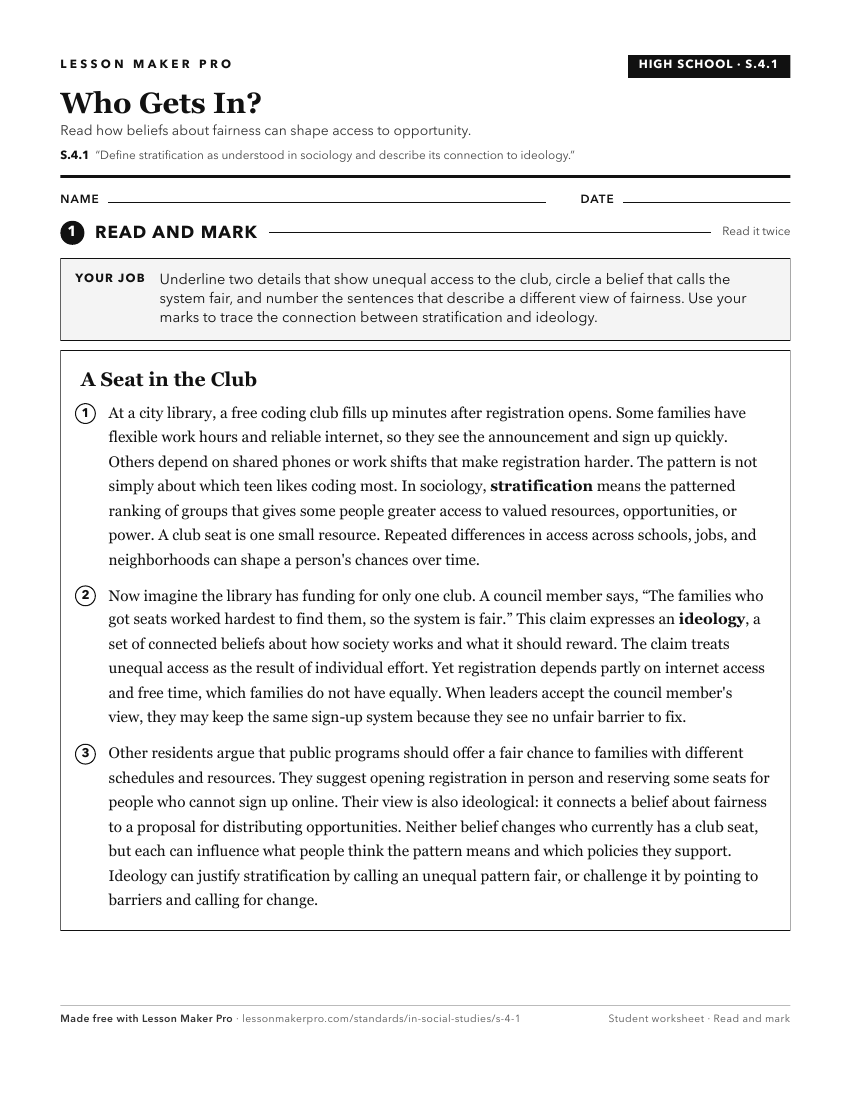
A ready-to-print activity worksheet aligned to S.4.1, with an answer key for the teacher on its own page. No account needed.
PDF, US Letter, prints cleanly in black and white.
Download the worksheetKeep exploring
Related Standards
- S.4.2
Compare the stratification of different societies along with its causes and effects.
- S.6.1
Define social groups as understood in sociology and distinguish groups from crowds and aggregates.
- S.4.3
Explore stratification from both functionalist and conflict perspectives.
- S.7.5
Examine one or more important social institutions (e.g., marriage, family, education, health care, judicial system, religion) and their functions for society; c...
Turn this exact standard into a lesson
Grade, subject, topic, and the complete standard are prefilled. Create one free, no account needed.
Also for this standard:Make a WorksheetMake a QuizMake a Sub Lesson