Indiana Social Studies IS.1.27
The Standard
Examine the impact of the Civil Rights Movement of the 1960s and 1970s in Indiana through the actions of leaders and groups that were active in the movement.
2026 Indiana Academic Standards: K-12 Social Studies · Post-War Indiana: 1945 to 1960
Teacher's field guide
What This Standard Means
What Students Need to Do
- Students study what Richard Hatcher and Indiana NAACP chapters did in the 1960s and 1970s. They explain how those actions affected political representation and efforts to end discrimination in Indiana.
What Mastery Looks Like
- A student can explain how Hatcher's 1967 election changed who led Gary. They can describe an Indiana NAACP chapter's goal and use a source to explain its effect.
Common Misconceptions
- Students may think the movement happened only in the South. They may also assume that electing a Black mayor ended discrimination in that city.
How to Assess It
- Exit ticket: How did Hatcher's 1967 election change Gary's leadership, and what did an Indiana NAACP chapter seek to change? Use one detail from each class source.
Lesson moves
Ways to Teach It
Give pairs fact cards about Hatcher's election and Indianapolis NAACP fair-housing work; have them place each on an Indiana map and label its impact.
Ask students to write: How did winning an election differ from campaigning for fair housing? Use one detail from each fact card.
Play a card match: pair Hatcher and the Indianapolis NAACP with their actions, then pair each action with an effect.
Print your town's fair-housing notice; ask students to circle one protection and connect it to an Indiana campaign against housing discrimination.
Free download
Printable IS.1.27 Worksheet
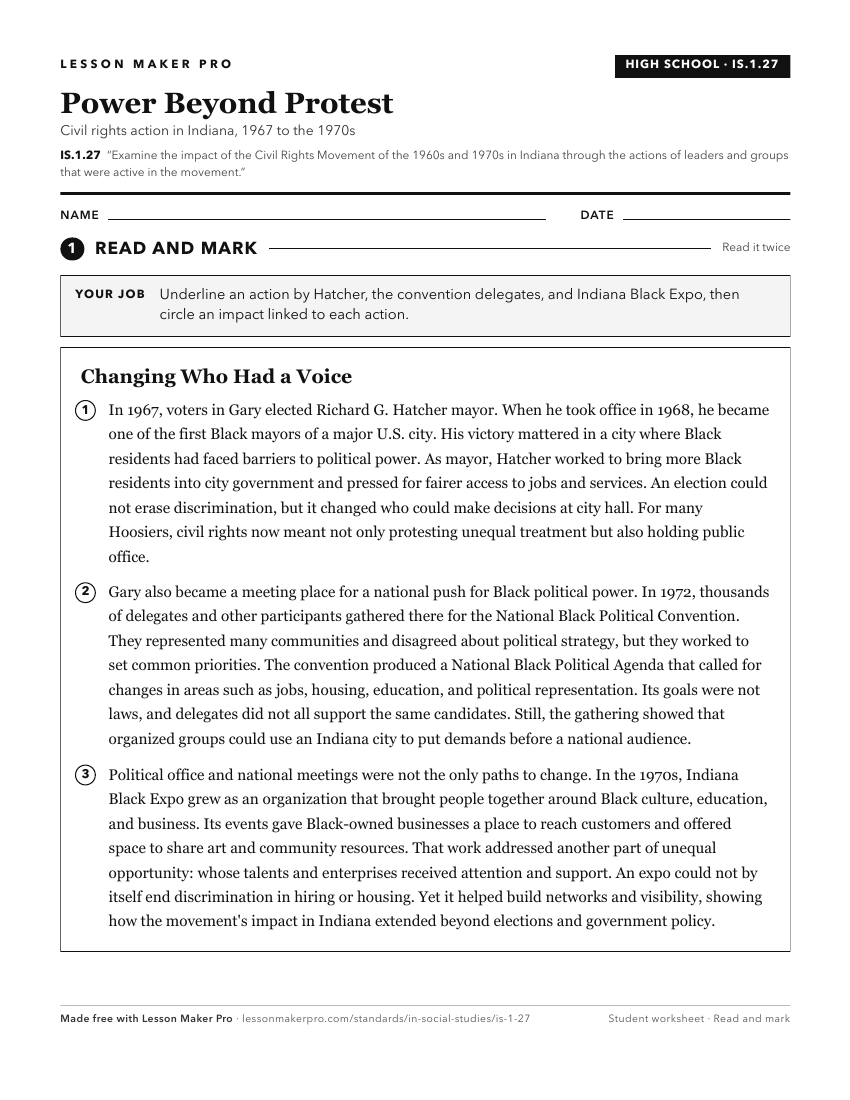
A ready-to-print activity worksheet aligned to IS.1.27, with an answer key for the teacher on its own page. No account needed.
PDF, US Letter, prints cleanly in black and white.
Download the worksheetKeep exploring
Related Standards
- IS.1.26
Summarize and assess the various actions which characterized the early struggle for civil rights and racial equality in Indiana.
- IS.1.17
Identify the social, political, economic, and cultural movements of the 1920s and analyze how these movements reflected and shaped Indiana society.
- IS.4.10
Summarize the impact of industrialization and immigration on social movements in Indiana from 1870-1900, including contributions of specific individuals and gro...
- IS.4.12
Identify and explain the significance of federal programs, policies, and legal rulings designed to improve the lives of Americans during the 1960s and the impac...
Turn this exact standard into a lesson
Grade, subject, topic, and the complete standard are prefilled. Create one free, no account needed.
Also for this standard:Make a WorksheetMake a QuizMake a Sub Lesson