Indiana Social Studies 8.H.24
The Standard
Compare and contrast the three plans for Reconstruction and evaluate the merits of each.
2026 Indiana Academic Standards: K-12 Social Studies
Teacher's field guide
What This Standard Means
What Students Need to Do
- Students compare Lincoln’s, Johnson’s, and Congress’s plans for bringing Southern states back into the Union. They explain how each plan treated former Confederates and the rights of formerly enslaved people, then weigh its strengths and limits.
What Mastery Looks Like
- A student can identify the 10 percent loyalty rule, Johnson’s pardons, and Congress’s military districts. They can explain why a plan might speed reunion but leave freedpeople with little protection.
Common Misconceptions
- Students may mix up Lincoln’s and Johnson’s plans because both aimed to bring states back quickly. Some assume ending slavery gave formerly enslaved people voting rights and protection right away.
How to Assess It
- On an exit ticket, ask: Which plan offered the strongest protection for formerly enslaved people, and what was one drawback? Name one provision from that plan and one from a different plan.
Lesson moves
Ways to Teach It
Give pairs nine policy cards, including the 10 percent rule, pardons, and military districts; have them sort the cards into three plan columns.
Ask students to write: Which plan best balanced reunion and freedpeople’s rights? Support your choice with two provisions and one drawback.
Read policy clues aloud; teams hold up Lincoln, Johnson, or Congress cards and explain each choice.
Compare a current voter registration form with an excerpt from the 1867 Reconstruction Acts; have students mark who could vote under each set of rules.
Free download
Printable 8.H.24 Worksheet
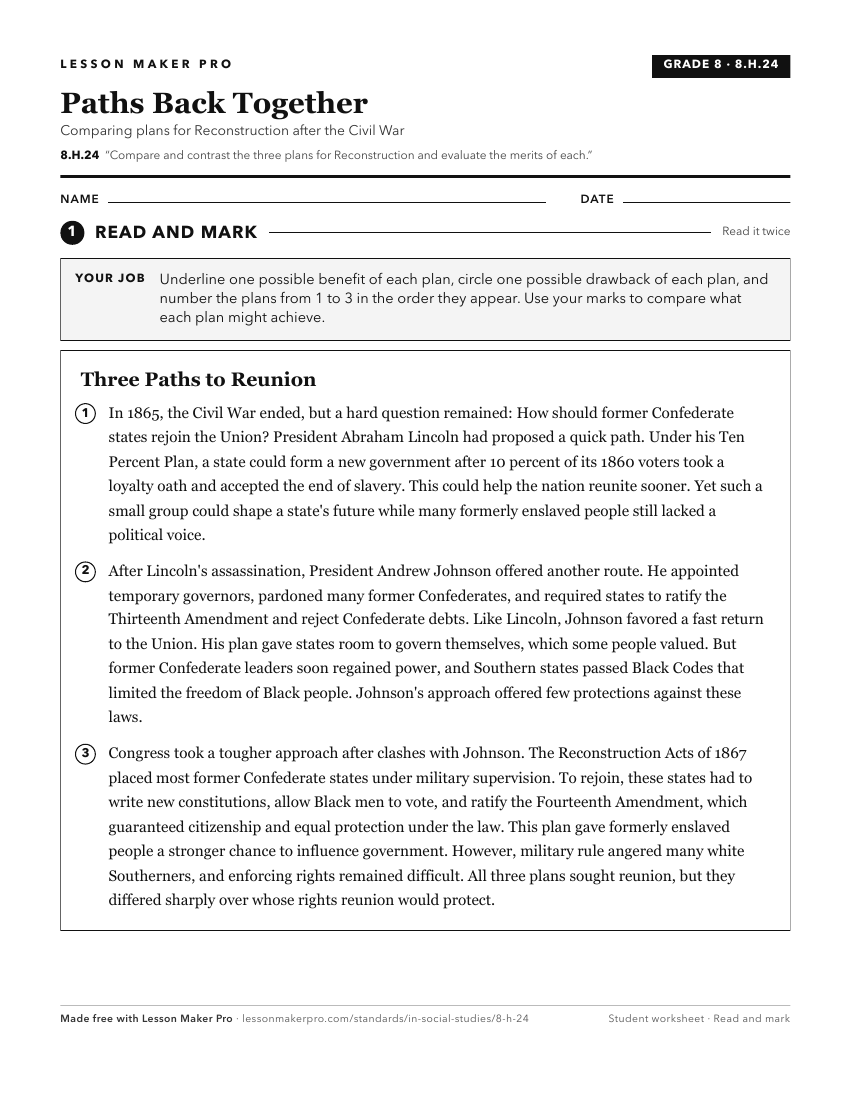
A ready-to-print activity worksheet aligned to 8.H.24, with an answer key for the teacher on its own page. No account needed.
PDF, US Letter, prints cleanly in black and white.
Download the worksheetKeep exploring
Related Standards
- USH.4.4
Analyze the strengths and weaknesses of the first and second New Deal, as well as the short- and long-term impacts.
- USH.1.2
Identify and summarize the causes and effects of slavery, the Civil War, abolitionism, social reform movements, and Reconstruction.
- USG.1.5
Compare and contrast unitary, confederate, and federal systems of government.
- 8.H.26
Using primary and secondary sources, analyze an issue confronting the United States from colonial times through the Reconstruction period.
Turn this exact standard into a lesson
Grade, subject, topic, and the complete standard are prefilled. Create one free, no account needed.
Also for this standard:Make a WorksheetMake a QuizMake a Sub Lesson