Indiana Social Studies 7.H.3
The Standard
Analyze how the control of trade routes and natural resources led to the rise of powerful empires in Sub-Saharan Africa.
2026 Indiana Academic Standards: K-12 Social Studies
Teacher's field guide
What This Standard Means
What Students Need to Do
- Students trace gold and salt from their sources through West African trade cities. They explain how rulers gained wealth by controlling trade and collecting taxes. They connect that wealth to larger armies and wider rule.
What Mastery Looks Like
- Given a map, a student can explain why a trade city such as Timbuktu grew wealthy. They use the map to show how control of a route could bring in tax money and help a ruler expand an empire.
Common Misconceptions
- Students may think rulers mined every resource they traded. They may also assume caravans passing nearby made an empire rich, even if its rulers did not control or tax the trade.
How to Assess It
- Use this exit ticket: “Mali controlled gold-producing areas and taxed caravans traveling through Timbuktu. Explain how each helped its rulers build power.”
Lesson moves
Ways to Teach It
On a blank West Africa map, mark the Taghaza salt mines, Bure goldfields, and Timbuktu, then draw a caravan route connecting them.
Ask pairs, “Why might a ruler guard a caravan route instead of mining gold?” Have them use one location on their maps.
Give pairs gold, salt, and tax tokens; caravans cross a marked border, and rulers collect tax tokens to hire guards.
Show a local toll road map and ask how toll payments compare with fees collected from caravans.
Free download
Printable 7.H.3 Worksheet
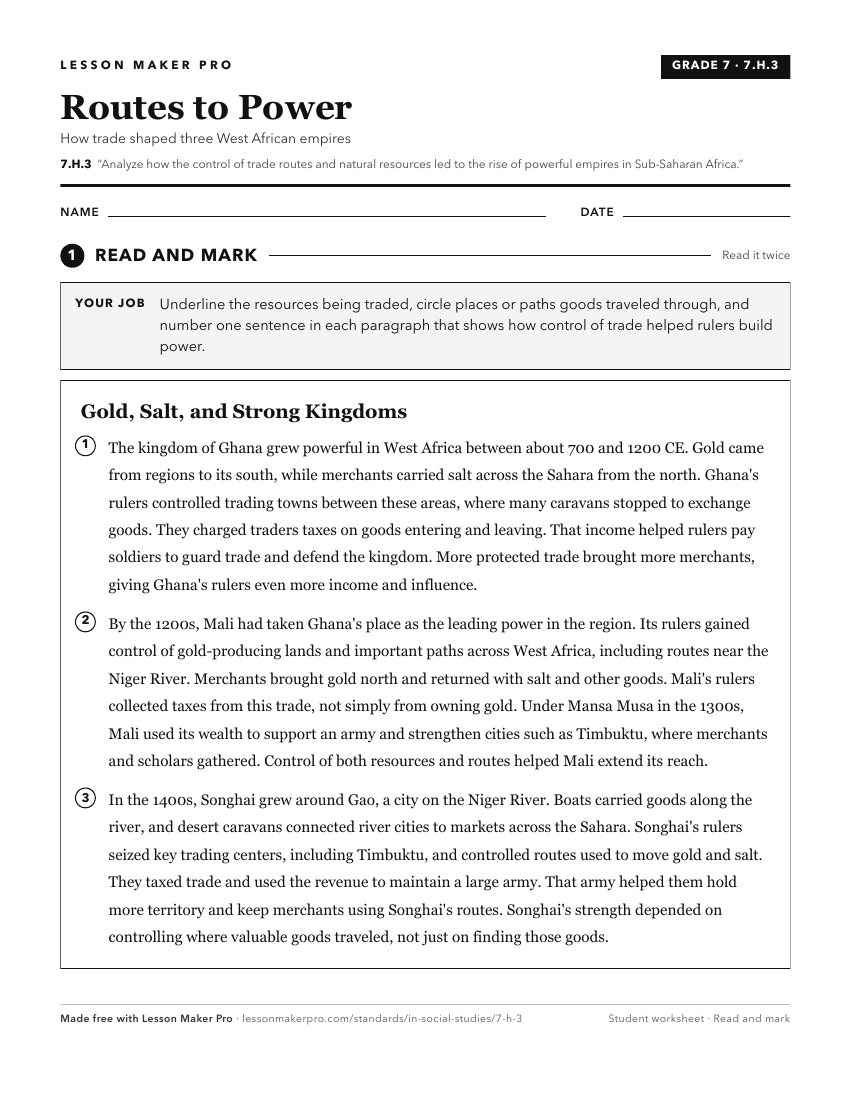
A ready-to-print activity worksheet aligned to 7.H.3, with an answer key for the teacher on its own page. No account needed.
PDF, US Letter, prints cleanly in black and white.
Download the worksheetKeep exploring
Related Standards
- 7.H.4
Analyze how the Silk Road created economic interdependence and cultural exchange between Asia, Europe, and Africa.
- 6.H.5
Identify trade routes and discuss their impact on the rise of cultural centers and trade cities in Europe and Mesoamerica.
- WH.3.1
Analyze the impact of trade networks, such as the Silk Road and Indian Ocean trade network.
- 7.H.5
Analyze the scientific, cultural, and economic influences of Muslim civilizations including trade routes and banking systems.
Turn this exact standard into a lesson
Grade, subject, topic, and the complete standard are prefilled. Create one free, no account needed.
Also for this standard:Make a WorksheetMake a QuizMake a Sub Lesson