Indiana Social Studies 5.E.4
The Standard
Define types of trade barriers and predict the effect of changes in supply and demand on price.
2026 Indiana Academic Standards: K-12 Social Studies
Teacher's field guide
What This Standard Means
What Students Need to Do
- Students tell the difference between an import tax, a limit on imports, and a trade ban. They predict whether prices rise or fall when supply or demand changes.
What Mastery Looks Like
- A student names a tariff, quota, or embargo from a short example. They predict a higher price after a smaller harvest and a lower price when fewer buyers want the same crop.
Common Misconceptions
- Students may confuse a quota with a tariff or think an embargo is just a higher tax. They may predict a lower price when fewer goods are available. Some confuse demand with the number of goods on shelves.
How to Assess It
- Exit ticket: A country limits imported oranges to 100 boxes. Name the trade barrier, then explain what happens to orange prices if the crop shrinks or more buyers want oranges.
Lesson moves
Ways to Teach It
Run a paper-apple market with play money; add a $2 tariff, a two-apple quota, then an embargo and count sales.
Ask: If a storm cuts the orange harvest but buyers still want the same number, what happens to price? Why?
Deal cards showing changes in supply or demand; teams point a price arrow up or down and explain their choice.
Use a grocery flyer to compare berry prices in two seasons, then ask how the harvest size might explain the difference.
Free download
Printable 5.E.4 Worksheet
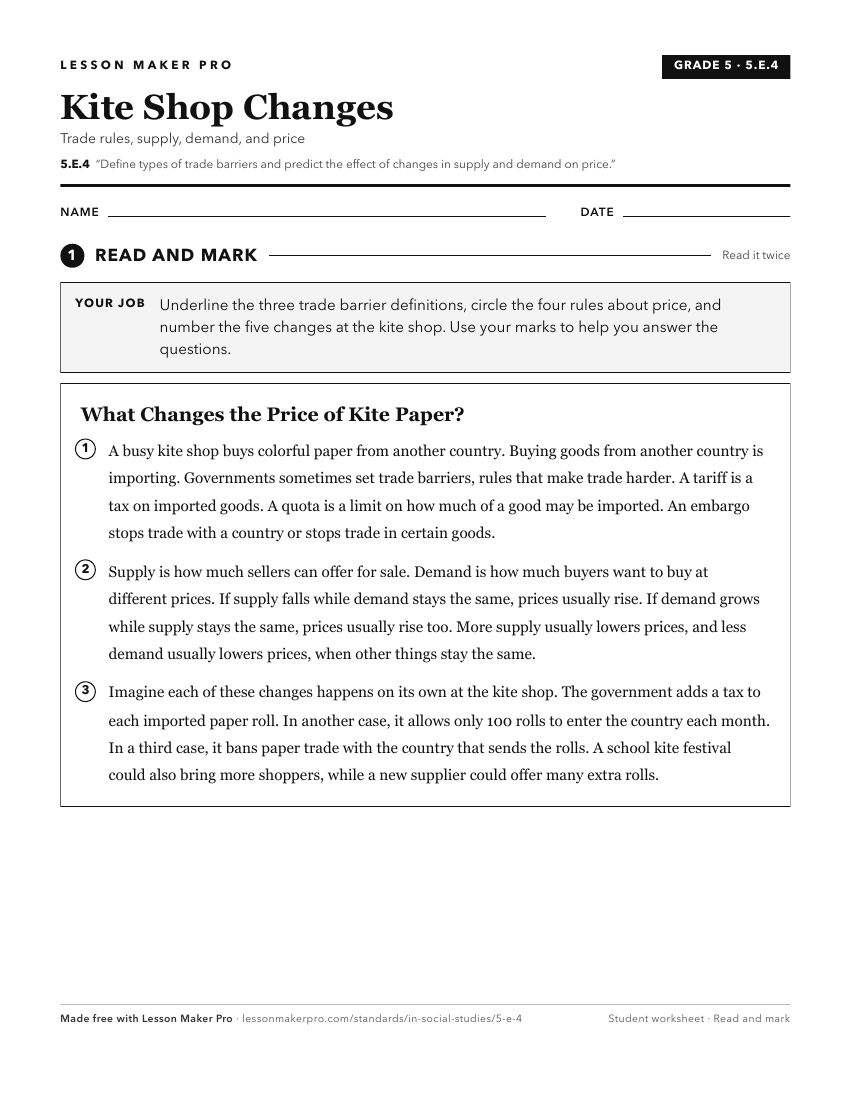
A ready-to-print activity worksheet aligned to 5.E.4, with an answer key for the teacher on its own page. No account needed.
PDF, US Letter, prints cleanly in black and white.
Download the worksheetKeep exploring
Related Standards
- GE.8.1
Define and explain the impact of trade barriers, such as quotas and tariffs, and analyze why countries erect them.
- GE.4.6
Evaluate the effects of trade agreements among nations and barriers to trade.
- E.2.4
Identify factors that cause changes in market supply and demand and how these changes affect price and quantity in a competitive market.
- 4.E.3
Explain that prices change as a result of changes in supply and demand for specific products.
Turn this exact standard into a lesson
Grade, subject, topic, and the complete standard are prefilled. Create one free, no account needed.
Also for this standard:Make a WorksheetMake a QuizMake a Sub Lesson