Indiana Science HS-ENV2-6
The Standard
Evaluate competing design solutions for developing, managing, and utilizing energy and mineral resources based on cost-benefit ratios. [Clarification Statement: Emphasis is on the conservation, recycling, and reuse of resources (such as minerals and metals) where possible, and on minimizing impacts where it is not. Examples include developing best practices for agricultural soil use, mining (for coal, tar sands, and oil shales), and pumping (for petroleum and natural gas). Science knowledge indicates what can happen in natural systems—not what should happen. Discuss how environmental costs can be left out of cost-benefit analyses.]
Indiana Academic Standards for Science (2023) · Flow of Matter and Energy
Teacher's field guide
What This Standard Means
What Students Need to Do
- Students compare ways to get a resource, such as mining new copper or recycling old wiring. They calculate how much copper each option provides per dollar and check for environmental costs missing from the price.
What Mastery Looks Like
- Given a cost table, students calculate copper per dollar for both options. They add an omitted cleanup cost, compare the new ratios, and explain their choice.
Common Misconceptions
- Students may pick the lower price without checking how much copper each option produces. They may ignore water cleanup because it is missing from the price, or assume scientific data alone decides which trade-off is fair.
How to Assess It
- Exit ticket: Mining produces 100 kg of copper for $200, but the price omits $150 in water cleanup. Recycling produces 80 kg for $240. Calculate kilograms per dollar before and after adding the cleanup cost, then defend a choice.
Lesson moves
Ways to Teach It
Have pairs sort paper ore and scrap tokens into copper and waste, then count usable copper and estimate waste disposal costs.
Ask: What can water tests tell us about mine runoff, and who decides whether cheaper copper is worth the harm?
Give teams mining and recycling cost cards; have them calculate kilograms per dollar, then reveal a hidden cleanup cost and recalculate.
Bring a discarded phone and copper wire scrap; have students identify metals that could be recovered instead of mined.
Free download
Printable HS-ENV2-6 Worksheet
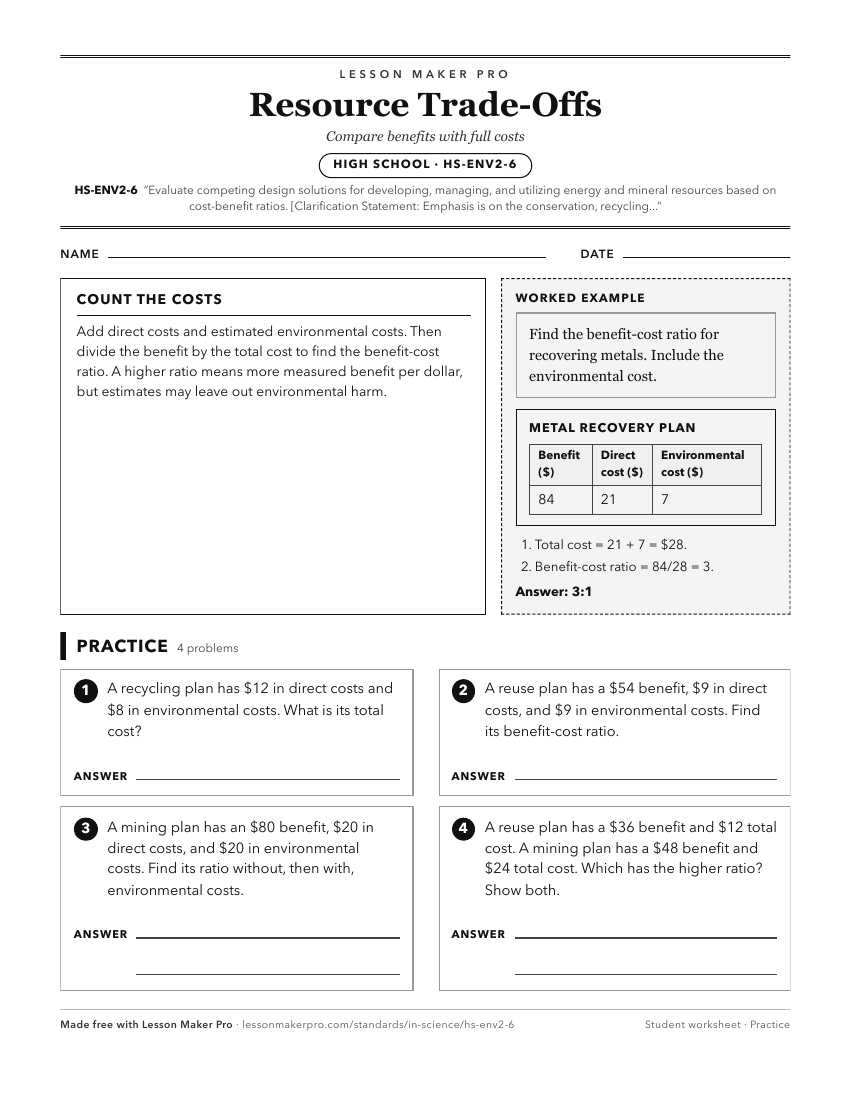
A ready-to-print activity worksheet aligned to HS-ENV2-6, with an answer key for the teacher on its own page. No account needed.
PDF, US Letter, prints cleanly in black and white.
Download the worksheetKeep exploring
Related Standards
Turn this exact standard into a lesson
Grade, subject, topic, and the complete standard are prefilled. Create one free, no account needed.
Also for this standard:Make a WorksheetMake a QuizMake a Sub Lesson