Indiana Science HS-ENV5-3
The Standard
Design, evaluate and refine a technological solution that reduces impacts of human activities on natural systems. [Clarification Statement: Examples of data on the impacts of human activities could include the quantities and types of pollutants released, changes to biomass and species diversity, or areal changes in land surface use (such as for urban development, agriculture and livestock, or surface mining). Examples for limiting future impacts could range from local efforts (such as reducing, reusing, and recycling resources, including water conservation efforts) to large-scale geoengineering design solutions (such as altering global temperatures by making large changes to the atmosphere or ocean).]
Indiana Academic Standards for Science (2023) · The Effect of Human Population and Activities on the Environment
Teacher's field guide
What This Standard Means
What Students Need to Do
- Students design a way to reduce sediment washing from developed areas into streams. They compare results with untreated runoff, consider limits such as cost and flow rate, and change the design based on evidence.
What Mastery Looks Like
- A student measures cloudiness before and after filtering, along with the volume of water treated. They use those results to explain a design change and retest it under the same conditions.
Common Misconceptions
- Students may assume clear water is free of pollutants, even though dissolved chemicals can pass through a sand filter. They may compare filters using different starting samples or ignore how much water each design treats.
How to Assess It
- Exit ticket: A filter reduces cloudiness from 20 to 8 units but treats only half the runoff. Propose one design change and name two measurements you would use to test it.
Lesson moves
Ways to Teach It
Build a bottle filter with gravel and sand, count grid lines visible through the filtered water, change one layer, and retest.
Ask, “If two filters make runoff equally clear but one treats twice as much water, which should a school use? Why?”
Give pairs runoff test cards with cloudiness, volume, and cost; have them rank three filter designs and defend one revision.
Walk the school grounds, trace where rain would carry soil toward a drain, and sketch a spot for a planted runoff strip.
Free download
Printable HS-ENV5-3 Worksheet
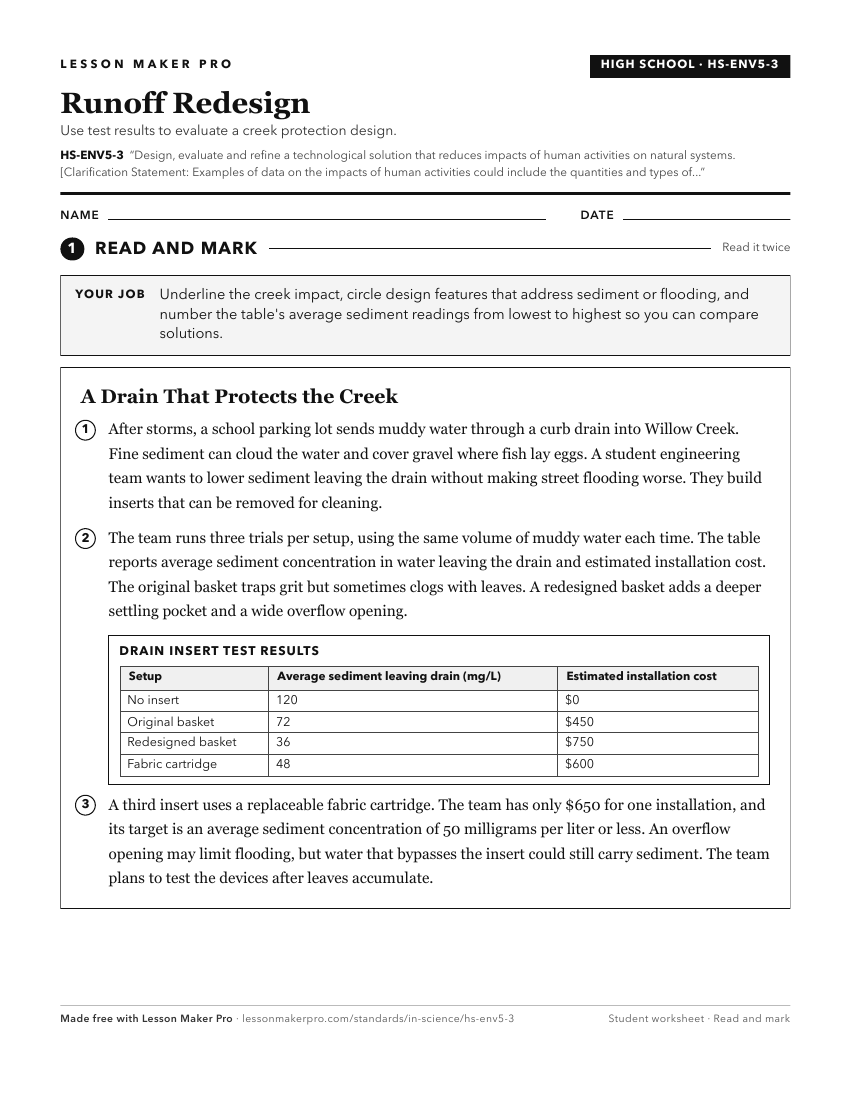
A ready-to-print activity worksheet aligned to HS-ENV5-3, with an answer key for the teacher on its own page. No account needed.
PDF, US Letter, prints cleanly in black and white.
Download the worksheetTurn this exact standard into a lesson
Grade, subject, topic, and the complete standard are prefilled. Create one free, no account needed.
Also for this standard:Make a WorksheetMake a QuizMake a Sub Lesson