Indiana Science HS-AP8-2
The Standard
Conduct an investigation to learn about the ABO blood type. Discuss how the surface-antigens and plasma antibodies allow and/or disallow for certain blood transfusions.
Indiana Academic Standards for Science (2023) · Transport, Blood and the Cardiovascular System
Teacher's field guide
What This Standard Means
What Students Need to Do
- Students run a simulated blood-typing test with anti-A and anti-B reagents to identify a sample’s ABO type. They compare donor red cell antigens with recipient plasma antibodies to decide whether a red cell transfusion would cause clumping.
What Mastery Looks Like
- A student identifies type A when a sample reacts with anti-A but not anti-B reagent. They explain why type A plasma would react with type B red cells but not type O red cells.
Common Misconceptions
- Students may think type A blood contains anti-A antibodies, rather than A antigens on its red cells. They may call type O a universal recipient or check donor antibodies instead of recipient antibodies.
How to Assess It
- Exit ticket: A patient has type A blood. Can they receive type B or type O red blood cells? Explain each answer using antigens and antibodies.
Lesson moves
Ways to Teach It
Give pairs paper red cells marked A, B, both, or neither and antibody cards; have them model which donor cells clump in recipient plasma.
Ask students to write why a type A patient can receive type O red cells but not type B red cells.
Hand out donor and recipient cards for all four ABO types; teams sort pairs into safe or unsafe red cell transfusions and explain their choices.
Show a mock hospital label for type O red cells beside a type A patient chart; ask whether ABO matching permits the transfusion.
Free download
Printable HS-AP8-2 Worksheet
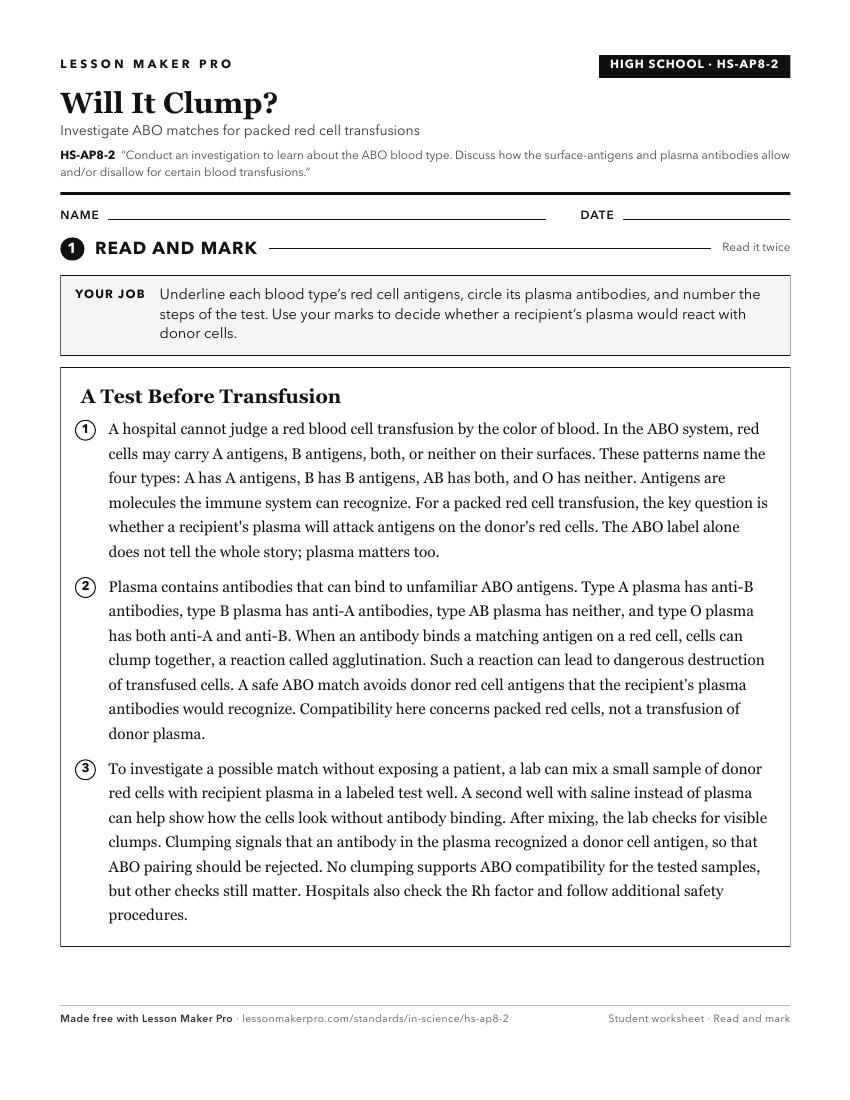
A ready-to-print activity worksheet aligned to HS-AP8-2, with an answer key for the teacher on its own page. No account needed.
PDF, US Letter, prints cleanly in black and white.
Download the worksheetKeep exploring
Related Standards
- HS-AP10-1
Identify and locate major and accessory organs of the digestive system and investigate their physiological functions.
- HS-AP8-3
Investigate the primary structures of the cardiovascular system and explore their functional importance to maintaining homeostasis.
- HS-AP8-1
Perform an investigation to identify the composition and function of whole blood components, and the role they play in maintaining homeostasis.
Turn this exact standard into a lesson
Grade, subject, topic, and the complete standard are prefilled. Create one free, no account needed.
Also for this standard:Make a WorksheetMake a QuizMake a Sub Lesson