Indiana ELA 9-10.RC.13
The Standard
- 9-10.RC
- Students analyze the author's technique, structure, main ideas, purpose, and perspective in grade-level fiction and nonfiction text, using textual evidence to support analysis.
Determine the meaning of words and phrases as they are used in a nonfiction text, including figurative, connotative, denotative, and technical meanings; evaluate the effectiveness of specific word choices on meaning and tone in multiple and varied contexts.
Indiana Academic Standards for English/Language Arts (2023)
Teacher's field guide
What This Standard Means
What Students Need to Do
- Students work out what words mean in a nonfiction passage, including literal, implied, figurative, and technical meanings. They compare word choices across texts and explain how those choices shape meaning and tone.
What Mastery Looks Like
- A student can explain why “bakes” makes city heat sound harsher than “warms.” They can explain “heat island” in a science report and use words from the report to judge whether the term helps readers understand the issue.
Common Misconceptions
- Students may picture a literal island when they read “heat island” or think “bakes” refers to cooking. They may give a dictionary definition without checking the sentence, or call a word “strong” without explaining its effect.
How to Assess It
- Put this sentence on an exit ticket: “City pavement bakes in the afternoon sun, creating heat islands.” Ask students what each marked phrase means in context and how replacing “bakes” with “warms” would change the tone.
Lesson moves
Ways to Teach It
Give pairs a city heat fact sheet and opinion paragraph; have them cut out shared terms and sort them by meaning in each text.
Give students a climate report and an editorial, then ask: How does “heat island” affect each writer’s tone? Cite a phrase from each.
Play a word-swap round: replace “bakes” with “warms” in a city heat paragraph, then defend which better fits the writer’s purpose.
Read a local heat advisory and a weather app alert; mark each text’s strongest warning word and explain which would prompt you to act.
Free download
Printable 9-10.RC.13 Worksheet
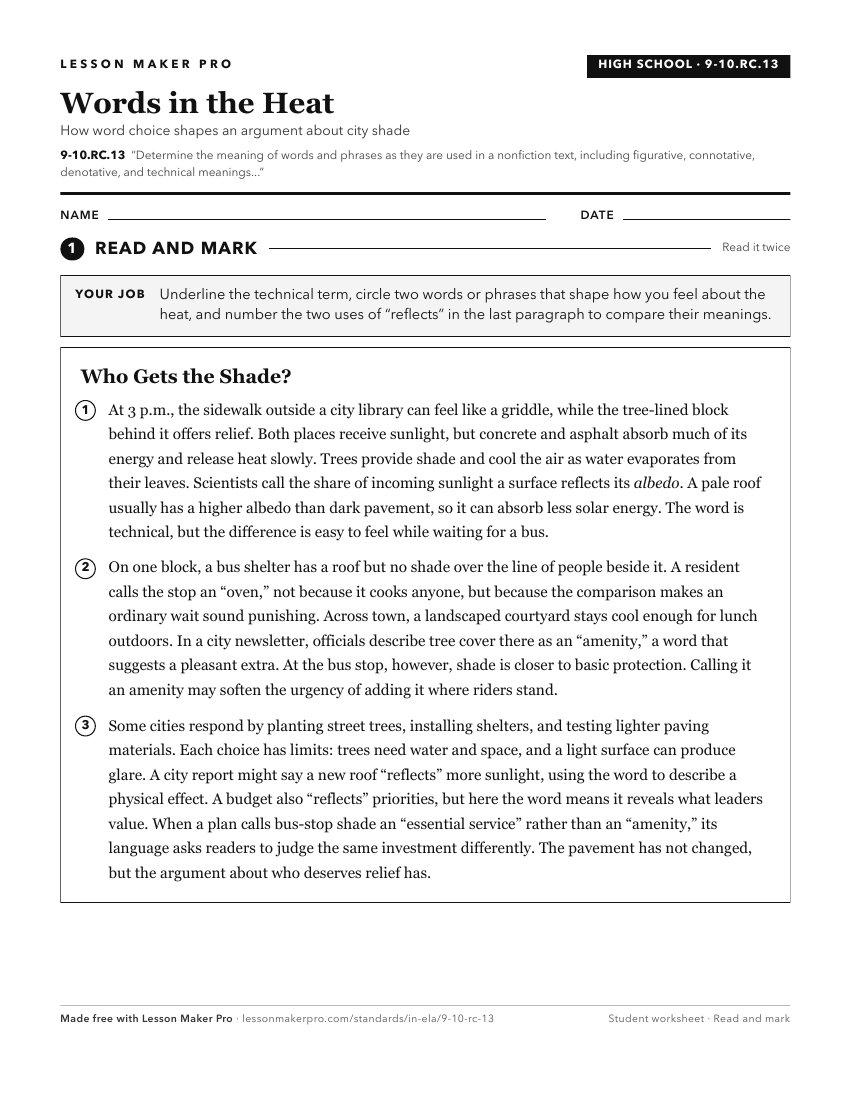
A ready-to-print activity worksheet aligned to 9-10.RC.13, with an answer key for the teacher on its own page. No account needed.
PDF, US Letter, prints cleanly in black and white.
Download the worksheetKeep exploring
Related Standards
- 11-12.RC.14
Determine the meaning of words and phrases as they are used in a nonfiction text, including figurative, connotative, denotative, and technical meanings; evaluat...
- 9-10.RC.12
Analyze the meaning of words and phrases as they are used in works of literature, including figurative, connotative, and denotative meanings; analyze the impact...
- 4.RC.13
Determine how words and phrases provide meaning to works of literature, including figurative language (e.g., similes, metaphors, or hyperbole).
Turn this exact standard into a lesson
Grade, subject, topic, and the complete standard are prefilled. Create one free, no account needed.
Also for this standard:Make a WorksheetMake a QuizMake a Sub Lesson