Idaho Social Studies 9-12.WC.20
The Standard
Identify key figures of the Byzantine Empire, including but not limited to Justinian and Theodora, and explain their contributions to its history and culture.
Idaho Content Standards: K-12 Social Studies · The Middle Ages (c. 330 AD – 1450 AD)
Teacher's field guide
What This Standard Means
What Students Need to Do
- Students identify Justinian, Theodora, and Belisarius. They explain what each person did and how those actions affected the Byzantine Empire.
What Mastery Looks Like
- A student can connect Justinian to the law code and the rebuilding of Hagia Sophia. They can explain Theodora’s role during the Nika revolt and Belisarius’s role in military campaigns.
Common Misconceptions
- Students may credit Justinian with personally leading Belisarius’s campaigns. They may think Theodora had no political influence or that Justinian founded Constantinople.
How to Assess It
- Exit ticket: Name one action by Justinian and one by Theodora. Explain how each action affected the empire.
Lesson moves
Ways to Teach It
Give pairs a blank Mediterranean map and campaign cards; have them mark where Belisarius fought in North Africa and Italy.
Ask students: Why might Theodora’s advice during the Nika revolt have changed Justinian’s decision to stay in Constantinople?
Play a card match with leader names, actions, and effects; ask students to explain each set they make.
Show a current photo of Hagia Sophia and ask students what its continued use tells us about Justinian’s building project.
Free download
Printable 9-12.WC.20 Worksheet
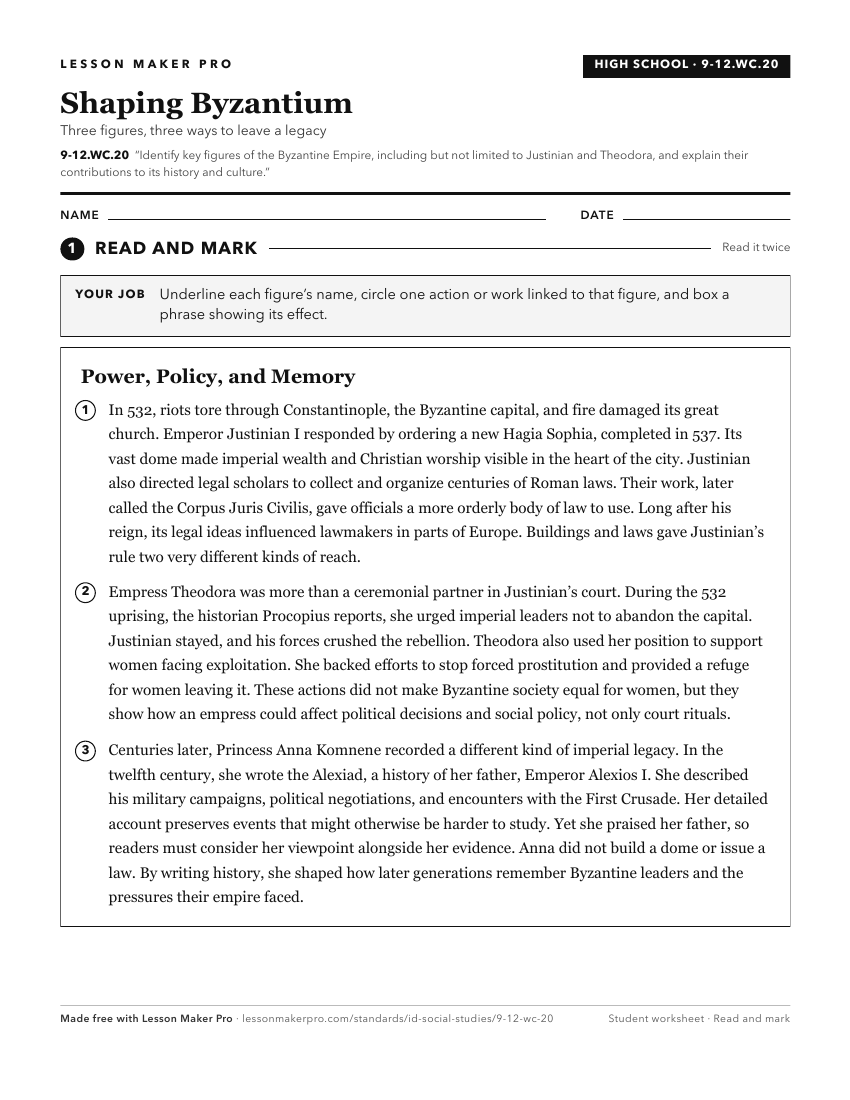
A ready-to-print activity worksheet aligned to 9-12.WC.20, with an answer key for the teacher on its own page. No account needed.
PDF, US Letter, prints cleanly in black and white.
Download the worksheetKeep exploring
Related Standards
- 9-12.WC.23
Identify key figures, artistic and intellectual achievements of the medieval period in Western Europe, (e.g. Thomas Aquinas, Hildegard von Bingen, Dante, Gothic...
- 6-12.US1.12
Explain the contributions of key historical figures during the Revolutionary Period, including, but not limited to:
- 9-12.WC.15
Analyze the causes and consequences of Diocletian’s reforms and Constantine the Great's establishment of "New Rome" (Constantinople) and the recognition of Chri...
- 9-12.WC.36
Analyze the causes and consequences of the fall of Constantinople.
Turn this exact standard into a lesson
Grade, subject, topic, and the complete standard are prefilled. Create one free, no account needed.
Also for this standard:Make a WorksheetMake a QuizMake a Sub Lesson