Idaho Social Studies 9-12.WC.19
The Standard
Analyze the impact of Christianity on Classical culture and society and the formation of the Catholic Church.
Idaho Content Standards: K-12 Social Studies · Ancient Rome (c. 500 BC – 500 AD)
Teacher's field guide
What This Standard Means
What Students Need to Do
- Students trace Christianity from a sometimes persecuted faith to one backed by Roman emperors. They explain how it changed public life and how bishops and councils helped shape the Catholic Church.
What Mastery Looks Like
- A student can explain why the Edict of Milan did not make Christianity Rome's official religion. They can use the Council of Nicaea and later imperial support to show how church beliefs and leadership became more organized.
Common Misconceptions
- Students often think the Edict of Milan made Christianity the official religion, or that Roman religious practices disappeared overnight. Some think one emperor founded the Catholic Church.
How to Assess It
- Give students three dated cards: 313 legal toleration, 325 Council of Nicaea, and 380 Nicene Christianity made official. Ask them to explain one change in Roman public life and one step toward shared church beliefs.
Lesson moves
Ways to Teach It
Give groups event cards for 313, 325, and 380; have them build a timeline with one effect on Roman society per card.
Ask, 'Did Christianity erase Roman culture?' Have students compare Roman civic and early church basilica plans, then name one change and one survival.
Play a matching game: pair the three dated event cards with legal toleration, a council of bishops, and an official state religion.
Print a current Catholic diocese map; have students locate their region and compare its bishop-led structure with a diagram of late Roman churches.
Free download
Printable 9-12.WC.19 Worksheet
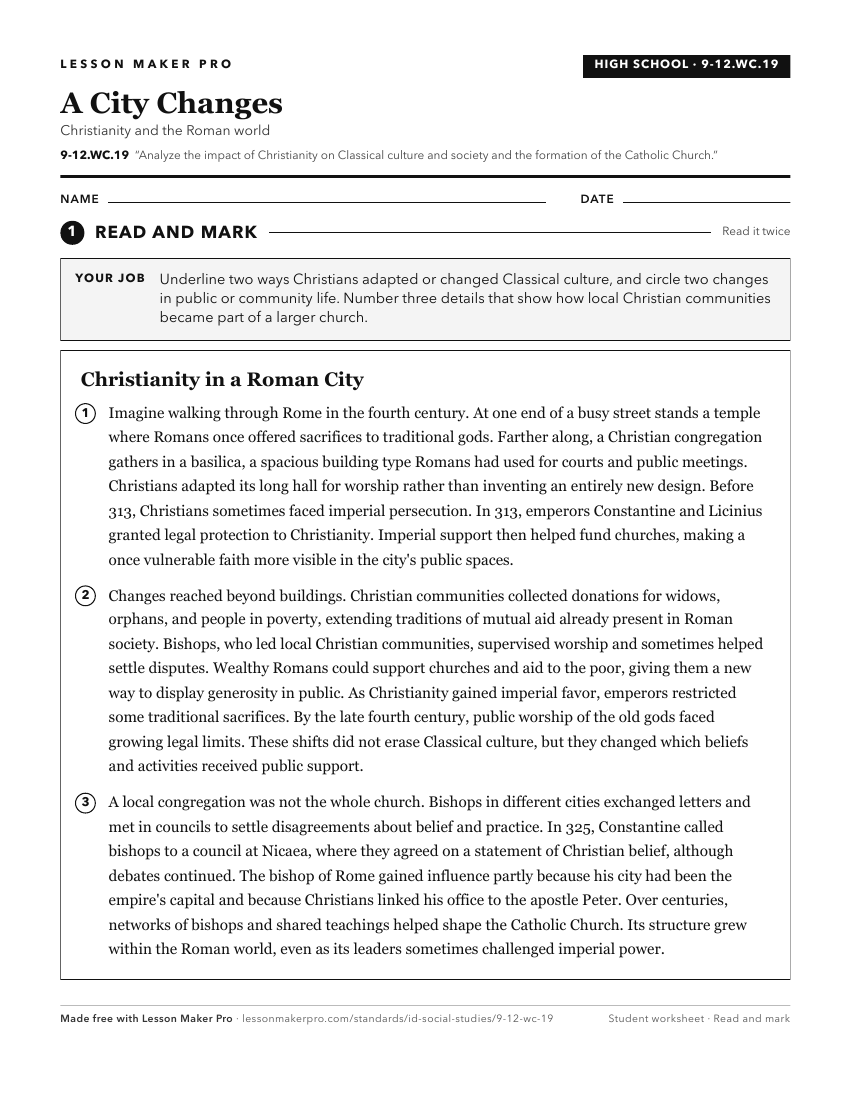
A ready-to-print activity worksheet aligned to 9-12.WC.19, with an answer key for the teacher on its own page. No account needed.
PDF, US Letter, prints cleanly in black and white.
Download the worksheetKeep exploring
Related Standards
- 9-12.WC.18
Analyze the Hebrew and Classical origins and central features of early Christianity, including key people, texts, events, and major teachings.
- 9-12.WC.16
Analyze the Hebrew tradition and its influence on Western Civilization.
- 9-12.WC.15
Analyze the causes and consequences of Diocletian’s reforms and Constantine the Great's establishment of "New Rome" (Constantinople) and the recognition of Chri...
- 6-9.WH.1.8
Analyze different social classes and their impact on societies and civilizations throughout the world, including Ancient, Middle Age, Early-Modern, and Modern.
Turn this exact standard into a lesson
Grade, subject, topic, and the complete standard are prefilled. Create one free, no account needed.
Also for this standard:Make a WorksheetMake a QuizMake a Sub Lesson