Idaho Social Studies 9-12.US2.9
The Standard
Describe the impacts of economic, demographic, social, and cultural changes during the 1920s.
Idaho Content Standards: K-12 Social Studies · The Roaring 20s, 1920-1929
Teacher's field guide
What This Standard Means
What Students Need to Do
- Students explain how buying on credit, migration, immigration limits, changing roles for women, and new entertainment changed life in the 1920s. They identify who benefited and who faced barriers.
What Mastery Looks Like
- A student can explain how credit helped families buy radios but also put them in debt. They can connect the Great Migration to growing Black communities and the Harlem Renaissance, while explaining why many farmers did not share in the boom.
Common Misconceptions
- Students may assume everyone was prosperous, overlooking farm debt and low wages. They may confuse the Great Migration with immigration from abroad or assume new freedoms for some women meant equal rights for all women.
How to Assess It
- Exit ticket: For consumer credit, the Great Migration, women's changing roles, and radio, name one effect of each and a group that felt it.
Lesson moves
Ways to Teach It
Give pairs a 1920s catalog page and a mock installment plan; have them calculate the full cost of buying a radio on credit.
Show a Great Migration map and a Harlem Renaissance poem; ask how moving north changed opportunities and cultural life for Black Americans.
Have teams sort cards labeled farm prices, immigration quotas, jazz, radio, and consumer credit by change type, then explain one effect of each.
Compare a 1920s radio ad with a current phone ad; ask how each persuades people to buy.
Free download
Printable 9-12.US2.9 Worksheet
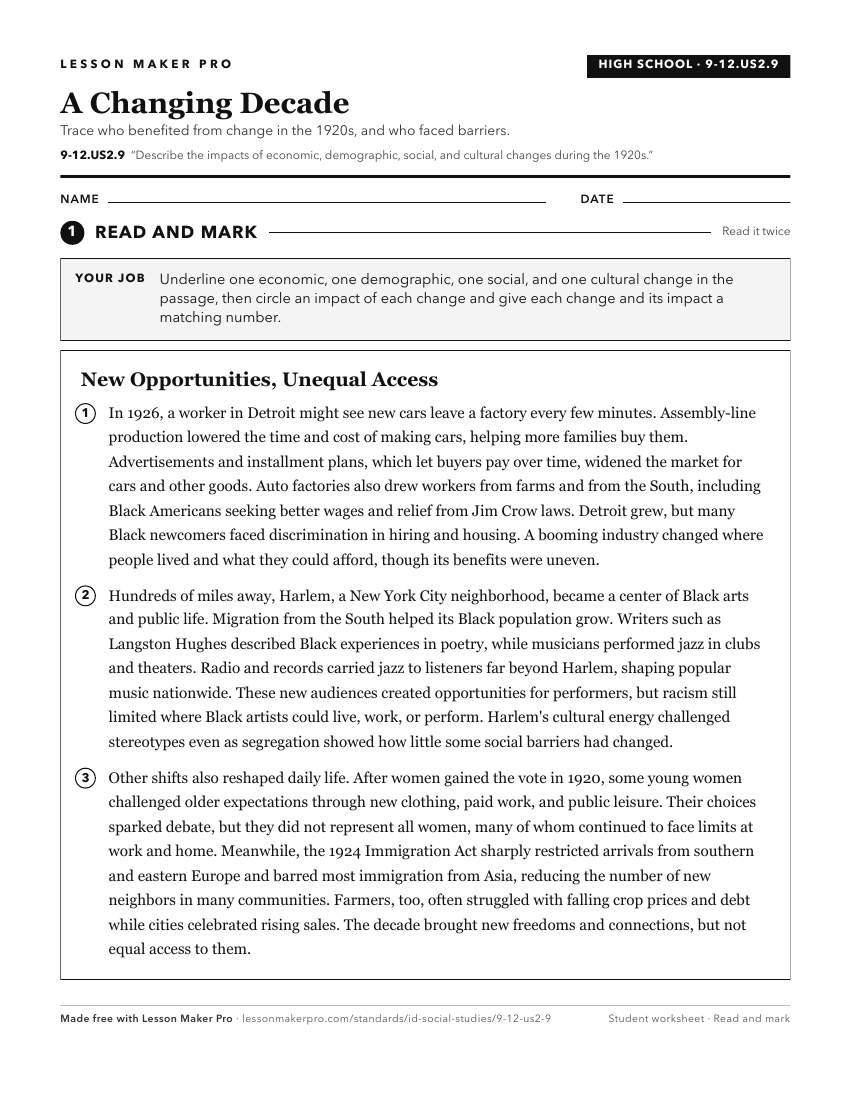
A ready-to-print activity worksheet aligned to 9-12.US2.9, with an answer key for the teacher on its own page. No account needed.
PDF, US Letter, prints cleanly in black and white.
Download the worksheetKeep exploring
Related Standards
- 9-12.US2.27
Describe the causes and effects on American society and culture of widespread growing affluence in the post-war period, as well as groups and geographic areas t...
- 9-12.US2.41
Analyze the effects of globalization, free trade agreements, financial market deregulation, and the computer revolution on the economic boom of the 1990s.
- 9-12.US2.12
Analyze the impact of the Great Depression and the Dust Bowl on farmers, businesses, workers, and racial and ethnic minorities.
- 9-12.US2.22
Evaluate the impact of postwar demobilization and the GI Bill on economic growth, culture, and lifestyle.
Turn this exact standard into a lesson
Grade, subject, topic, and the complete standard are prefilled. Create one free, no account needed.
Also for this standard:Make a WorksheetMake a QuizMake a Sub Lesson