Idaho Social Studies 9-12.US2.27
The Standard
Describe the causes and effects on American society and culture of widespread growing affluence in the post-war period, as well as groups and geographic areas that were largely left out of it.
Idaho Content Standards: K-12 Social Studies · Affluence, Cold War, and Social Revolutions 1945-1974
Teacher's field guide
What This Standard Means
What Students Need to Do
- Students explain how wartime production, rising wages, and federal housing programs helped more families buy homes and goods after World War II. They describe changes in daily life and identify people and places that shared less in the boom.
What Mastery Looks Like
- A student can connect federally backed mortgages to suburban growth and car ownership. They can also explain how discriminatory lending limited Black homebuyers and how the loss of coal jobs hurt many Appalachian families.
Common Misconceptions
- Students may assume everyone could get a suburban mortgage because the GI Bill helped veterans. They may also mistake national income growth for proof that every region grew wealthier.
How to Assess It
- Exit ticket: Name one cause of the postwar boom and one change in daily life. Explain one barrier faced by Black homebuyers and one reason many Appalachian families had fewer opportunities.
Lesson moves
Ways to Teach It
Give pairs a 1950s suburban housing ad and a redlining map; have them mark where mortgage access differed.
Ask students to write how two veterans might use the GI Bill differently if a bank denied one a mortgage.
Have students sort cards labeled factory wages, television sales, redlining, and coal mine layoffs into causes, effects, and barriers.
Compare a 1960 county income map with a current one; locate Appalachia and note whether the income gap persists.
Free download
Printable 9-12.US2.27 Worksheet
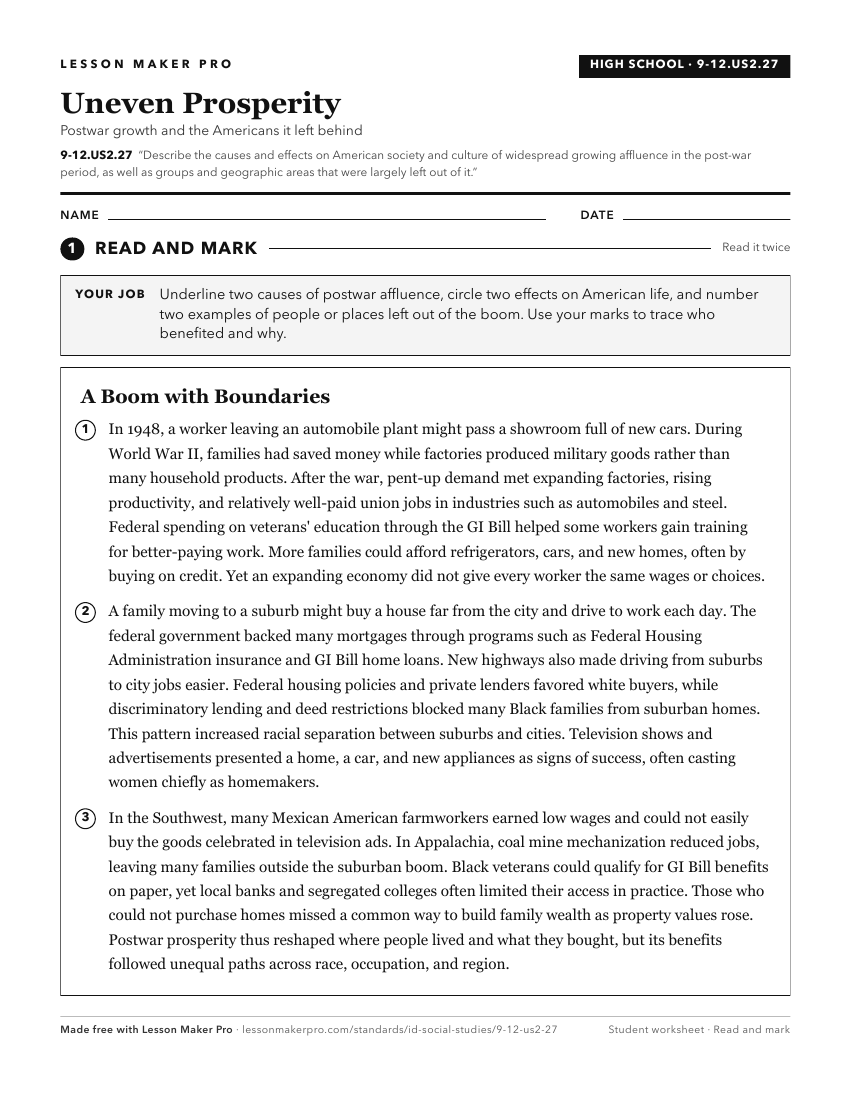
A ready-to-print activity worksheet aligned to 9-12.US2.27, with an answer key for the teacher on its own page. No account needed.
PDF, US Letter, prints cleanly in black and white.
Download the worksheetKeep exploring
Related Standards
- 9-12.US2.9
Describe the impacts of economic, demographic, social, and cultural changes during the 1920s.
- 9-12.US2.41
Analyze the effects of globalization, free trade agreements, financial market deregulation, and the computer revolution on the economic boom of the 1990s.
- 9-12.US2.42
Describe some effects of key changes on United States society and labor. These may include:
- 9-12.US2.22
Evaluate the impact of postwar demobilization and the GI Bill on economic growth, culture, and lifestyle.
Turn this exact standard into a lesson
Grade, subject, topic, and the complete standard are prefilled. Create one free, no account needed.
Also for this standard:Make a WorksheetMake a QuizMake a Sub Lesson