Idaho Social Studies 9-12.GOV.43
The Standard
Explain the functions, powers, interactions, and dynamic relationships among federal, state, local, and tribal governments including the roles of the 10th Amendment, McCulloch vs Maryland, Gibbons vs. Ogden, and evolution from dual federalism to cooperative federalism.
Idaho Content Standards: K-12 Social Studies · Function And Structure of the U.S. Political System
Teacher's field guide
What This Standard Means
What Students Need to Do
- Students explain what federal, state, local, and tribal governments do and where their authority overlaps. They use the 10th Amendment and two court rulings to explain limits on state power. They compare separate government roles with shared programs.
What Mastery Looks Like
- A student can explain that the 10th Amendment reserves some powers to states or the people, while tribal nations have their own authority. They can use McCulloch to explain why a state cannot tax a federal bank, and Gibbons to explain federal authority over interstate commerce. They can show how federal, state, local, and tribal governments work together on a shared project.
Common Misconceptions
- Students may think the 10th Amendment lets states block any federal action. They may treat tribal nations like cities, though cities get authority from states and tribal nations have their own sovereignty. They may think shared programs mean states simply follow federal orders.
How to Assess It
- Exit ticket: A city and tribal nation plan a bridge with state and federal aid. Label each government's role, explain why this is cooperative rather than dual federalism, state what the 10th Amendment reserves, and match McCulloch and Gibbons to a taxed federal bank and interstate boat travel.
Lesson moves
Ways to Teach It
Give groups federal, state, city, and tribal cards; have them map overlapping roles in funding, permitting, and maintaining a road across tribal land.
Read McCulloch and Gibbons case cards; ask which federal power each ruling protected and what state action it blocked.
Play four corners with city trash pickup, state teacher licenses, interstate shipping, and tribal fishing rules; students choose a government and explain.
Find a local road repair notice; have students identify the city or county office, state agency, and federal funder, if listed.
Free download
Printable 9-12.GOV.43 Worksheet
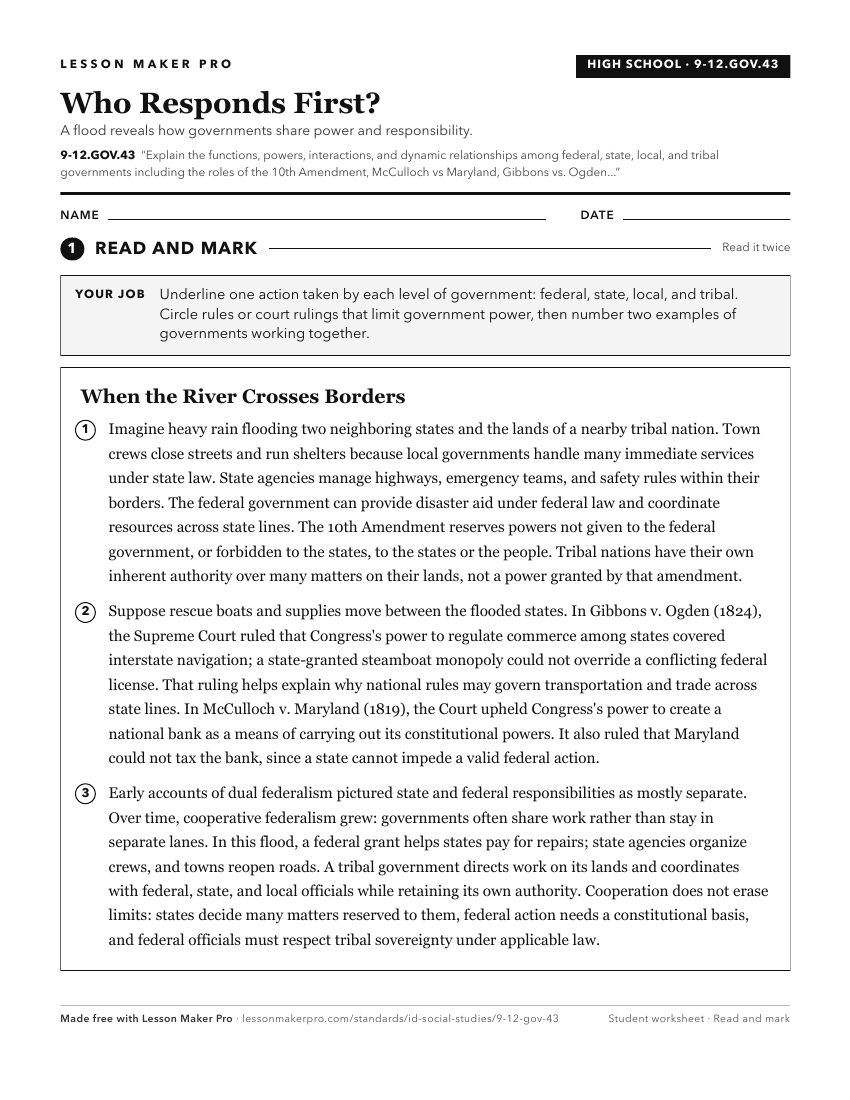
A ready-to-print activity worksheet aligned to 9-12.GOV.43, with an answer key for the teacher on its own page. No account needed.
PDF, US Letter, prints cleanly in black and white.
Download the worksheetKeep exploring
Related Standards
- 5.SS.4.5
Distinguish and compare responsibilities among state, national, and tribal governments in a federal system.
- 4.SS.4.1
Identify the people and groups who make, apply, and enforce laws within state, local, and tribal governments how they function, and the relationships between th...
- 3.SS.4.3
Identify and explain the basic functions of local and state governments.
- 9-12.GOV.47
Understand the structure, powers, and lawmaking process of local government (county, city, special district) by analyzing the relationships between state and lo...
Turn this exact standard into a lesson
Grade, subject, topic, and the complete standard are prefilled. Create one free, no account needed.
Also for this standard:Make a WorksheetMake a QuizMake a Sub Lesson