Idaho Social Studies 6-9.WG.1.2
The Standard
Examine the impact of Europeans and native cultures on one another in regions throughout the world.
Idaho Content Standards: K-12 Social Studies
Teacher's field guide
What This Standard Means
What Students Need to Do
- Students explain how contact changed both Europeans and local peoples in different regions. They use examples from the Americas and India, and tell trade and choice apart from conquest and pressure.
What Mastery Looks Like
- A student can explain how Plains peoples used horses brought by Europeans and how Andean potatoes changed European diets. They can also explain how Indian cotton cloth shaped European clothing while British factory cloth competed with Indian weaving.
Common Misconceptions
- Students may tell a one-way story in which only Europeans caused change. They may treat local peoples as one group or assume every change was voluntary.
How to Assess It
- Exit ticket: Explain how horses changed life for Plains peoples and how Indian cotton cloth changed European clothing. Name one specific change in each place.
Lesson moves
Ways to Teach It
Place potato, cotton, horse, and factory-cloth cards on a world map; trace each contact route with yarn.
Ask pairs how Plains communities used horses and why British factory cloth threatened Indian weavers; require one example for each.
Play a contact-chain relay: teams match place cards to horse, potato, cotton, and factory-cloth cards, then name who changed whom.
Compare a potato and a cotton shirt, then mark how Andean crops and Indian cloth changed European meals and clothing on a map.
Free download
Printable 6-9.WG.1.2 Worksheet
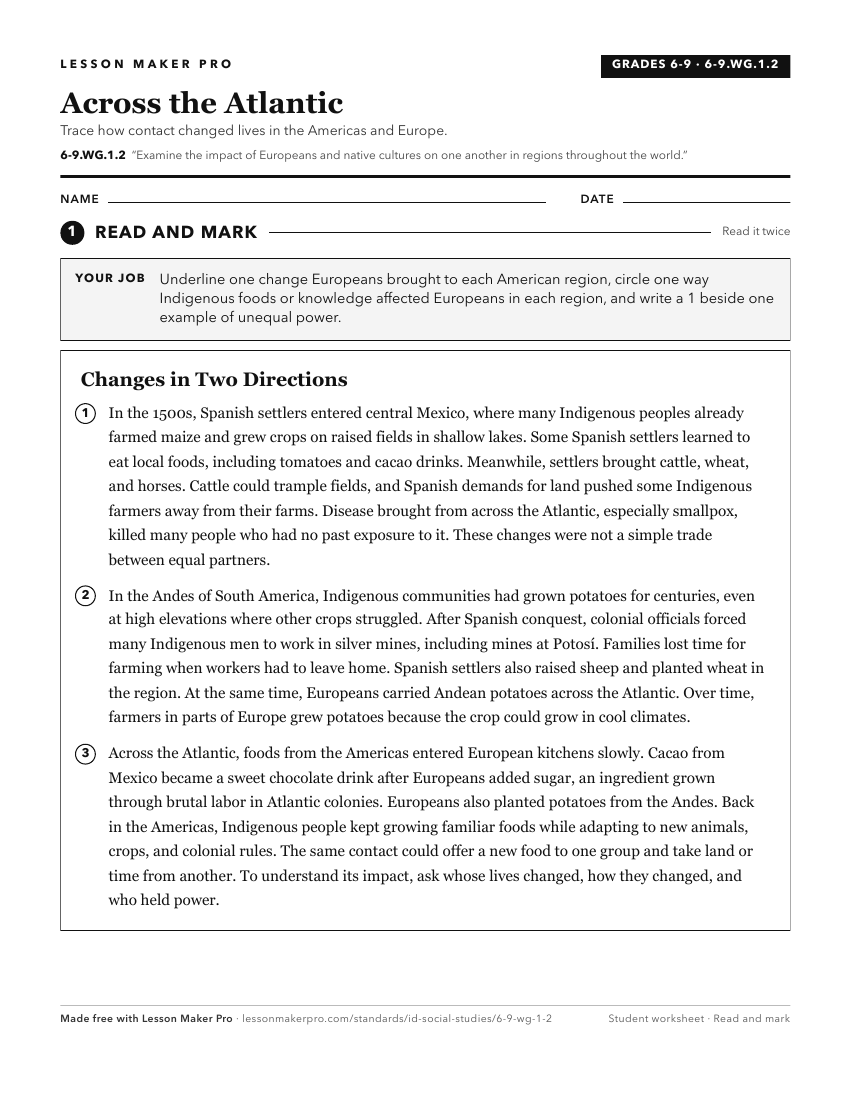
A ready-to-print activity worksheet aligned to 6-9.WG.1.2, with an answer key for the teacher on its own page. No account needed.
PDF, US Letter, prints cleanly in black and white.
Download the worksheetKeep exploring
Related Standards
- 3.SS.5.2
Examine the contributions of various cultures from other parts of the world to the development of the community and how they make that community unique.
- 6-9.WG.2.10
Compare and contrast cultural patterns in regions throughout the world, such as language, religion, and ethnicity.
- 6-12.US1.2
Analyze the impact of the Columbian exchange on Europe, Africa, and the Americas, including, but not limited to agriculture, technology, politics, and religion.
- 6-9.WG.1.1
Describe major aspects of the civilizations in regions throughout the world prior to European contact including government, religion/belief systems, arts/archit...
Turn this exact standard into a lesson
Grade, subject, topic, and the complete standard are prefilled. Create one free, no account needed.
Also for this standard:Make a WorksheetMake a QuizMake a Sub Lesson