Georgia S7L4.a
The Standard
- S7L4
- Obtain, evaluate, and communicate information to examine the interdependence of organisms with one another and their environments.
Construct an explanation for the patterns of interactions observed in different ecosystems in terms of the relationships among and between organisms and abiotic components of the ecosystem.
Georgia Standards of Excellence for Science · Obtain, evaluate, and communicate information to examine the interdependence of organisms with one another and their environments.
Teacher's field guide
What This Standard Means
What Students Need to Do
- Students examine observations, graphs, food webs, and other evidence from ecosystems. They explain patterns by connecting interactions among organisms with factors such as water, light, temperature, and soil.
What Mastery Looks Like
- A student can identify a pattern in ecosystem data and support an explanation with specific evidence. The explanation links organisms to each other and to at least one abiotic factor.
Common Misconceptions
- Students may treat abiotic factors as background conditions rather than parts of ecosystem interactions. They may also assume every interaction involves feeding or that one environmental change affects only one species.
How to Assess It
- Show a pond food web with data showing lower rainfall and fewer insects. Ask students to explain how rainfall could affect insect and fish populations, using two details from the evidence.
Lesson moves
Ways to Teach It
Set up two small plant containers with different water levels, then record changes and predict effects on insects that depend on the plants.
Ask students to write why a drought might change predator and prey populations, even when predators do not use water directly.
Give groups organism and abiotic factor cards, then have them build and defend chains showing how one change spreads through an ecosystem.
Use local rainfall and wildlife data to explain how seasonal weather patterns affect organisms in a nearby park or watershed.
Free download
Printable S7L4.a Worksheet
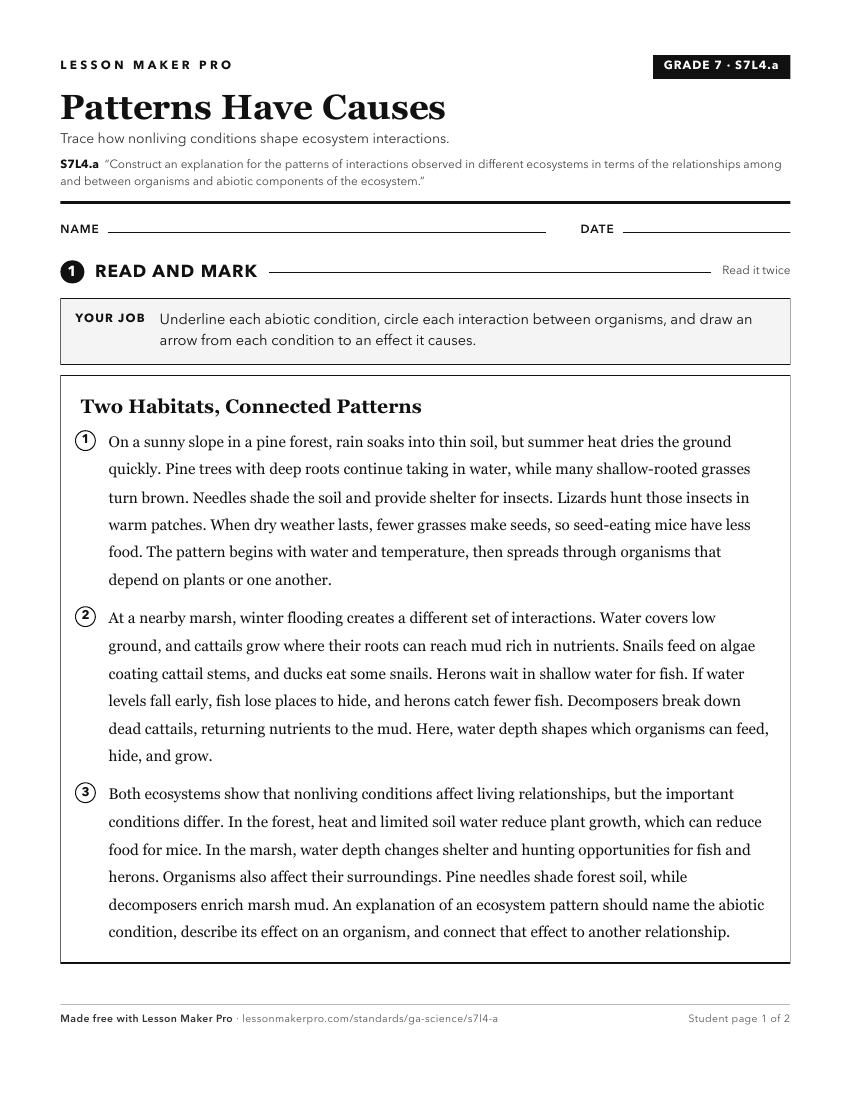
A ready-to-print activity worksheet aligned to S7L4.a, with an answer key for the teacher on its own page. No account needed.
PDF, US Letter, prints cleanly in black and white.
Download the worksheetKeep exploring
Related Standards
- S2E3.b
Construct an explanation of the causes and effects of a change to the environment in your community.
- SKL1.a
Construct an explanation based on observations to recognize the differences between organisms and non-living objects.
- S7L4.b
Develop a model to describe the cycling of matter and the flow of energy among biotic and abiotic components of an ecosystem.
- S3L1.c
Use evidence to construct an explanation of why some organisms can thrive in one habitat and not in another.
Turn this exact standard into a lesson
Grade, subject, topic, and the complete standard are prefilled. Create one free, no account needed.
Also for this standard:Make a WorksheetMake a QuizMake a Sub Lesson