Georgia S3P1.c
The Standard
- S3P1
- Obtain, evaluate, and communicate information about the ways heat energy is transferred and measured.
Use tools and every day materials to design and construct a device/structure that will increase/decrease the warming effects of sunlight on various materials.
Georgia Standards of Excellence for Science · Obtain, evaluate, and communicate information about the ways heat energy is transferred and measured.
Teacher's field guide
What This Standard Means
What Students Need to Do
- Students build a simple device that changes how quickly an object warms in sunlight. They measure temperature, compare results, and use evidence to improve the design.
What Mastery Looks Like
- Students choose materials and explain how each choice should increase or reduce warming. They run a fair test, record temperatures, and identify whether the device worked.
Common Misconceptions
- Students may think insulation creates cold or that shiny materials always become hotter. They may change several test conditions at once or confuse temperature with the amount of heat transferred.
How to Assess It
- Give students two identical cups, foil, black paper, and cotton. Ask them to sketch a design that keeps one cup cooler and describe the temperature evidence they would collect.
Lesson moves
Ways to Teach It
Build covers for ice-filled cups using foil, felt, paper, or plastic, then place them in sunlight and compare temperature changes.
Write a claim explaining which material would keep a playground slide cooler, then support it with observations from a class test.
Play a design challenge where teams select three material cards to make a model house warm quickly or stay cool.
Compare car sunshades, dark shirts, and insulated lunch bags, then explain how each item changes warming from sunlight.
Free download
Printable S3P1.c Worksheet
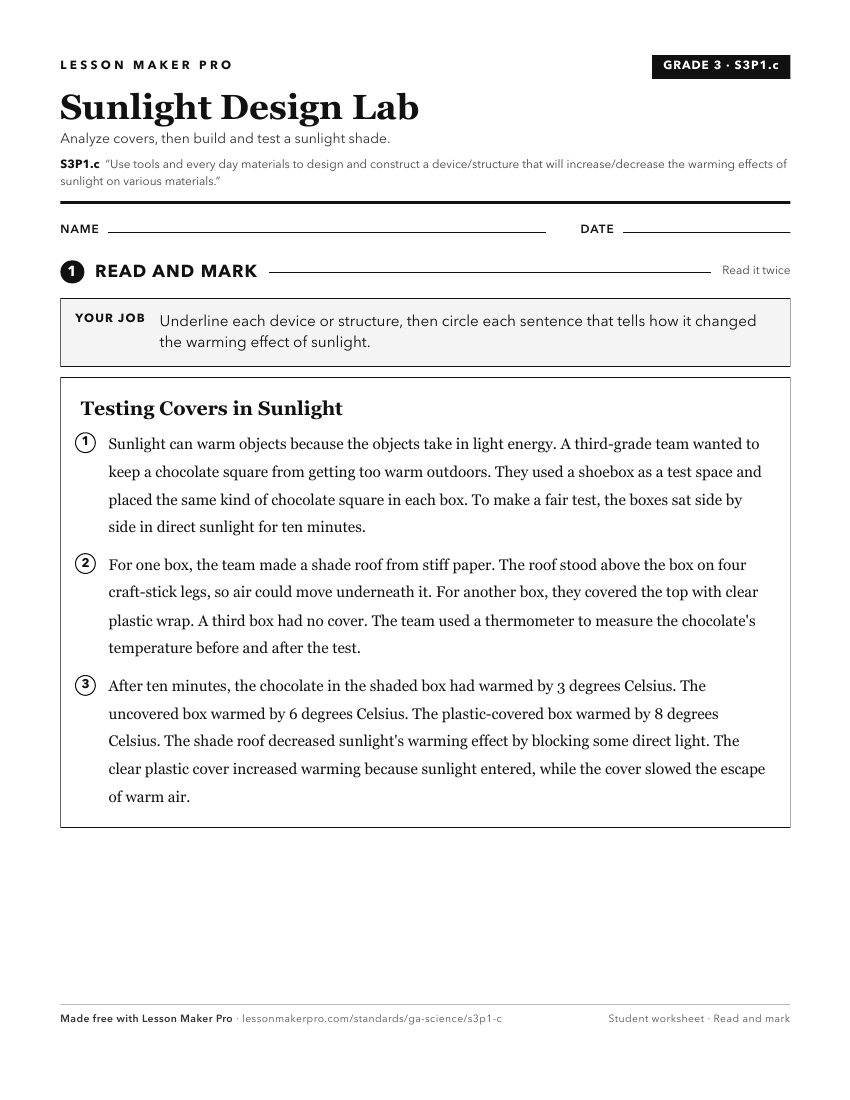
A ready-to-print activity worksheet aligned to S3P1.c, with an answer key for the teacher on its own page. No account needed.
PDF, US Letter, prints cleanly in black and white.
Download the worksheetKeep exploring
Related Standards
- S3P1.b
Plan and carry out an investigation to gather data using thermometers to produce tables and charts that illustrate the effect of sunlight on various objects.
- S6E4.b
Plan and carry out an investigation to demonstrate how energy from the sun transfers heat to air, land and water at different rates.
- S2E2.a
Plan and carry out an investigation to determine the effect of the position of the sun in relation to a fixed object on Earth at various times of the day.
- S2E2.b
Design and build a structure that demonstrates how shadows change throughout the day.
Turn this exact standard into a lesson
Grade, subject, topic, and the complete standard are prefilled. Create one free, no account needed.
Also for this standard:Make a WorksheetMake a QuizMake a Sub Lesson