Georgia K.P.ST.1.b
The Standard
Consider how context impacts the purposes of the author and the audience. (I/C)
Georgia's K-12 English Language Arts Standards · Practices (P) · Situating Texts
Teacher's field guide
What This Standard Means
What Students Need to Do
- Students look at the situation around a message, such as a birthday, classroom rule, or request. They explain why someone made it, who would use it, and what that audience needs from it.
What Mastery Looks Like
- Given a simple message, a student names the likely creator, audience, and reason for making or reading it. The student points to a picture, word, event, or setting clue that supports the answer.
Common Misconceptions
- Students may think every message is made for everyone or only for fun. They may confuse the author with a character, or name people in the picture as the audience. They may overlook clues about the event, place, or problem.
How to Assess It
- Show a birthday invitation and ask, “Who made this, who should read it, and what event caused it to be made?” Have students point to one clue.
Lesson moves
Ways to Teach It
Give pairs picture cards of invitations, signs, lists, and notes to sort by who uses each message and why.
Show a playground rules poster and ask, “Why was this made, and what do children need from it?”
Play Audience Match by pairing message cards with reader cards, then have students explain each match using one clue.
Examine a school notice and identify the event, who needs the information, and what families should do after reading it.
Free download
Printable K.P.ST.1.b Worksheet
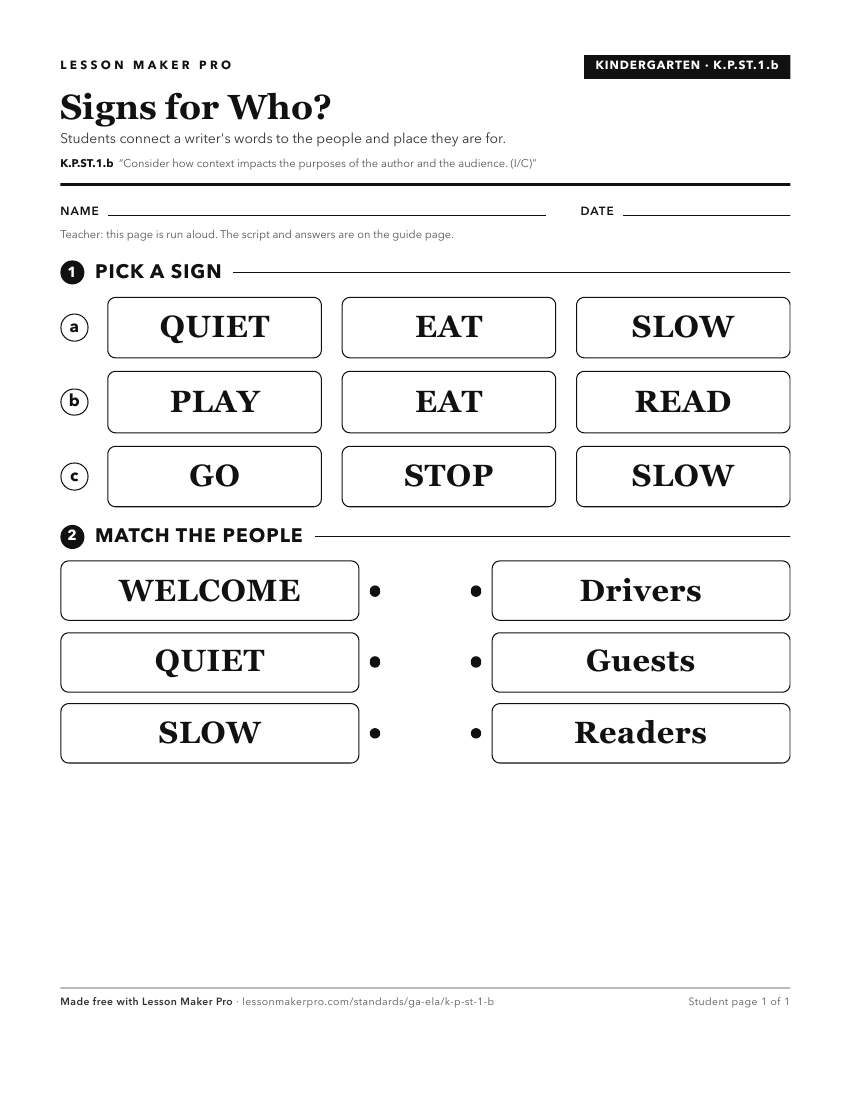
A ready-to-print activity worksheet aligned to K.P.ST.1.b, with an answer key for the teacher on its own page. No account needed.
PDF, US Letter, prints cleanly in black and white.
Download the worksheetKeep exploring
Related Standards
Turn this exact standard into a lesson
Grade, subject, topic, and the complete standard are prefilled. Create one free, no account needed.
Also for this standard:Make a WorksheetMake a QuizMake a Sub Lesson