Georgia 5.P.ST.1.b
The Standard
Consider how context impacts the purposes of the author and the audience. (I/C)
Georgia's K-12 English Language Arts Standards · Practices (P) · Situating Texts
Teacher's field guide
What This Standard Means
What Students Need to Do
- Students examine the situation surrounding a text, including time, place, events, culture, and intended readers. They explain how that context affects why the author wrote and how readers may respond.
What Mastery Looks Like
- Students identify relevant details about when, where, why, and for whom a text was created. They explain how those details shaped the author’s purpose and the audience’s response.
Common Misconceptions
- Students may treat context as only the setting inside a text. They may name an author’s purpose without explaining how the time, place, event, or audience shaped it.
How to Assess It
- Give students a school principal’s letter announcing a new rule. Ask: “How do the school setting and intended audience shape the writer’s purpose? Cite one detail.”
Lesson moves
Ways to Teach It
Give groups two announcements about the same event for students and parents, then have them mark differences in wording, details, and purpose.
Ask students to write: “How might this text change if it were written in another time, place, or situation?”
Play Context Match by pairing short texts with cards naming an audience, event, time, or place, then require a spoken explanation.
Compare a local weather alert with a television forecast, and discuss how the situation and audience shape each writer’s purpose.
Free download
Printable 5.P.ST.1.b Worksheet
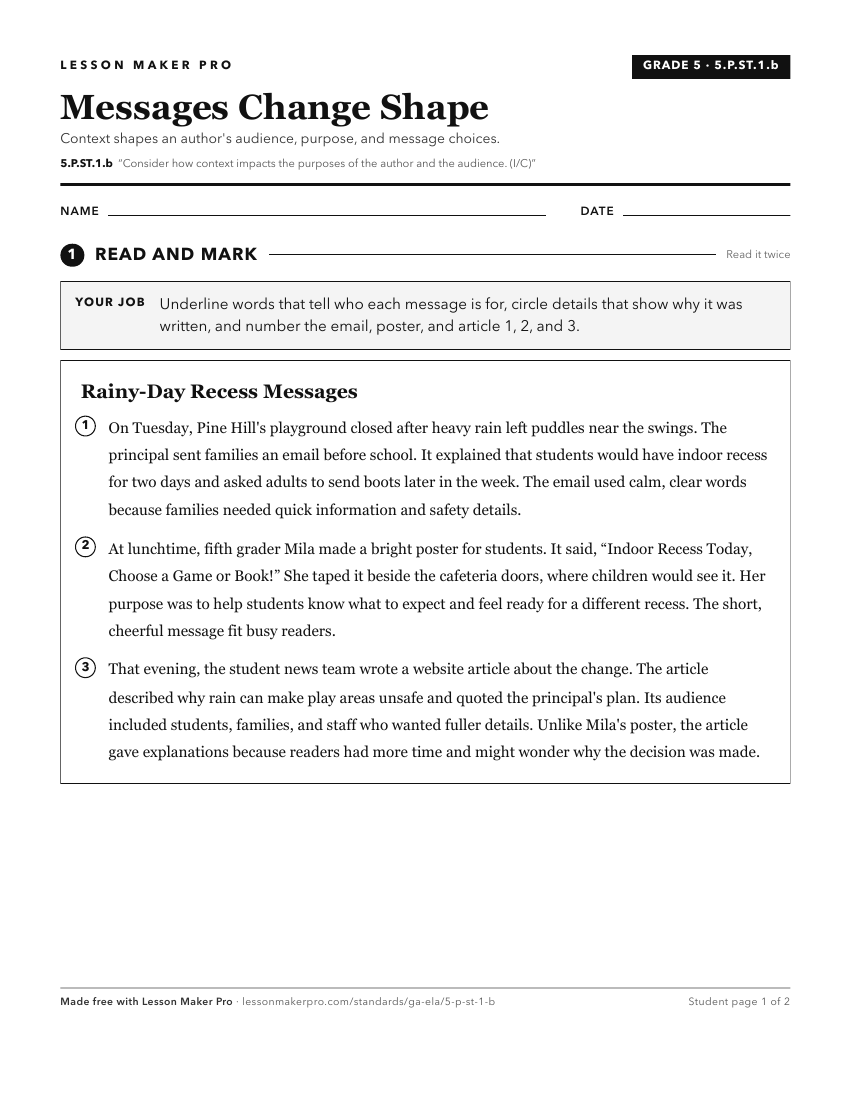
A ready-to-print activity worksheet aligned to 5.P.ST.1.b, with an answer key for the teacher on its own page. No account needed.
PDF, US Letter, prints cleanly in black and white.
Download the worksheetKeep exploring
Related Standards
Turn this exact standard into a lesson
Grade, subject, topic, and the complete standard are prefilled. Create one free, no account needed.
Also for this standard:Make a WorksheetMake a QuizMake a Sub Lesson