Georgia 6.T.T.4
Georgia Standard (Expectation Cluster)
Poetic Techniques Analyze and apply poetic techniques.
Georgia's K-12 English Language Arts Standards · Texts (T)
Cluster contents
Expectations in This Standard
6.T.T.4 is a Georgia English Language Arts standard. These are the expectations under it.
- 6.T.T.4.a
Recognize and describe poetic techniques used to present and design content, including stanzas, rhyme scheme, imagery, figurative language, and/or sound devices...
- 6.T.T.4.b
Apply poetic techniques (e.g., stanzas, rhyme/rhyme scheme, imagery, figurative language, sound devices) to produce poetry and engage audiences. (C)
Teacher's field guide
What This Cluster Means
What Students Need to Do
- Students find poetic techniques in a poem and explain how each one affects meaning, tone, mood, or sound. They also use selected techniques purposefully in their own lines or poems.
What Mastery Looks Like
- Students accurately identify techniques such as imagery, metaphor, repetition, rhyme, rhythm, and line breaks. They explain how a technique shapes meaning, tone, or mood, then use it deliberately in their own poem.
Common Misconceptions
- Students may name a technique without explaining what it does. They may confuse imagery with figurative language or assume every repeated sound is rhyme. They may also add techniques to a poem without connecting them to meaning or mood.
How to Assess It
- Give students a short poem and ask them to identify one technique, explain its effect, and revise two lines using that technique purposefully.
Lesson moves
Ways to Teach It
Give pairs a printed poem to color-code imagery, figurative language, repetition, sound devices, and line breaks, then label each effect.
Ask, “How would the mood change if the poet replaced this image, sound, or line break?” Students defend one revision.
Run a technique sort where students match poem excerpts to technique cards, earn points for accurate names, and explain each effect.
Display school-appropriate song lyrics and have students mark repetition, imagery, rhyme, and rhythm, then explain how one technique affects the listener.
Free download
Printable 6.T.T.4 Worksheet
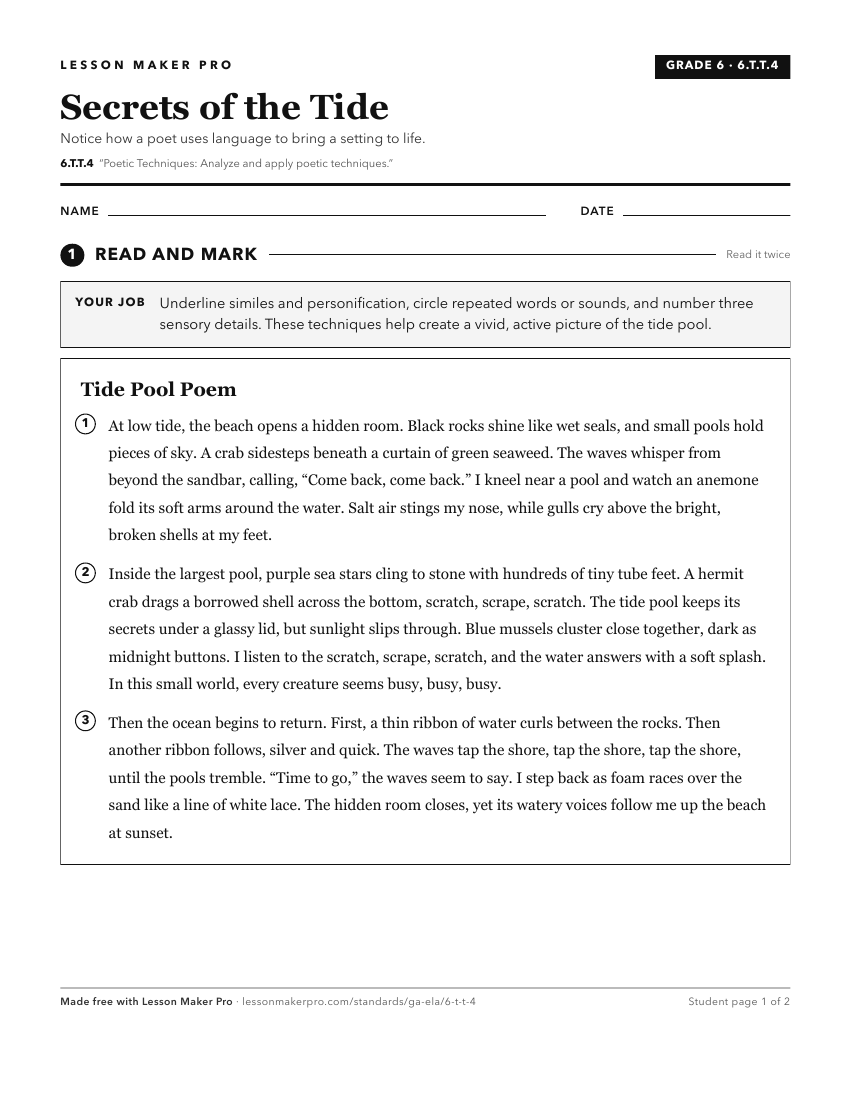
A ready-to-print activity worksheet aligned to 6.T.T.4, with an answer key for the teacher on its own page. No account needed.
PDF, US Letter, prints cleanly in black and white.
Download the worksheetKeep exploring
Related Standards
Turn this cluster into a lesson
Grade, subject, topic, and the complete cluster are prefilled. Create one free, no account needed.
Also for this cluster:Make a WorksheetMake a QuizMake a Sub Lesson