Georgia 6.L.V.3.c
The Standard
Distinguish between the connotations of words that share a similar denotation (e.g., confident, assertive, egotistic, pompous, smug). (I)
Georgia's K-12 English Language Arts Standards · Language (L) · Vocabulary
Teacher's field guide
What This Standard Means
What Students Need to Do
- Students compare words with similar dictionary meanings and identify the feelings or judgments each word suggests. They choose words that fit a character, audience, or purpose and explain their choices.
What Mastery Looks Like
- Students can arrange similar words from positive to negative and explain their choices. They can replace one word with another and describe how the new word changes the sentence’s tone.
Common Misconceptions
- Students may treat synonyms as interchangeable or confuse connotation with dictionary meaning. They may label every word as simply positive or negative, missing differences in intensity and context.
How to Assess It
- Exit ticket: Replace proud in “Jalen felt proud after winning” with smug or satisfied. Choose the word that makes Jalen seem more likable and explain why.
Lesson moves
Ways to Teach It
Give groups synonym cards to place on a positive-to-negative continuum, then have them defend the placement of two words.
Ask students to explain how calling a character confident instead of smug changes the reader’s impression.
Play Connotation Match by having teams pair sentences with the synonym that best fits each context.
Collect words from advertisements or headlines, then replace one loaded word and discuss how the message changes.
Free download
Printable 6.L.V.3.c Worksheet
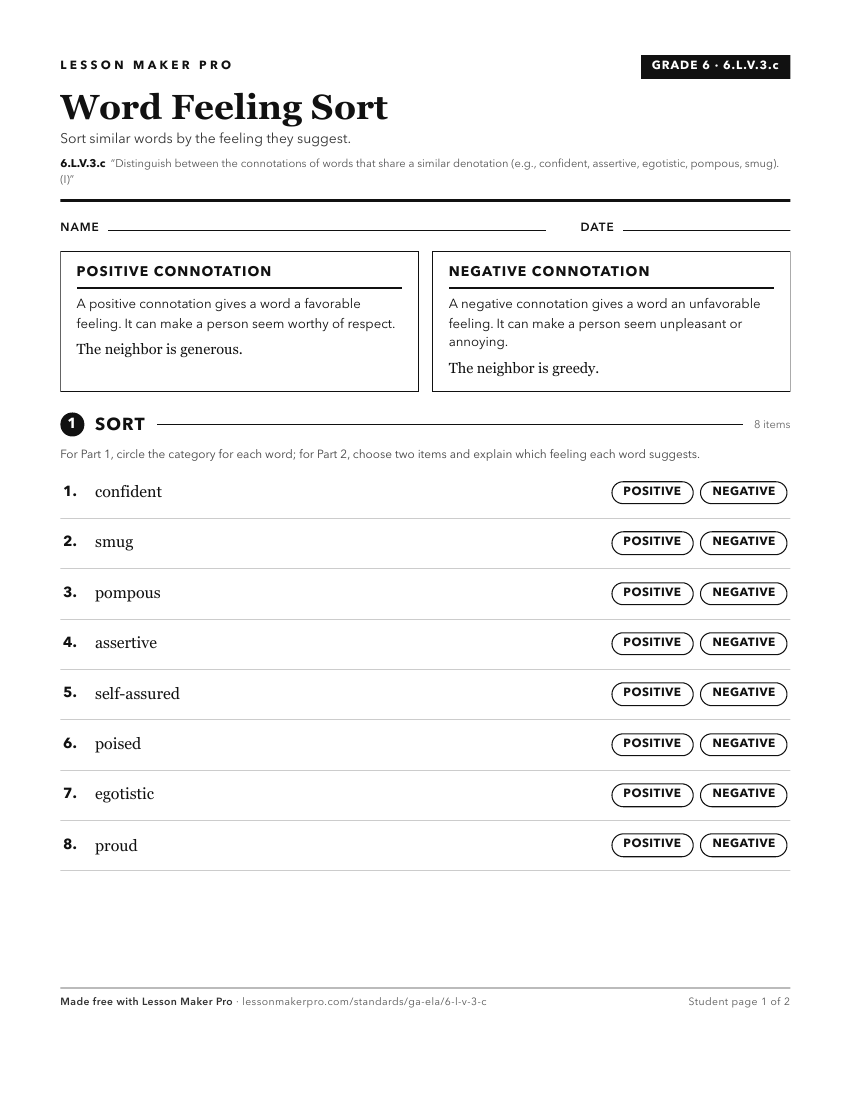
A ready-to-print activity worksheet aligned to 6.L.V.3.c, with an answer key for the teacher on its own page. No account needed.
PDF, US Letter, prints cleanly in black and white.
Download the worksheetKeep exploring
Related Standards
Turn this exact standard into a lesson
Grade, subject, topic, and the complete standard are prefilled. Create one free, no account needed.
Also for this standard:Make a WorksheetMake a QuizMake a Sub Lesson