Georgia 2.P.ST.1.b
The Standard
Consider how context impacts the purposes of the author and the audience. (I/C)
Georgia's K-12 English Language Arts Standards · Practices (P) · Situating Texts
Teacher's field guide
What This Standard Means
What Students Need to Do
- Students use clues from a text and its situation to figure out who it is meant for and why it was created. They explain how the audience or setting shapes the message.
What Mastery Looks Like
- Students name a likely audience and explain the author's reason for writing. They point to details such as the topic, word choice, pictures, format, or situation as evidence.
Common Misconceptions
- Students may think every text is written only to entertain. They may confuse the author with the narrator or assume the audience is always their class.
How to Assess It
- Give students a birthday invitation and ask, "Who is this for, why was it written, and which two details helped you decide?"
Lesson moves
Ways to Teach It
Give pairs a menu, invitation, poster, and storybook to sort by likely audience and reason for writing.
Read a school announcement and ask, "How would the message change if it were written for parents instead of students?"
Play Audience Detective by matching short texts to audience cards, then require one clue to support each match.
Compare a playground rule sign with a toy advertisement and discuss how each text fits where people would see it.
Free download
Printable 2.P.ST.1.b Worksheet
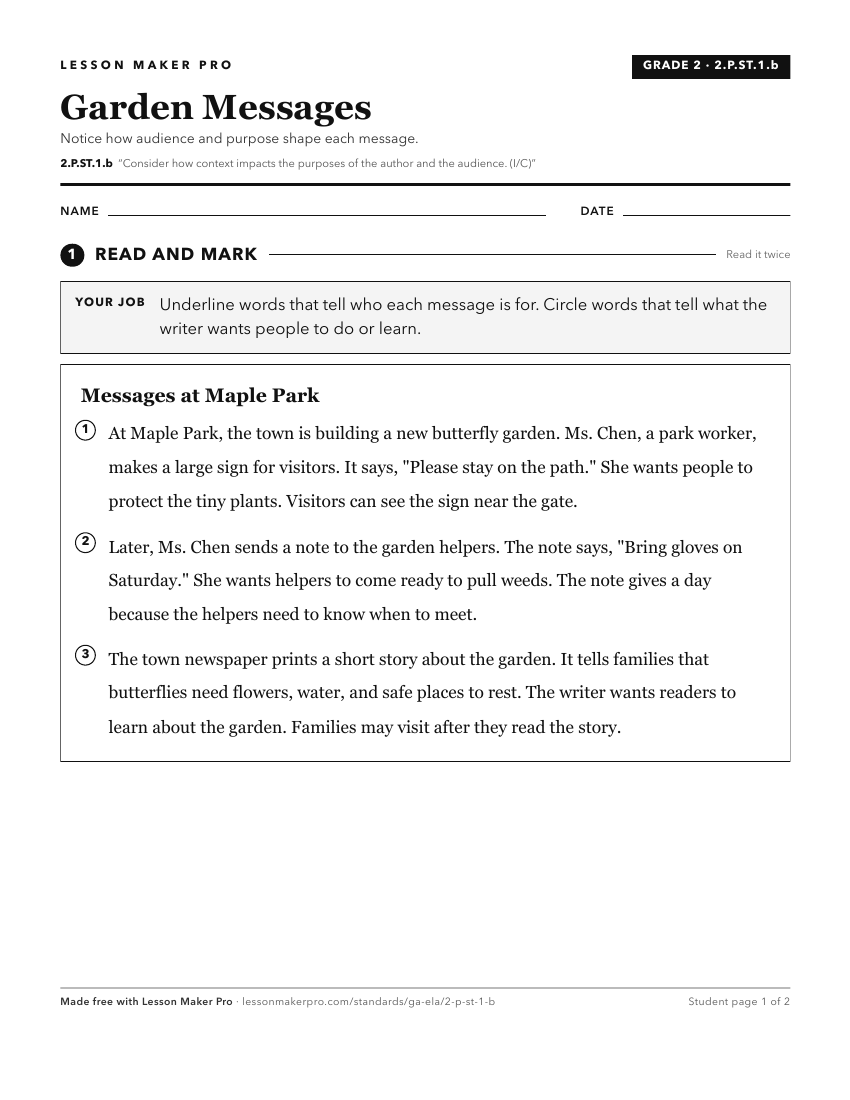
A ready-to-print activity worksheet aligned to 2.P.ST.1.b, with an answer key for the teacher on its own page. No account needed.
PDF, US Letter, prints cleanly in black and white.
Download the worksheetKeep exploring
Related Standards
Turn this exact standard into a lesson
Grade, subject, topic, and the complete standard are prefilled. Create one free, no account needed.
Also for this standard:Make a WorksheetMake a QuizMake a Sub Lesson