Georgia 11.T.C.1.b
The Standard
Assess the impact of voice and tone on a text’s reception by the audience. (I)
Georgia's K-12 English Language Arts Standards · Texts (T) · Context
Teacher's field guide
What This Standard Means
What Students Need to Do
- Students analyze how a writer’s voice and tone influence an audience’s response. They connect specific word choices and sentence patterns to reactions such as trust, sympathy, discomfort, or rejection.
What Mastery Looks Like
- Students identify voice and tone through diction, syntax, and details. They explain how those choices shape a specific audience’s trust, interest, sympathy, or resistance.
Common Misconceptions
- Students may treat voice and tone as the same thing or name a tone without citing language. They may assume every audience reacts identically.
How to Assess It
- Give students two versions of the same announcement with different tones. Ask which version a skeptical audience would accept and require two quoted details.
Lesson moves
Ways to Teach It
Give groups printed versions of one message in four tones, then have them sort the versions by likely audience response.
Ask students to explain how a sarcastic voice might affect a respectful, hostile, or undecided audience.
Play Audience Match by pairing tone cards with audience cards and defending each match using a phrase from the text.
Compare two public service posts on the same issue, then decide which tone would persuade local teenagers more effectively.
Free download
Printable 11.T.C.1.b Worksheet
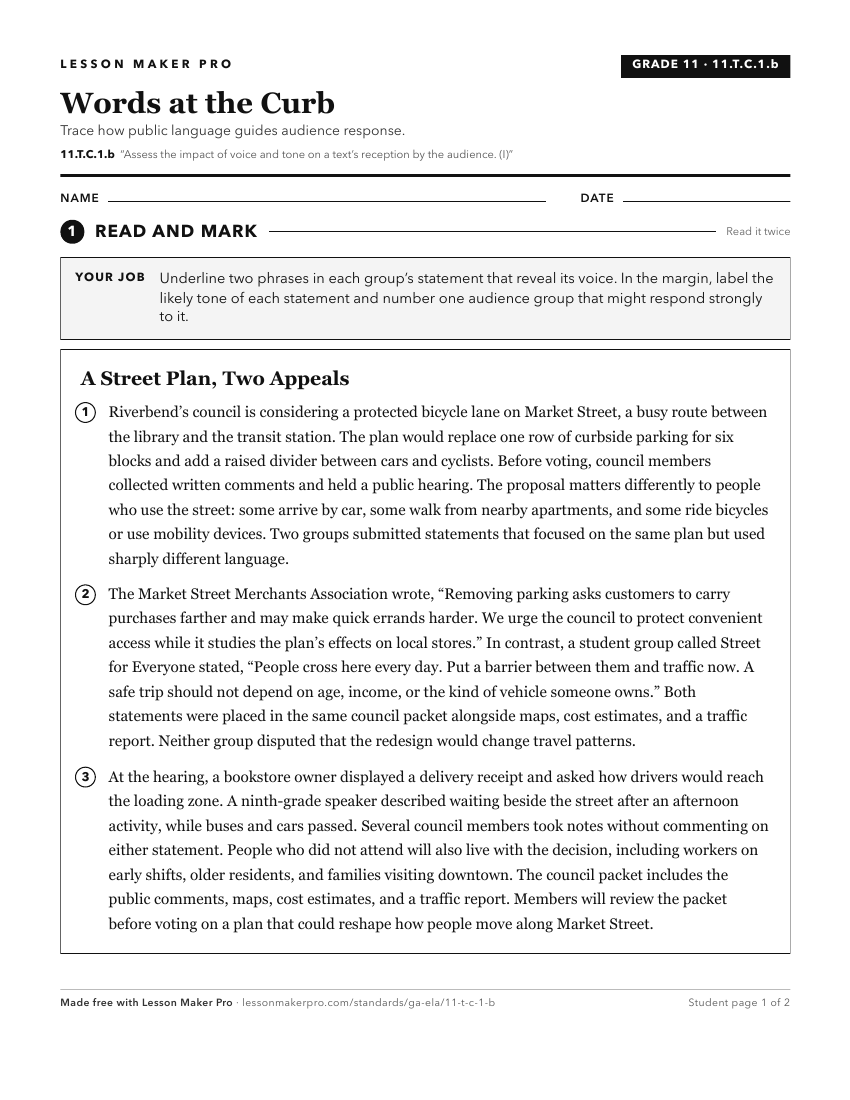
A ready-to-print activity worksheet aligned to 11.T.C.1.b, with an answer key for the teacher on its own page. No account needed.
PDF, US Letter, prints cleanly in black and white.
Download the worksheetKeep exploring
Related Standards
- 12.T.C.1.b
Evaluate the impact of voice and tone on a text’s reception by the audience. (I)
- 9.T.C.1.b
Assess the impact of context and language on a text’s reception by the audience. (I)
- 10.T.C.1.b
Evaluate the impact of context and language on a text’s reception by the audience. (I)
- 9.T.C.2.b
Identify the impact of the speaker’s reliability or credibility on the text. (I)
Turn this exact standard into a lesson
Grade, subject, topic, and the complete standard are prefilled. Create one free, no account needed.
Also for this standard:Make a WorksheetMake a QuizMake a Sub Lesson