Georgia 1.P.EICC.3.f
The Standard
Make, track, and support inferences about different levels of meaning within the text. (I)
Georgia's K-12 English Language Arts Standards · Practices (P) · Engagement & Intention for Comprehension & Composition
Teacher's field guide
What This Standard Means
What Students Need to Do
- Students use words, events, and pictures to figure out ideas the author does not state directly. They track clues, revise their thinking, and explain what supports each inference.
What Mastery Looks Like
- Students name an unstated idea, such as a character’s feeling, reason, or lesson. They point to a word, event, or picture detail and adjust their thinking when new clues appear.
Common Misconceptions
- Students may treat an inference as a guess without evidence. They may rely only on the picture, miss clues in the words, or refuse to revise an earlier idea.
How to Assess It
- Read a short page aloud and ask, “How is the character feeling, and which word or picture clue helped you decide?”
Lesson moves
Ways to Teach It
Give pairs a picture book page, sticky notes, and crayons to mark one clue and draw the idea it suggests.
Ask, “Why did the character do that?” Students answer in one sentence and cite a word, action, or picture detail.
Play Clue Detective by reading three clues aloud while teams infer the hidden feeling, object, or event and explain their evidence.
Show a school lunch photo and have students infer what happened before and what might happen next using visible details.
Free download
Printable 1.P.EICC.3.f Worksheet
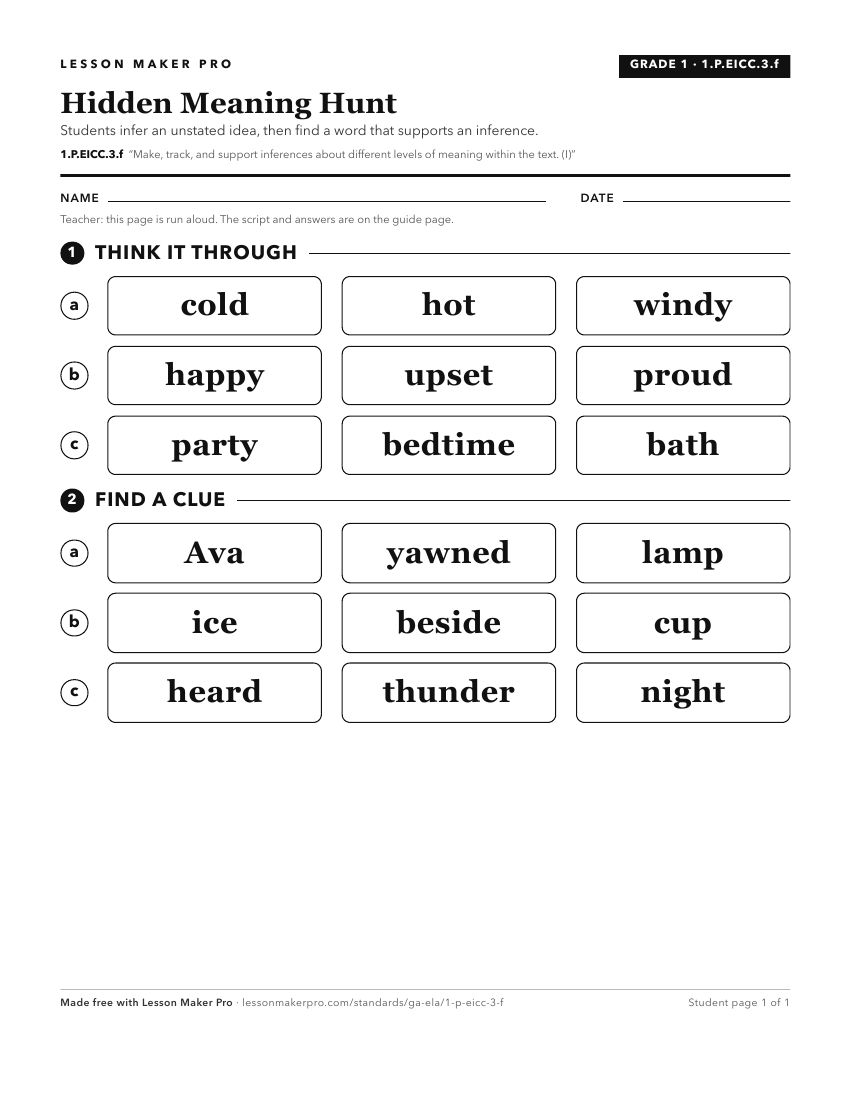
A ready-to-print activity worksheet aligned to 1.P.EICC.3.f, with an answer key for the teacher on its own page. No account needed.
PDF, US Letter, prints cleanly in black and white.
Download the worksheetKeep exploring
Related Standards
Turn this exact standard into a lesson
Grade, subject, topic, and the complete standard are prefilled. Create one free, no account needed.
Also for this standard:Make a WorksheetMake a QuizMake a Sub Lesson