Florida SS.8.A.3.10
The Standard
- SS.8.A.3
- Demonstrate an understanding of the causes, course and consequences of the American Revolution and the founding principles of our nation.
Examine the course and consequences of the Constitutional Convention (e.g., New Jersey Plan, Virginia Plan, Great Compromise, Three-Fifths Compromise, compromises regarding taxation and slave trade, Electoral College, state vs. federal power, empowering a president).
Florida Next Generation Sunshine State Standards for Social Studies
Teacher's field guide
What This Standard Means
What Students Need to Do
- Students compare the Virginia and New Jersey plans and trace how delegates reached major compromises. They explain how those choices shaped representation, slavery, presidential power, and the balance between state and federal authority.
What Mastery Looks Like
- Students can connect each major dispute to its compromise and immediate result. They can explain who gained political power, who lost it, and how enslaved people were used in representation without receiving rights.
Common Misconceptions
- Students may confuse the Virginia Plan with the New Jersey Plan or think the Great Compromise settled every dispute. They may believe the Three-Fifths Compromise granted rights to enslaved people. Some think the convention ended the slave trade immediately or created direct presidential elections.
How to Assess It
- Give students four rows labeled representation, slavery, presidential selection, and federal power. Ask them to name the decision reached and explain one consequence for each.
Lesson moves
Ways to Teach It
Give groups delegate role cards and have them negotiate representation, taxation, the slave trade, and presidential selection.
Ask students to write which compromise most changed political power and defend their choice with two specific details.
Run a card match pairing each proposal or dispute with its supporters, final compromise, and consequence.
Compare the Electoral College or a federal-state dispute today with the concerns delegates raised during the convention.
Free download
Printable SS.8.A.3.10 Worksheet
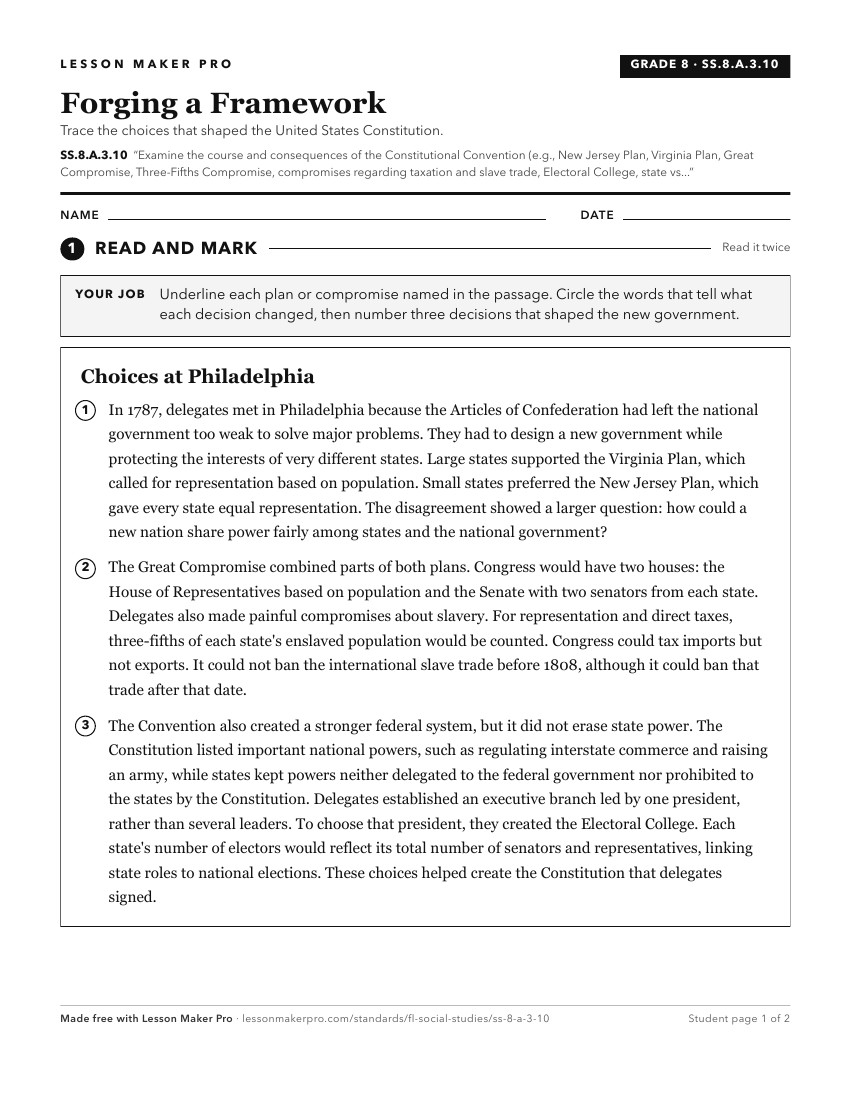
A ready-to-print activity worksheet aligned to SS.8.A.3.10, with an answer key for the teacher on its own page. No account needed.
PDF, US Letter, prints cleanly in black and white.
Download the worksheetKeep exploring
Related Standards
- SS.5.A.5.10
Examine the significance of the Constitution including its key political concepts, origins of those concepts, and their role in American democracy.
- SS.8.A.3.11
Analyze support and opposition (Federalists, Federalist Papers, Anti-Federalists, Anti-Federalist Papers, and the Bill of Rights) to ratification of the U.S. Co...
- SS.8.A.3.6
Examine the causes, course, and consequences of the American Revolution.
- SS.8.A.3.9
Evaluate the structure, strengths, and weaknesses of the Articles of Confederation and its aspects that led to the Constitutional Convention.
Turn this exact standard into a lesson
Grade, subject, topic, and the complete standard are prefilled. Create one free, no account needed.
Also for this standard:Make a WorksheetMake a QuizMake a Sub Lesson