Florida SS.68.AA.2.6
The Standard
- SS.68.AA.2
- Analyze events that involved or affected Africans from the founding of the nation through Reconstruction.
Evaluate various abolitionist movements that continuously pushed to end slavery.
Florida Next Generation Sunshine State Standards for Social Studies
Teacher's field guide
What This Standard Means
What Students Need to Do
- Students trace organized opposition to slavery from the early republic through the Civil War. They compare Black-led activism, religious groups, newspapers, speeches, petitions, escape networks, and political parties, then judge each approach’s results and limits.
What Mastery Looks Like
- A student can distinguish immediate abolition from gradual emancipation and colonization, and explain why many Black abolitionists rejected removal from the United States. The student uses primary-source evidence to compare tactics and judge their reach, risks, results, and limits.
Common Misconceptions
- Students often treat abolitionism as one united movement and assume every abolitionist supported immediate emancipation and full racial equality. They may think the Underground Railroad was a train, or that Lincoln and white Northerners led all antislavery work. They may also credit abolitionists alone for emancipation, overlooking enslaved people’s resistance, military service, and self-emancipation.
How to Assess It
- Give students short excerpts from The Liberator and the Liberty Party platform. Ask, “Which strategy was more likely to change federal policy before 1860? Cite one phrase from each source.”
Lesson moves
Ways to Teach It
Sort source cards from The Liberator, abolition petitions, Underground Railroad accounts, and Liberty Party materials by strategy, then place them on a timeline.
Write a claim answering: Which created more pressure against slavery, moral persuasion, direct assistance, or political action, and why?
Play a matching relay pairing abolitionists and groups with tactics, then require teams to justify each match using an evidence card.
Compare an abolitionist petition with a current local petition, marking how each names a problem, audience, demand, and proposed action.
Free download
Printable SS.68.AA.2.6 Worksheet
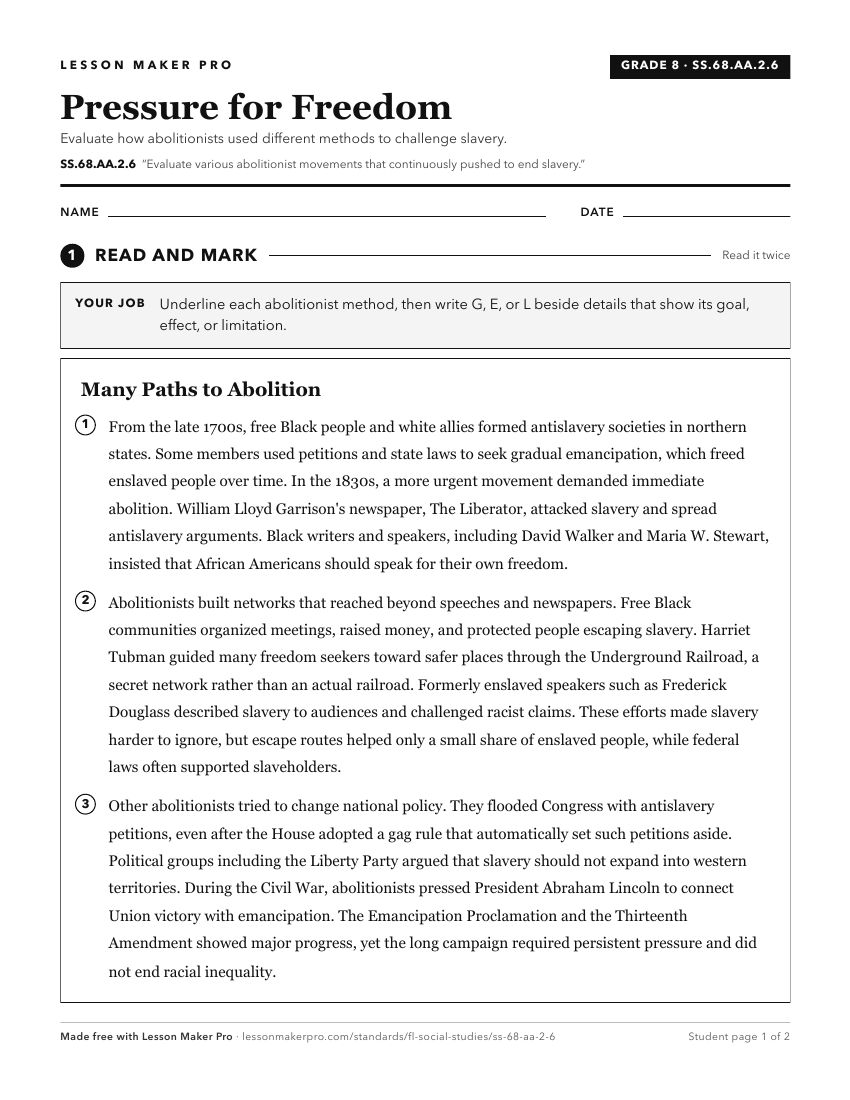
A ready-to-print activity worksheet aligned to SS.68.AA.2.6, with an answer key for the teacher on its own page. No account needed.
PDF, US Letter, prints cleanly in black and white.
Download the worksheetKeep exploring
Related Standards
- SS.68.AA.2.7
Examine how the status of slaves, those who had escaped slavery and free blacks, affected their contributions to the Civil War effort.
- SS.68.AA.2.5
Identify political figures who strove to abolish the institution of slavery (e.g., Thaddeus Stevens, Abraham Lincoln, Zachariah Chandler).
- SS.68.AA.2.4
Examine the Underground Railroad and its importance to those seeking freedom.
- SS.5.AA.1.3
Examine key figures and events in abolitionist movements.
Turn this exact standard into a lesson
Grade, subject, topic, and the complete standard are prefilled. Create one free, no account needed.
Also for this standard:Make a WorksheetMake a QuizMake a Sub Lesson