Florida SS.5.CG.1.4
The Standard
- SS.5.CG.1
- Foundations of Government, Law, and the American Political System
Describe the history, meaning, and significance of the Bill of Rights
Florida Next Generation Sunshine State Standards for Social Studies
Teacher's field guide
What This Standard Means
What Students Need to Do
- Students explain why people wanted protections added to the Constitution and how the first ten amendments became the Bill of Rights. They describe rights such as free speech and explain how those rights limit government power.
What Mastery Looks Like
- A student can say that the Bill of Rights was ratified in 1791 after people raised concerns about federal power. They can match a right to an example and explain why that protection matters.
Common Misconceptions
- Students may think the Bill of Rights was part of the original Constitution, rather than added through amendments. They may also think free speech means they can say anything without consequences from anyone.
How to Assess It
- Give students this exit ticket: “Why was the Bill of Rights added? Name one right it protects and describe one way that right limits government power.”
Lesson moves
Ways to Teach It
Give pairs ten amendment cards and ten plain-language example cards, then have them match each pair and explain one choice.
Ask students to write two sentences answering: Why did some people want a list of rights added to the Constitution?
Read short scenarios aloud, such as a newspaper criticizing a mayor, and have teams name the right involved.
Show a photo of a peaceful public protest and ask students which right protects people from government punishment for taking part.
Free download
Printable SS.5.CG.1.4 Worksheet
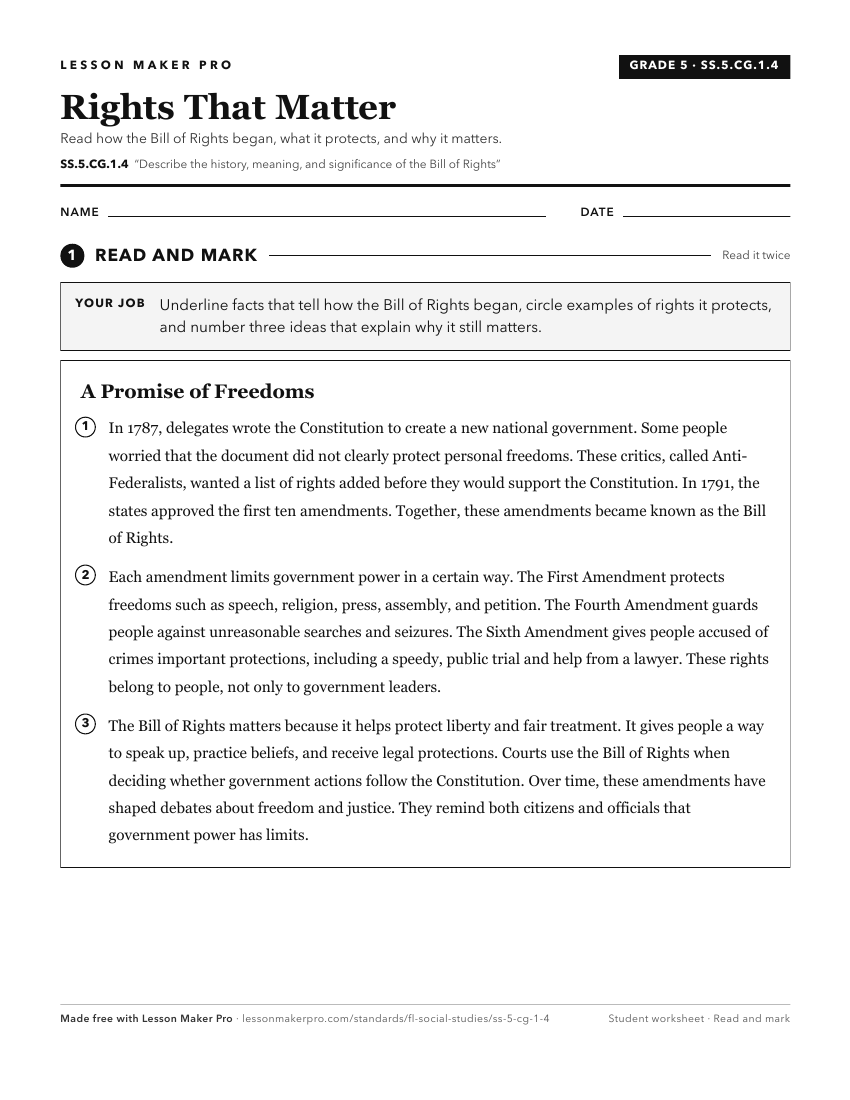
A ready-to-print activity worksheet aligned to SS.5.CG.1.4, with an answer key for the teacher on its own page. No account needed.
PDF, US Letter, prints cleanly in black and white.
Download the worksheetKeep exploring
Related Standards
- SS.8.CG.2.5
Analyze how the Bill of Rights guarantees civil rights and liberties to citizens.
- SS.7.CG.2.3
Identify and apply the rights contained in the Bill of Rights and other amendments to the U.S. Constitution.
- SS.7.CG.1.10
Compare the viewpoints of the Federalists and the Anti-Federalists regarding ratification of the U.S. Constitution and including a bill of rights.
- SS.7.CG.2.4
Explain how the U.S. Constitution and the Bill of Rights safeguard individual rights.
Turn this exact standard into a lesson
Grade, subject, topic, and the complete standard are prefilled. Create one free, no account needed.
Also for this standard:Make a WorksheetMake a QuizMake a Sub Lesson