Florida SS.5.A.6.4
The Standard
- SS.5.A.6
- Growth and Westward Expansion
Explain the importance of the explorations west of the Mississippi River.
Florida Next Generation Sunshine State Standards for Social Studies
Teacher's field guide
What This Standard Means
What Students Need to Do
- Students identify what western expeditions mapped, recorded, and reported. They explain how that information supported trade, settlement, national claims, and later expansion.
What Mastery Looks Like
- Students connect specific findings from Lewis and Clark or Zebulon Pike to later actions by the United States. They support each connection with map or source evidence.
Common Misconceptions
- Students may think explorers discovered land that was empty or unknown to everyone. They may also confuse exploration with settlement and overlook Native peoples’ knowledge and assistance.
How to Assess It
- Give students a western expedition map and ask: How did this expedition make later expansion easier? Require two details from the map or notes.
Lesson moves
Ways to Teach It
Have pairs trace expedition routes on a blank map, then place labels for rivers, mountains, Native nations, and recorded resources.
Ask students to write: Which expedition finding most influenced later expansion, and what evidence supports your choice?
Play a card match where students pair expedition findings, such as river routes or mountain barriers, with effects on trade and settlement.
Compare an expedition route with a modern highway map, then identify cities, roads, or parks that follow or remember that route.
Free download
Printable SS.5.A.6.4 Worksheet
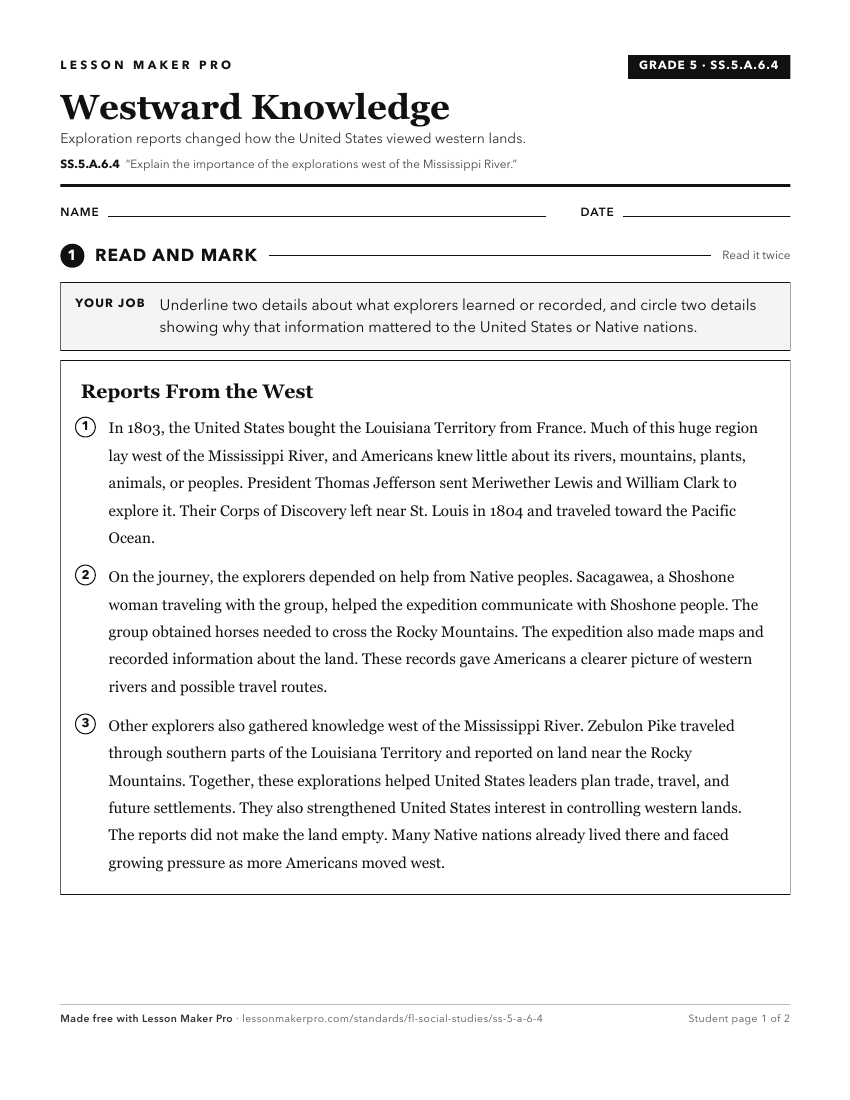
A ready-to-print activity worksheet aligned to SS.5.A.6.4, with an answer key for the teacher on its own page. No account needed.
PDF, US Letter, prints cleanly in black and white.
Download the worksheetKeep exploring
Related Standards
Turn this exact standard into a lesson
Grade, subject, topic, and the complete standard are prefilled. Create one free, no account needed.
Also for this standard:Make a WorksheetMake a QuizMake a Sub Lesson