Florida B.E.S.T. ELA.K.R.3.2
The Standard
Retell a text orally to enhance comprehension: a. Use main character(s), setting, and important events for a story. b. Use topic and details for an informational text.
Florida B.E.S.T. Standards for English Language Arts
Teacher's field guide
What This Standard Means
What Students Need to Do
- After hearing or reading a book, students tell it back in their own words. For stories, they explain who, where, and what happened. For nonfiction, they name the subject and key facts.
What Mastery Looks Like
- A student gives a clear oral account without copying every sentence. The student includes the right story parts or explains the nonfiction topic with accurate supporting facts.
Common Misconceptions
- Students may list random details instead of telling what matters most. They may mix up event order, omit the setting, or treat a nonfiction book like a story.
How to Assess It
- After a read-aloud, prompt: “Tell this book back to me. Include who, where, and key events, or the topic and two facts.”
Lesson moves
Ways to Teach It
Students sequence picture cards from a familiar story, then use character figures and a setting mat to retell it aloud.
After a nonfiction read-aloud, partners answer: “What did this book teach us, and which two facts helped you understand?”
Play Retell Relay: students pass a toy microphone, adding the next event or fact without repeating an earlier detail.
Examine a handwashing poster, then students tell its topic and two details they can use before lunch.
Free download
Printable ELA.K.R.3.2 Worksheet
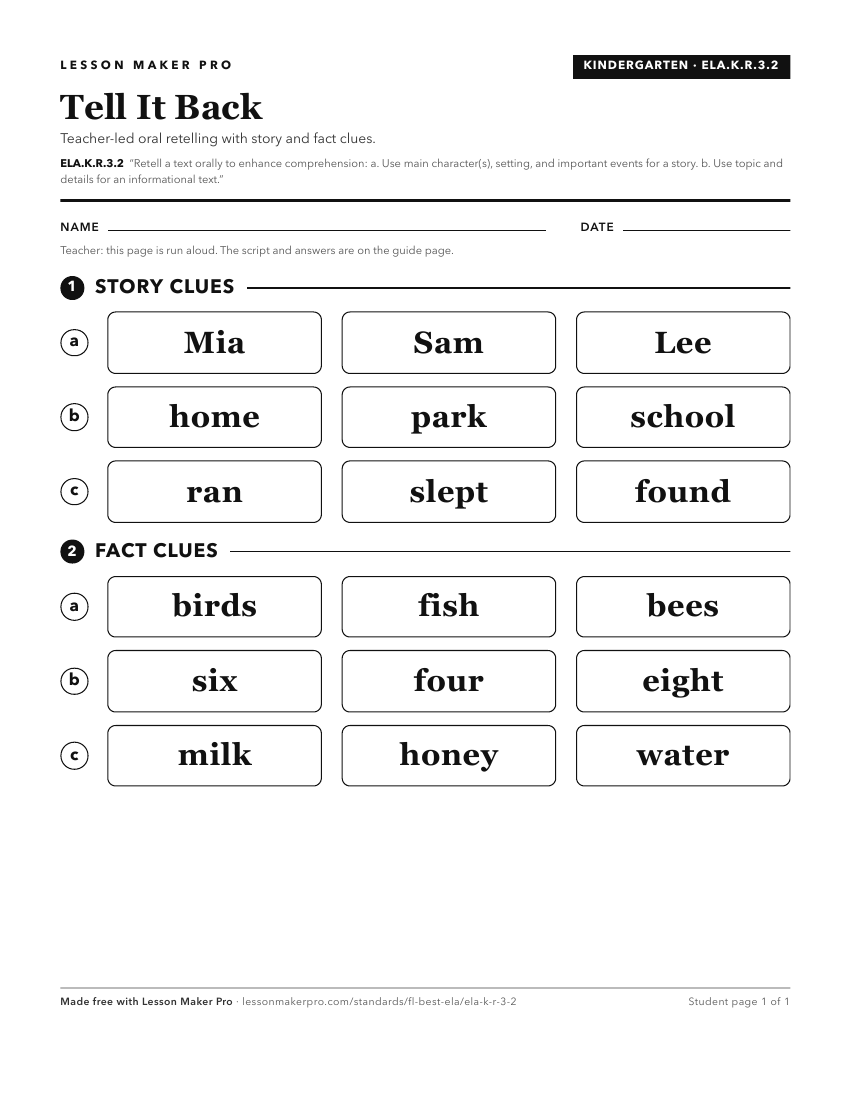
A ready-to-print activity worksheet aligned to ELA.K.R.3.2, with an answer key for the teacher on its own page. No account needed.
PDF, US Letter, prints cleanly in black and white.
Download the worksheetKeep exploring
Related Standards
Turn this exact standard into a lesson
Grade, subject, topic, and the complete standard are prefilled. Create one free, no account needed.
Also for this standard:Make a WorksheetMake a QuizMake a Sub Lesson