Florida B.E.S.T. ELA.1.R.2.2
The Standard
Identify the topic of and relevant details in a text.
Florida B.E.S.T. Standards for English Language Arts
Teacher's field guide
What This Standard Means
What Students Need to Do
- Students name the broad subject of a short nonfiction text. They find facts, examples, or picture information that directly supports that subject.
What Mastery Looks Like
- A student names the subject in a few words, such as “how frogs grow.” The student selects facts from the words or pictures that clearly relate to that subject.
Common Misconceptions
- Students may name one interesting fact instead of the broad subject. They may also choose a detail from the picture that the text does not support.
How to Assess It
- Give students a short passage about frogs. Ask them to write the subject and circle two sentences that give facts about it.
Lesson moves
Ways to Teach It
Read a short animal book, then have students sort fact cards under “belongs” or “does not belong” beside the book cover.
Ask, “What is this book mostly about, and which two facts helped you decide?” Students answer with a partner.
Play Topic Detective by reading three facts aloud and having students choose the matching subject card.
Examine a school lunch menu and identify its subject, then point out details such as foods, prices, or serving days.
Free download
Printable ELA.1.R.2.2 Worksheet
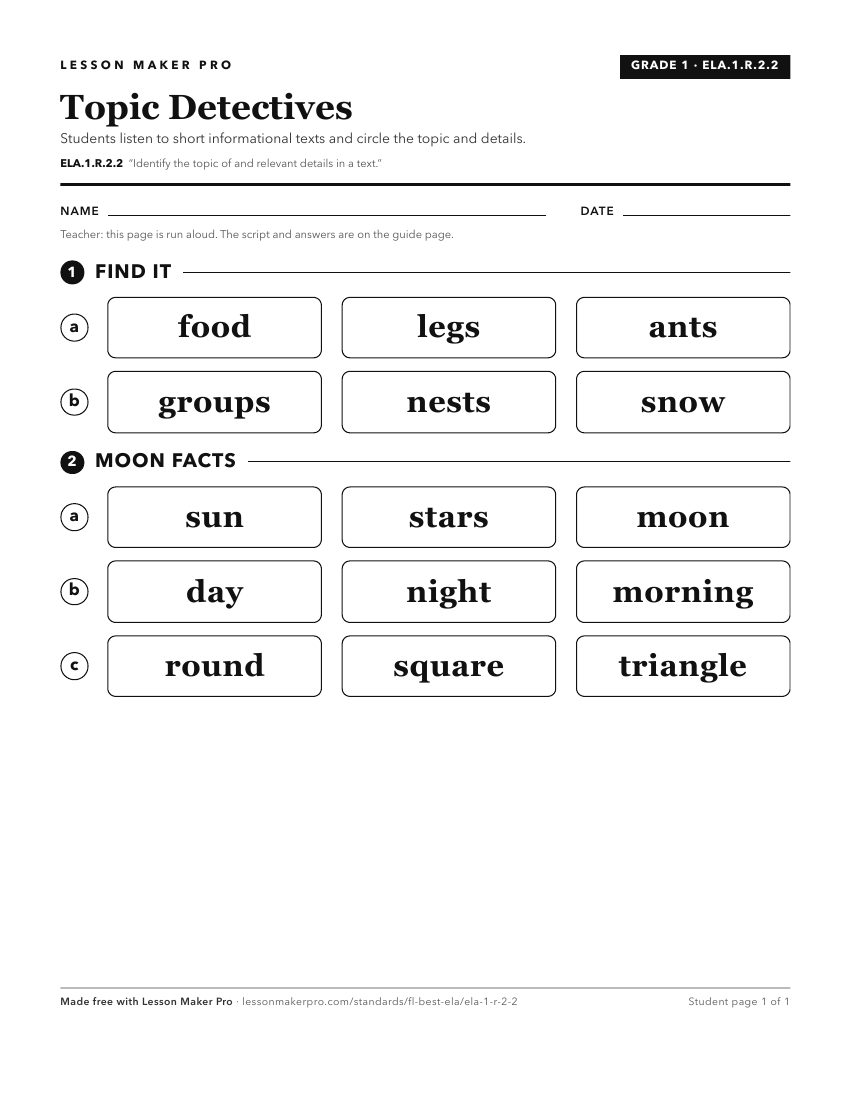
A ready-to-print activity worksheet aligned to ELA.1.R.2.2, with an answer key for the teacher on its own page. No account needed.
PDF, US Letter, prints cleanly in black and white.
Download the worksheetKeep exploring
Related Standards
- ELA.6.R.2.2
Analyze the central idea(s), implied or explicit, and its development throughout a text.
- ELA.3.R.2.2
Identify the central idea and explain how relevant details support that idea in a text.
- ELA.2.R.2.2
Identify the central idea and relevant details in a text.
- ELA.K.R.2.2
Identify the topic of and multiple details in a text.
Turn this exact standard into a lesson
Grade, subject, topic, and the complete standard are prefilled. Create one free, no account needed.
Also for this standard:Make a WorksheetMake a QuizMake a Sub Lesson