Florida B.E.S.T. ELA.2.R.3.1
The Standard
Identify and explain similes, idioms, and alliteration in text(s)
Florida B.E.S.T. Standards for English Language Arts
Teacher's field guide
What This Standard Means
What Students Need to Do
- Students find similes, idioms, and alliteration in stories, poems, and short passages. They explain each comparison, intended meaning, or repeated sound pattern.
What Mastery Looks Like
- Given an unfamiliar passage, a student can mark each example and name its type. The student explains what is compared, what an idiom means in context, or which beginning sound repeats.
Common Misconceptions
- Students may call any phrase with “like” or “as” a simile, even when no comparison is made. They may read an idiom literally, such as picturing someone holding horses for “hold your horses.” They may look for repeated letters rather than repeated beginning sounds in alliteration.
How to Assess It
- Give students: “Maya was as quiet as a mouse. She kept an eye on the tiny, trembling turtle.” Ask them to label and explain the three language features.
Lesson moves
Ways to Teach It
Students sort phrase cards into simile, idiom, alliteration, or none, then underline the clue and explain it to a partner.
Read “The hallway was like a zoo,” then ask, “What is being compared, and what picture does the comparison create?”
Play phrase bingo: students cover the matching label, then justify one choice before claiming bingo.
Search cereal boxes, signs, or ads for repeated beginning sounds and familiar idioms, then explain why the wording is memorable.
Free download
Printable ELA.2.R.3.1 Worksheet
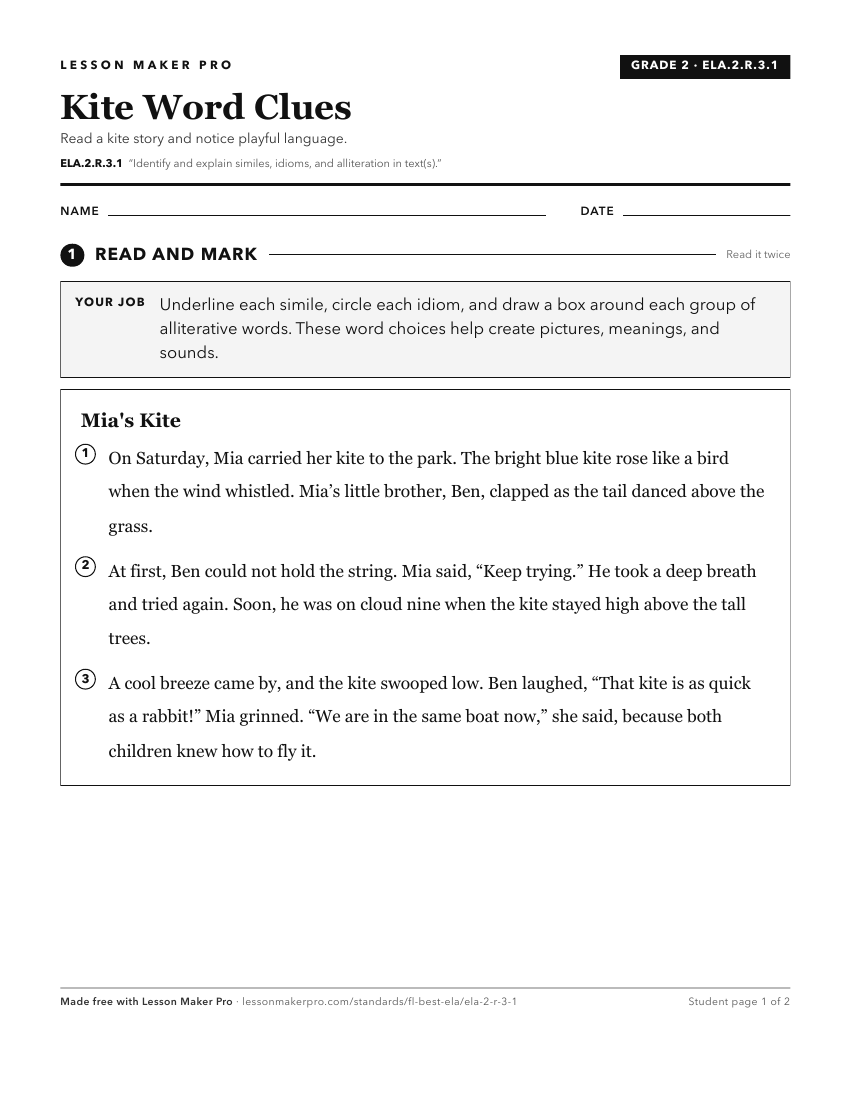
A ready-to-print activity worksheet aligned to ELA.2.R.3.1, with an answer key for the teacher on its own page. No account needed.
PDF, US Letter, prints cleanly in black and white.
Download the worksheetKeep exploring
Related Standards
- ELA.3.R.3.1
Identify and explain metaphors, personification, and hyperbole in text(s).
- ELA.1.R.3.1
Identify and explain descriptive words and phrases in text(s).
- ELA.7.R.3.1
Analyze how figurative language contributes to tone and meaning and explain examples of allusions in text(s).
- ELA.K.R.3.1
Identify and explain descriptive words in text(s).
Turn this exact standard into a lesson
Grade, subject, topic, and the complete standard are prefilled. Create one free, no account needed.
Also for this standard:Make a WorksheetMake a QuizMake a Sub Lesson