Florida B.E.S.T. ELA.7.R.3.1
The Standard
Analyze how figurative language contributes to tone and meaning and explain examples of allusions in text(s).
Florida B.E.S.T. Standards for English Language Arts
Teacher's field guide
What This Standard Means
What Students Need to Do
- Students identify similes, metaphors, personification, hyperbole, and other nonliteral phrases in a passage. They explain how those choices shape the feeling and message, then connect references to their original stories, people, or events.
What Mastery Looks Like
- Students accurately name a figurative device and describe the tone it creates using evidence from the passage. They identify an allusion’s source and explain what the reference adds beyond its literal words.
Common Misconceptions
- Students may label any vivid description as a metaphor or confuse tone with the reader’s mood. They may spot a familiar name but miss what that reference suggests about a character or event. Some think an allusion must retell the original story.
How to Assess It
- Give this exit ticket: “The cafeteria was a battlefield, and Maya’s Achilles’ heel was the dessert table.” Ask students to identify one figurative phrase, name the allusion, and explain how each shapes meaning and tone.
Lesson moves
Ways to Teach It
Give pairs figurative language cards and tone cards; students match them, then replace one phrase to create a different tone.
Compare two short descriptions of the same storm and discuss which words make one threatening and the other exciting.
Play Allusion Match with cards naming figures such as Midas, Hercules, and Cinderella, plus cards showing their implied meanings.
Collect figurative phrases and allusions from song lyrics, headlines, or advertisements, then explain the tone each creates.
Free download
Printable ELA.7.R.3.1 Worksheet
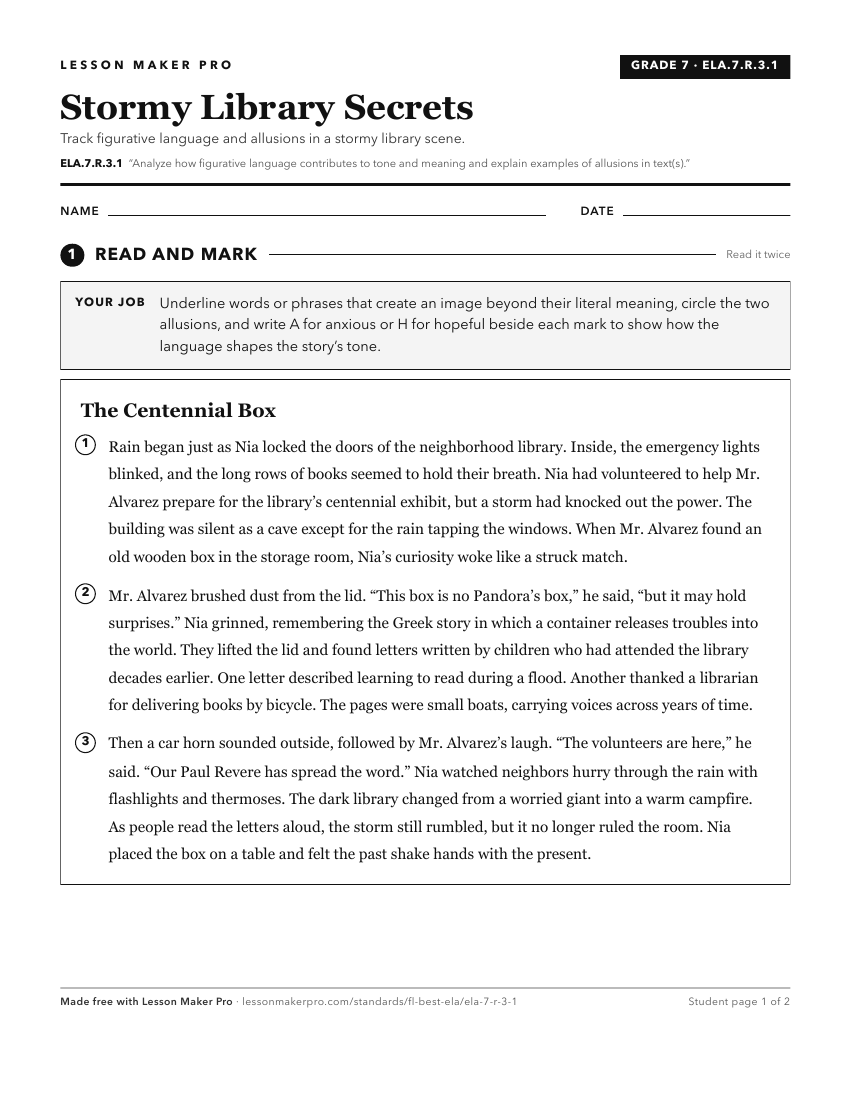
A ready-to-print activity worksheet aligned to ELA.7.R.3.1, with an answer key for the teacher on its own page. No account needed.
PDF, US Letter, prints cleanly in black and white.
Download the worksheetKeep exploring
Related Standards
- ELA.5.R.3.1
Analyze how figurative language contributes to meaning in text(s).
- ELA.8.R.3.1
Analyze how figurative language contributes to meaning and explain examples of symbolism in text(s).
- ELA.6.R.3.1
Explain how figurative language contributes to tone and meaning in text(s).
- ELA.10.R.3.1
Analyze how figurative language creates mood in text(s).
Turn this exact standard into a lesson
Grade, subject, topic, and the complete standard are prefilled. Create one free, no account needed.
Also for this standard:Make a WorksheetMake a QuizMake a Sub Lesson