Florida B.E.S.T. ELA.8.R.3.1
The Standard
Analyze how figurative language contributes to meaning and explain examples of symbolism in text(s).
Florida B.E.S.T. Standards for English Language Arts
Teacher's field guide
What This Standard Means
What Students Need to Do
- Students identify figurative phrases and explain what each suggests beyond the literal words. They connect those choices to tone, character, theme, or plot. They also explain what an object, image, color, or action may symbolize, using text evidence.
What Mastery Looks Like
- A student can explain how a figurative phrase shapes tone, meaning, or a character's feelings. The student can interpret a symbol and support that interpretation with specific details. The explanation goes beyond naming the device or object.
Common Misconceptions
- Students often identify a device but do not explain its effect. They may treat every object as a symbol or give a symbolic meaning without evidence. They may also confuse symbolism with figurative comparison.
How to Assess It
- Exit ticket: Read “The cracked trophy stared at Maya from the shelf; she boxed it, then laced her running shoes,” then explain how “stared” adds meaning and what the trophy may symbolize, citing one detail.
Lesson moves
Ways to Teach It
Place a key, candle, chain, and mirror at stations; groups read short excerpts and attach sticky notes explaining each object's possible symbolism.
Students write when an ordinary object can carry a larger meaning, using one text example and two supporting details.
Run Figurative Language Sort: teams classify excerpt cards, then earn a point by explaining how each phrase shapes tone or meaning.
Compare a charity logo or sports mascot with a literary symbol, and list how each image communicates ideas beyond its literal meaning.
Free download
Printable ELA.8.R.3.1 Worksheet
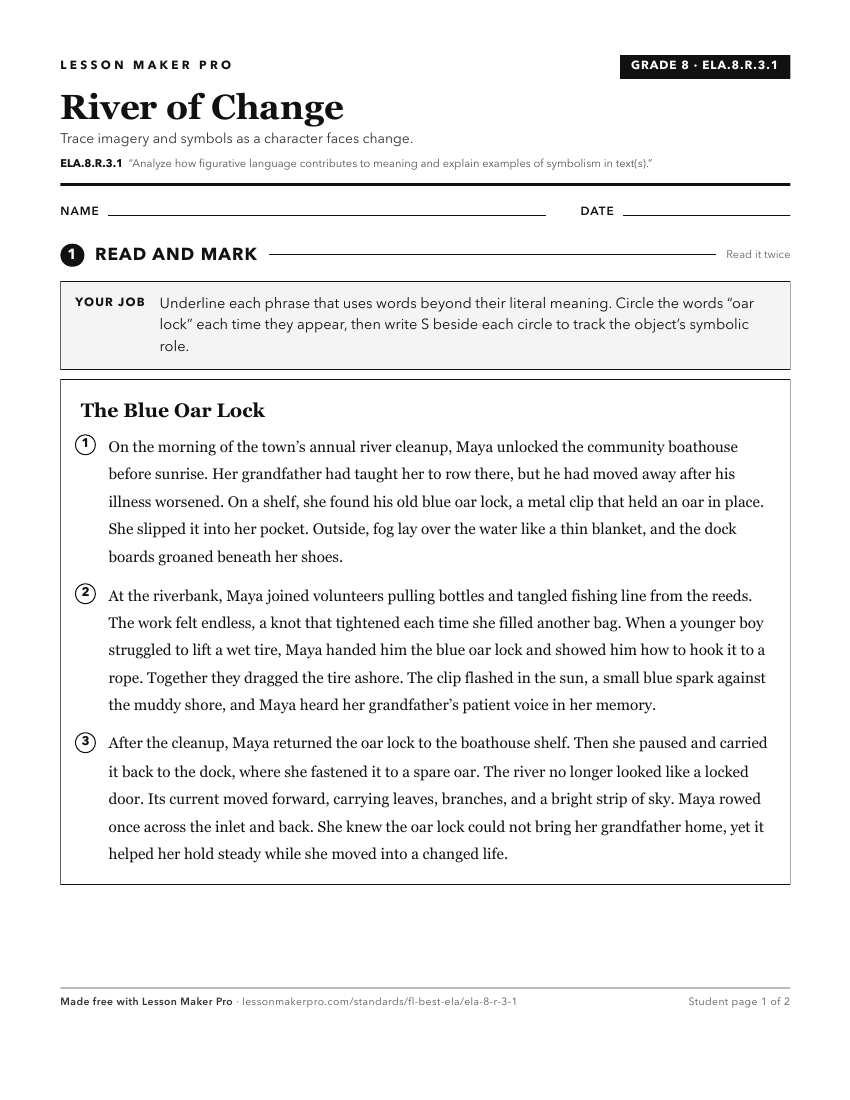
A ready-to-print activity worksheet aligned to ELA.8.R.3.1, with an answer key for the teacher on its own page. No account needed.
PDF, US Letter, prints cleanly in black and white.
Download the worksheetKeep exploring
Related Standards
- ELA.5.R.3.1
Analyze how figurative language contributes to meaning in text(s).
- ELA.7.R.3.1
Analyze how figurative language contributes to tone and meaning and explain examples of allusions in text(s).
- ELA.10.R.3.1
Analyze how figurative language creates mood in text(s).
- ELA.4.R.3.1
Explain how figurative language contributes to meaning in text(s).
Turn this exact standard into a lesson
Grade, subject, topic, and the complete standard are prefilled. Create one free, no account needed.
Also for this standard:Make a WorksheetMake a QuizMake a Sub Lesson