Florida B.E.S.T. ELA.5.R.3.1
The Standard
Analyze how figurative language contributes to meaning in text(s).
Florida B.E.S.T. Standards for English Language Arts · Reading
Teacher's field guide
What This Standard Means
What Students Need to Do
- Students find similes, metaphors, personification, and other nonliteral phrases in a text. They explain what each phrase means and how it affects imagery, mood, tone, character, or message.
What Mastery Looks Like
- Students accurately explain a figurative phrase using evidence from nearby sentences. They connect the phrase to a specific effect, such as creating a mood, sharpening an image, or revealing a character’s feelings.
Common Misconceptions
- Students may label a simile, metaphor, or personification without explaining its effect. They may interpret figurative phrases literally or give a meaning that does not fit the surrounding text.
How to Assess It
- Give students a short paragraph containing one metaphor. Ask: “What does the metaphor suggest, and how does it shape the reader’s understanding of the scene?”
Lesson moves
Ways to Teach It
Give pairs sentence strips with figurative phrases, then have them match each phrase to its likely meaning and effect.
Read a short poem and ask, “Which figurative phrase matters most, and what would change if it were removed?”
Play Figurative Language Detective, awarding points for identifying a phrase, explaining its meaning, and naming its effect on the passage.
Examine figurative language in song lyrics or advertisements, then explain how one phrase shapes the audience’s feelings or expectations.
Free download
Printable ELA.5.R.3.1 Worksheet
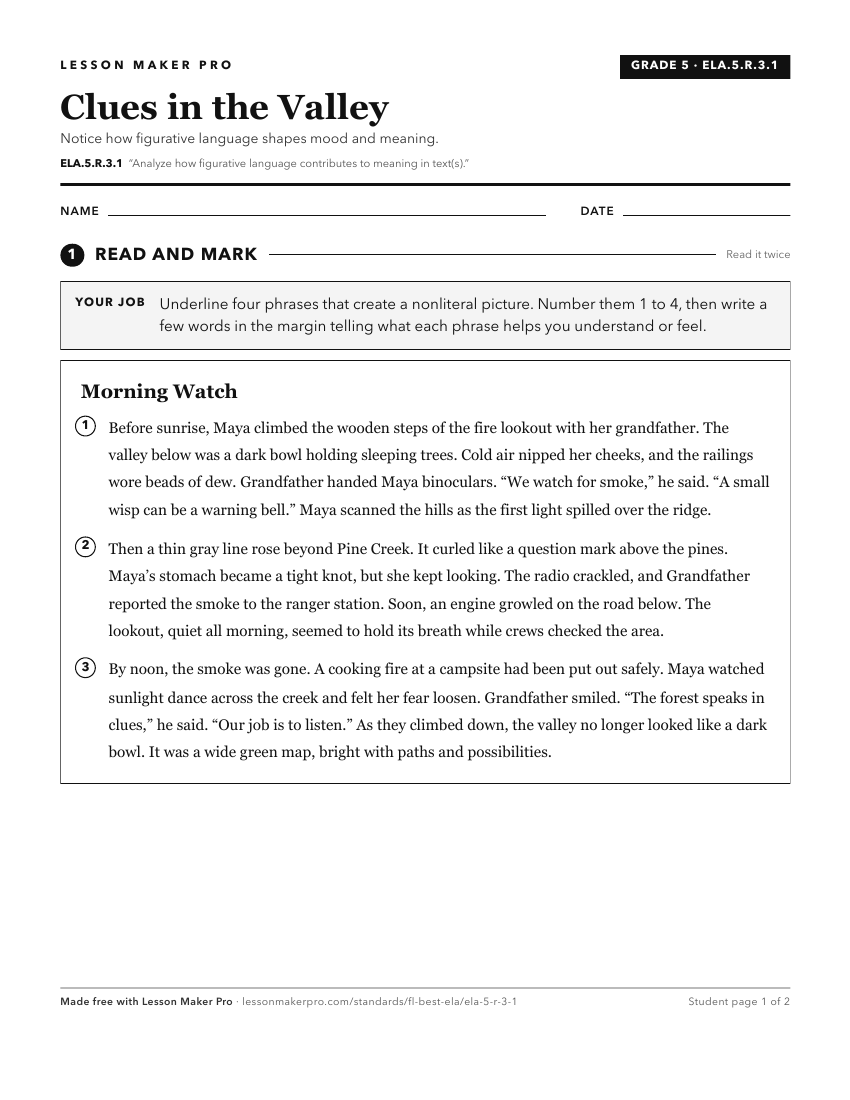
A ready-to-print activity worksheet aligned to ELA.5.R.3.1, with an answer key for the teacher on its own page. No account needed.
PDF, US Letter, prints cleanly in black and white.
Download the worksheetKeep exploring
Related Standards
- ELA.8.R.3.1
Analyze how figurative language contributes to meaning and explain examples of symbolism in text(s).
- ELA.6.R.3.1
Explain how figurative language contributes to tone and meaning in text(s).
- ELA.10.R.3.1
Analyze how figurative language creates mood in text(s).
- ELA.4.R.3.1
Explain how figurative language contributes to meaning in text(s).
Turn this exact standard into a lesson
Grade, subject, topic, and the complete standard are prefilled. Create one free, no account needed.
Also for this standard:Make a WorksheetMake a QuizMake a Sub Lesson