CCSS.
The Standard
Use context to confirm or self-correct word recognition and understanding, rereading as necessary.
Common Core State Standards for English Language Arts
Teacher's field guide
What This Standard Means
What Students Need to Do
- Students notice when a word they read does not make sense in the sentence. They check nearby words, try a better word, and read the sentence again.
What Mastery Looks Like
- Students pause when a word sounds wrong or does not fit the meaning. They use nearby clues, correct the word, and reread smoothly without teacher prompting.
Common Misconceptions
- Students may keep reading after saying a word that does not fit. They may guess from the first letter alone or replace the word without rereading the sentence.
How to Assess It
- Give students this sentence: “The hungry puppy began to gnaw the bone.” Ask them to read it aloud and explain which words helped them check “gnaw.”
Lesson moves
Ways to Teach It
Give pairs sentence strips and word cards; they replace any word that makes the sentence sound wrong, then reread the repaired sentence.
Ask, “Which words show that bank means riverbank here?” Students underline clues and explain their choice to a partner.
Play Context Detective with short sentences, awarding a point for catching a mismatched word, correcting it, and rereading the sentence.
Read a cafeteria menu or school notice together, pausing when a word seems wrong and using the rest of the line to fix it.
Free download
Printable RF.3.4c Worksheet
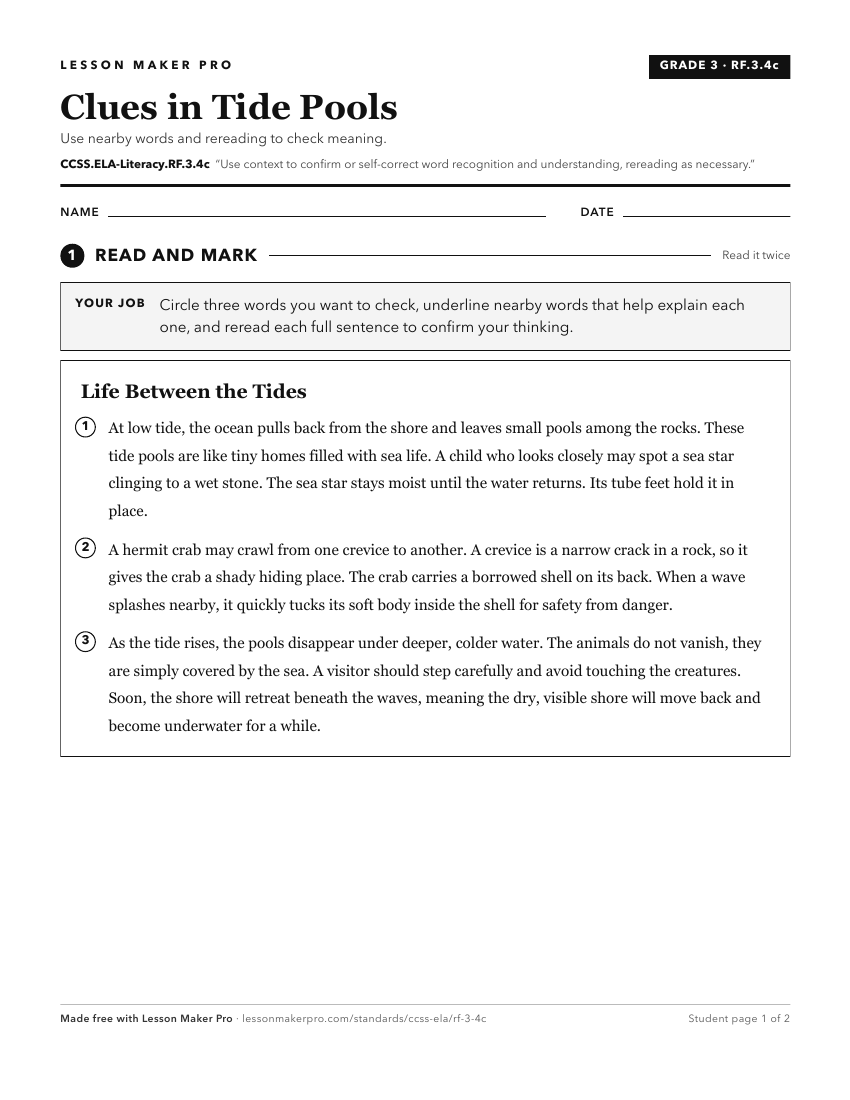
A ready-to-print activity worksheet aligned to CCSS.ELA-Literacy.RF.3.4c, with an answer key for the teacher on its own page. No account needed.
PDF, US Letter, prints cleanly in black and white.
Download the worksheetLearning progression
Where This Standard Sits
Before This Standard
If students are struggling here, check these first.
What This Unlocks
Mastery here sets students up for these next.
Keep exploring
Related Standards
Turn this exact standard into a lesson
Grade, subject, topic, and the complete standard are prefilled. Create one free, no account needed.
Also for this standard:Make a WorksheetMake a QuizMake a Sub Lesson