CCSS.
The Standard
Recognize and read grade-appropriate irregularly spelled words.
Common Core State Standards for English Language Arts
Teacher's field guide
What This Standard Means
What Students Need to Do
- Students quickly identify common words with unexpected spellings. They read these words accurately in lists and sentences without guessing from the first letter or a picture.
What Mastery Looks Like
- Students read common irregular words accurately and without long pauses. They recognize the same words in lists, sentences, and unfamiliar short texts.
Common Misconceptions
- Students may force regular sound patterns, reading “said” like “paid.” They may confuse similar words such as “were” and “where,” or guess from pictures and context.
How to Assess It
- Ask each student to read aloud: “She said we could go because it was warm.” Note whether the student reads each irregular word accurately without prompting.
Lesson moves
Ways to Teach It
Build said, could, does, and were with letter tiles, then circle the letters that do not represent expected sounds.
Ask, “Which part of because is surprising, and what helps you remember it?” Students write one sentence and share.
Play Irregular Word Bingo with words such as again, every, pretty, and where, then have students read each completed row aloud.
Hunt for five irregular words on a menu, classroom notice, or library poster, then read each word within its sentence.
Free download
Printable RF.2.3f Worksheet
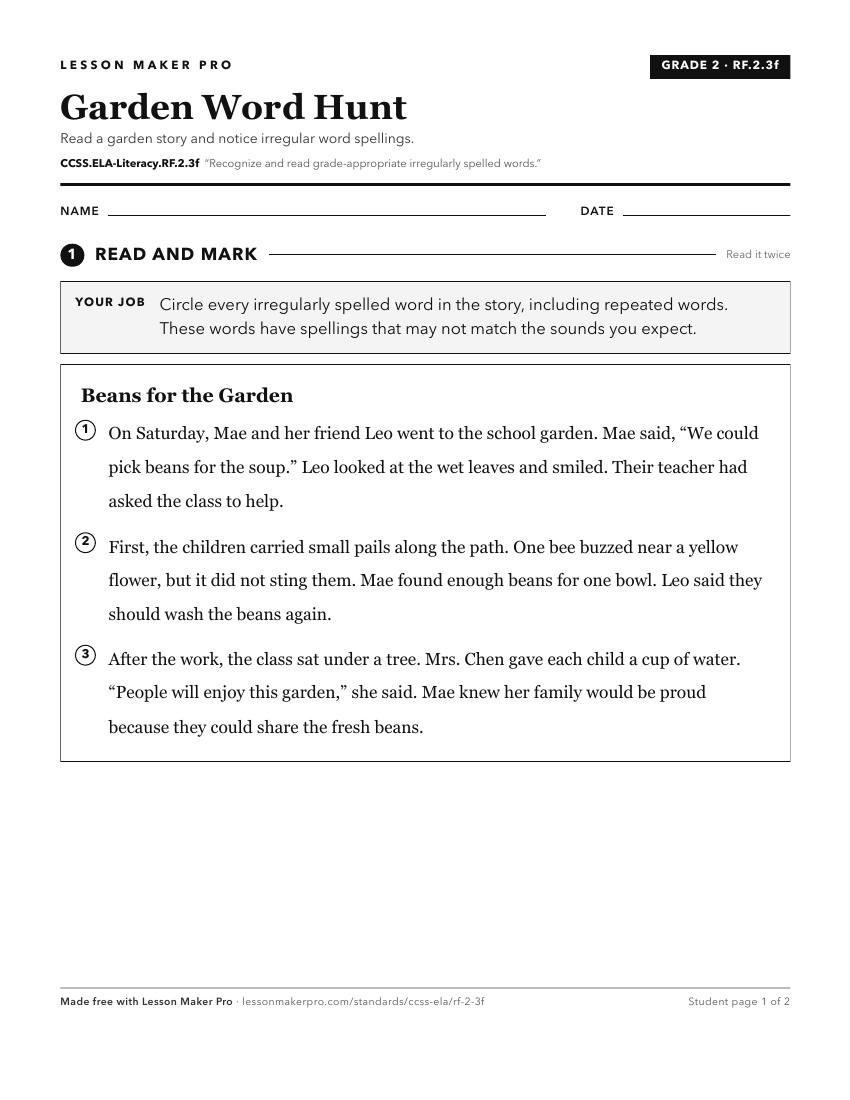
A ready-to-print activity worksheet aligned to CCSS.ELA-Literacy.RF.2.3f, with an answer key for the teacher on its own page. No account needed.
PDF, US Letter, prints cleanly in black and white.
Download the worksheetKeep exploring
Related Standards
- CCSS.ELA-Literacy.RF.1.3g
The 1st Grade version of this standard.
- CCSS.ELA-Literacy.L.5.2e
Spell grade-appropriate words correctly, consulting references as needed.
- CCSS.ELA-Literacy.L.1.2d
Use conventional spelling for words with common spelling patterns and for frequently occurring irregular words.
- CCSS.ELA-Literacy.RF.3.3d
Read grade-appropriate irregularly spelled words.
Turn this exact standard into a lesson
Grade, subject, topic, and the complete standard are prefilled. Create one free, no account needed.
Also for this standard:Make a WorksheetMake a QuizMake a Sub Lesson