Alabama Social Studies SS24.US2.4
Standard Cluster
Analyze the causes of the Great Depression, including the effects of overproduction, stock market speculation, buying on credit, international trade policy, and restrictive monetary policies. 4a Differentiate between the ways Herbert Hoover and Franklin Roosevelt dealt with the Great Depression. 4b Critique the effectiveness of the New Deal in managing problems of the Great Depression through relief, recovery, and reform programs; expansion of the executive branch; and the application of Keynesian economic theory.
2024 Alabama Course of Study: Social Studies
Cluster contents
Standards in This Cluster
SS24.US2.4 is a cluster heading. These are the individual standards under it.
Teacher's field guide
What This Cluster Means
What Students Need to Do
- Students explain how excess goods, stock speculation, debt, tariffs, and tight money deepened the Depression. They compare Hoover's response with Roosevelt's federal jobs and aid. They judge New Deal relief, recovery, and reform, including expanded presidential power and Keynesian arguments for spending.
What Mastery Looks Like
- Students explain how unsold goods, debt, stock bets, tariffs, and tight money reinforced each other. They contrast Hoover's bank loans with Roosevelt's CCC jobs. They classify CCC relief, AAA recovery, and FDIC reform, then weigh federal spending against continued unemployment and expanded presidential power.
Common Misconceptions
- Students may blame the stock market crash alone or confuse buying stocks on margin with buying household goods on credit. Some say Hoover did nothing, though his administration funded public works and lent money to banks. Others think New Deal programs ended unemployment or all followed Keynesian ideas.
How to Assess It
- Exit ticket: Explain how tariffs and buying on margin worsened the slump. Compare Hoover's bank loans with Roosevelt's CCC, then judge whether federal spending helped enough to justify greater presidential power.
Lesson moves
Ways to Teach It
Give pairs cards marked unsold wheat, margin loans, tariffs, tight money, and bank failures; have them build two cause-and-effect chains.
Ask students to write: Which would help an unemployed worker faster, Hoover's bank loans or Roosevelt's CCC jobs? Why?
Play program match: students place CCC, AAA, and FDIC cards under relief, recovery, or reform, then defend one choice.
Use a sample credit card bill and layoff notice; students trace how missed payments could affect a bank and local shops today.
Free download
Printable SS24.US2.4 Worksheet
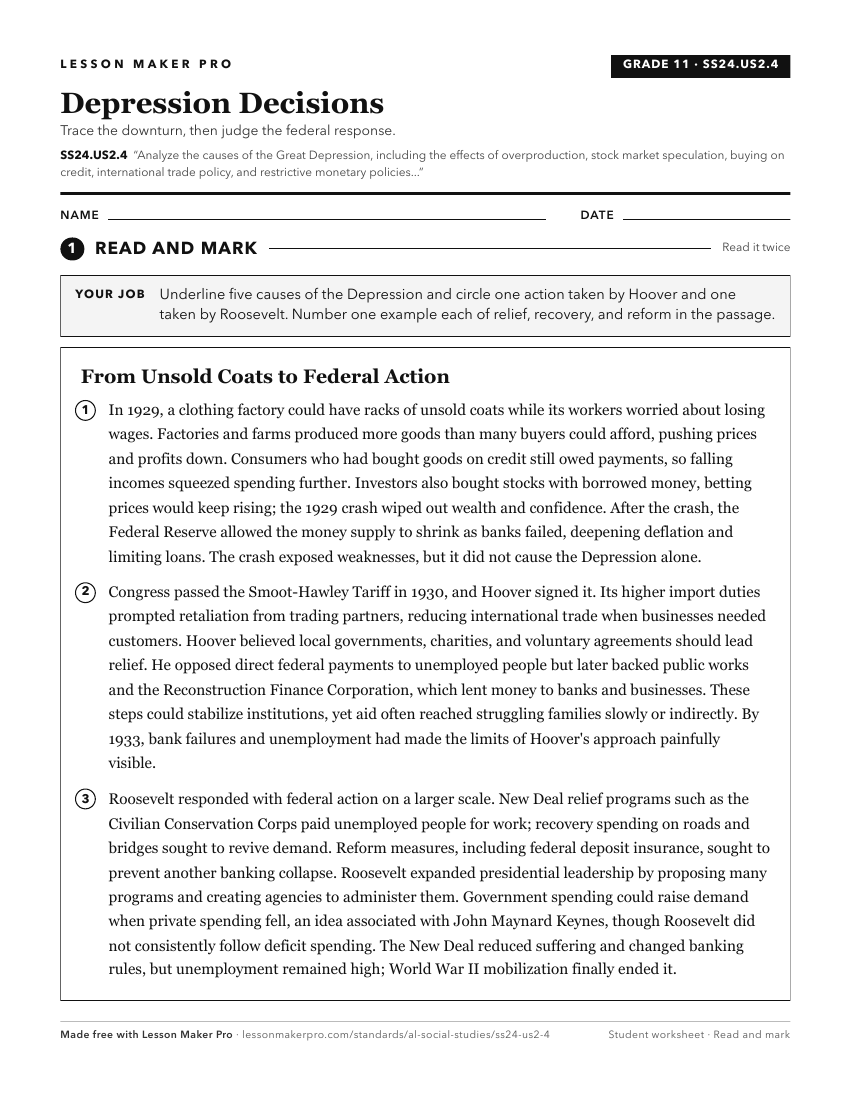
A ready-to-print activity worksheet aligned to SS24.US2.4, with an answer key for the teacher on its own page. No account needed.
PDF, US Letter, prints cleanly in black and white.
Download the worksheetKeep exploring
Related Standards
- SS24.WH.9
Summarize the conditions of the global Great Depression and explain how they led to the rise of totalitarian states and the weakening of democratic nations.
- SS24.US2.5
Identify economic and social effects of the Great Depression and the Dust Bowl on American society and describe how individuals addressed the challenges and sou...
- SS24.US2.5b
Analyze the impact of the Great Depression and the resulting social programs on the American family and minority groups.
Turn this cluster into a lesson
Grade, subject, topic, and the complete cluster are prefilled. Create one free, no account needed.
Also for this cluster:Make a WorksheetMake a QuizMake a Sub Lesson